
Skip to content
JACK & TORQUE

Comparison

Bluetooth vs Wired OBD2 Scanners

A dongle borrows your phone's screen. A handheld brings its own. Both answers are reasonable; the failure modes differ.

By Ryder M. · Published September 26, 2026 · Last reviewed September 26, 2026

We earn a commission when you buy through the Amazon links on this page, at no extra cost to you. It never changes which tool we put first, and we publish no price we have not verified. How this site is funded.

Bluetooth vs Wired OBD2 Scanners — ranked picks with scores and a price check for each
#PickKey capabilityScorePrice
1
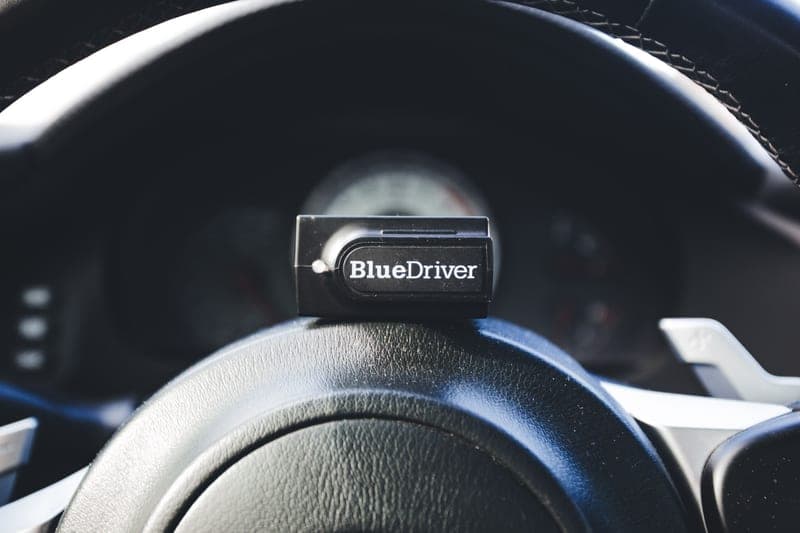
A Bluetooth code reader resting on a car steering wheel
BlueDriver ProThe Bluetooth case
Bluetooth to iOS and Android8.8
2
A mechanic using a digital tablet for vehicle diagnostics in a garage
Autel MaxiCOM MK808SThe self-contained case
7 in capacitive touchscreen, 1024 x 6009.0
3
An auto mechanic inspecting a car engine in a garage
Autel AutoLink AL319The simple wired case
TFT color, 220 x 1768.5
4
A car dashboard showing the speedometer and digital readout at night
OBDLink MX+Bluetooth with the widest protocol reach
All legislated OBD-II, plus Ford MS-CAN and GM SW-CAN8.6

Photographs on this page are licensed stock images that show the category, not the exact model, and not anything we own. We have no test rig and claim none.

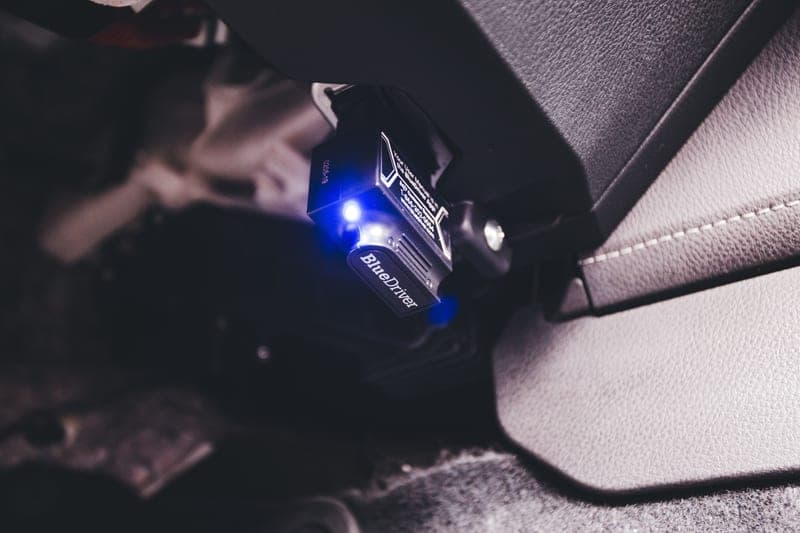
A Bluetooth code reader plugged in inside a vehicle, lit by a blue indicator

Short answer: buy a Bluetooth dongle if you want the most capability per dollar and you reliably have a charged phone. Buy a wired or self-contained tool if you want something that works with no phone, no app and no account — which is a genuine advantage in five years, not just today.

Side by side

Bluetooth dongle versus wired or self-contained scanner
Bluetooth dongleWired / self-contained
ScreenYour phone — large and sharpBuilt in, often small
Capability per dollarHigherLower
Works without a phoneNoYes
Depends on an appYesNo
Long-term usabilityTied to app supportTied only to the hardware
Data logging and sharingEasy — it is already on your phoneLimited, often needs a computer
Standing current draw if left plugged inYesCorded tools are unplugged anyway
CostLower for the same reachHigher
Bluetooth dongle versus wired or self-contained scanner

Where Bluetooth genuinely wins

The screen, and everything downstream of it. Watching six live parameters graphed simultaneously is a completely different experience on a phone than on a 2.8 in handheld display, and it is the difference between spotting an intermittent sensor drop-out and not. Sharing a log with a forum or a mechanic is also trivial when the data is already on your phone.

Protocol reach also tends to be better per dollar — OBDLink's MX+ supporting Ford MS-CAN and GM SW-CAN at up to 100 samples per second is a specification handhelds at that price do not match.

Where wired and self-contained win

  • Independence. No pairing, no app version, no account, no phone battery. Plug in and read.
  • Longevity. Hardware outlives software. A corded reader bought today will behave identically in a decade; an app-dependent dongle depends on the maker maintaining the app.
  • Working conditions. Cold hands, gloves, a phone that locks itself, a garage with no signal — a physical device with buttons is easier in all of these.
  • Nothing left in the car. A dongle in the port is a small standing load and a visible item in a parked vehicle.

The failure modes are what really differ

Think about what stops you using the tool at the moment you need it. For a dongle: a flat phone, a Bluetooth pairing that will not take, an app update that broke something, an account login you cannot remember. For a wired handheld: a damaged cable or connector, and firmware that is out of date for a newer vehicle.

Neither list is longer in some absolute sense. But the dongle's failures are more likely to happen on the day you need it, and the handheld's are more likely to be permanent.

The hybrid worth knowing about

Self-contained tablets like the Autel MK808S are neither: they have their own screen, their own battery and their own operating system, with a cable to the port. You get handheld independence with a phone-sized screen, at a price reflecting both. For anyone who wants one tool and does not want to think about it again, that is the format.

The picks in full

Every pick, in detail

A Bluetooth code reader resting on a car steering wheel

1. The Bluetooth case

BlueDriver Pro

BlueDriver · score 8.8/10

A Bluetooth dongle that reads enhanced ABS, airbag and transmission codes with no subscription, and hands you a repair report instead of a raw code.

Enhanced ABS, airbag and transmission codes plus repair reports, no subscription, across 1996-and-newer North American vehicles. Your phone provides a screen no handheld at this price can match.

Published specifications

Connection
Bluetooth to iOS and Android BlueDriver
Coverage
1996 and newer cars, SUVs and light trucks sold in North America BlueDriver
Enhanced systems
ABS, airbag (SRS), transmission BlueDriver
Subscription
None BlueDriver
Reports
Repair Reports built from verified fixes BlueDriver

What works

  • Reads the enhanced ABS and airbag codes most cheap readers cannot
  • Repair reports translate a code into a likely cause
  • No subscription — the price is the price

What you give up

  • Useless if your phone is dead
  • Enhanced coverage depends on the make
  • No bi-directional actuator control

Our scoring

  • Fit & reach8.8
  • Safety margin8.4
  • Beginner ease9.4
  • Build quality8.6
  • Value8.8
Check price on Amazon

#ad No price shown — we have no live feed. How this is funded

Specifications published by BlueDriver — we earn nothing from that link.

A mechanic using a digital tablet for vehicle diagnostics in a garage

2. The self-contained case

Autel MaxiCOM MK808S

Autel · score 9.0/10

A 7 in Android 11 tablet that reads and clears codes on all available systems and performs bi-directional active tests — the point where a scanner stops being a code reader.

7 in 1024 x 600 touchscreen, Android 11, 5000 mAh battery, bi-directional active tests and all-system read and clear. Nothing to pair, nothing to run flat but its own battery, and it works in a garage with no signal.

Published specifications

Display
7 in capacitive touchscreen, 1024 x 600 Autel
Processor
Cortex-A55 quad-core 1.8 GHz Autel
OS
Android 11 Autel
Battery
3.7 V / 5000 mAh Autel
Bi-directional
Yes — active tests Autel
Service functions
Oil reset, EPB, SAS, DPF, injector, battery registration Autel

What works

  • Reads and clears codes across all available modules, not just the engine
  • Bi-directional active tests let you command a component instead of guessing
  • Wi-Fi updates and a real battery — it works away from a laptop

What you give up

  • Far more tool than a first-time owner needs to read a check-engine light
  • Function coverage varies by make and model year
  • A tablet is one more device to keep charged

Our scoring

  • Fit & reach9.4
  • Safety margin8.6
  • Beginner ease8.0
  • Build quality9.0
  • Value8.2
Check price on Amazon

#ad No price shown — we have no live feed. How this is funded

Specifications published by Autel — we earn nothing from that link.

An auto mechanic inspecting a car engine in a garage

3. The simple wired case

Autel AutoLink AL319

Autel · score 8.5/10

A one-button emissions-readiness check, live PCM data and freeze frame on a color screen — everything a first check-engine light actually requires.

Corded, powered by the port, one-click readiness, code definitions, live PCM data and freeze frame. Nothing to charge, nothing to pair, and it will work in five years when the app you would have used no longer exists.

Published specifications

Display
TFT color, 220 x 176 Autel
Codes
Generic, manufacturer-specific and pending Autel
Live data
Live PCM datastream Autel
Freeze frame
Yes Autel
Vehicle info
VIN, CIN, CVN Autel
Coverage
OBD2-compliant vehicles, 1996 and newer Autel

What works

  • One-click I/M readiness key answers the pre-smog-test question instantly
  • No phone, no app, no pairing — plug in and read
  • Color-coded pass/fail display plus an audible tone

What you give up

  • Engine and emissions only — it will not read ABS or airbag codes
  • No bi-directional control
  • 220 x 176 screen shows very little live data at once

Our scoring

  • Fit & reach7.4
  • Safety margin8.0
  • Beginner ease9.6
  • Build quality8.2
  • Value9.4
Check price on Amazon

#ad No price shown — we have no live feed. How this is funded

Specifications published by Autel — we earn nothing from that link.

Method

How these picks were chosen

We did not test these tools. We do not run a laboratory, we have not loaded a jack to failure or checked a wrench on a calibration bench, and we will not tell you otherwise. What we did instead is read the published manufacturer specifications, check the figures that matter against the safety standard that applies to portable automotive lifting equipment, and work out which tool suits which job. Every number on this page links to where it came from, so you can check us.

The five things we score are the five that decide a first purchase: will it fit under and lift your car, how much safety margin the rating and the locking mechanism leave you, how hard it is to get right alone in a driveway, what the materials and published standards say about how long it lasts, and what the money buys against the rest of the field.

Read the full method — including how we pick a top pick, and why we publish no prices.

Questions

Frequently asked questions

+Is a Bluetooth OBD2 scanner better than a wired one?

For capability per dollar and screen quality, yes. For independence from a phone and long-term usability, no. Both are reasonable; the question is which failure mode you mind less.

+Do wired scanners need batteries?

Corded handhelds are powered by the diagnostic port itself. Self-contained tablets have their own battery — the Autel MK808S carries a 5000 mAh cell.

+Can I use a Bluetooth scanner without internet?

Reading codes generally works offline once the app is installed, but some features — repair reports, coverage lookups, updates — need connectivity. Check the specific tool if you work in a garage with no signal.

+Will my Bluetooth scanner still work in five years?

That depends on the app continuing to be maintained and to run on your phone's operating system. It is the honest weakness of the format, and the strongest argument for a self-contained tool.

Sources

Where these figures come from

Read next

Related reading