Every OBD2 scanner sold in the US can do the same baseline job, because the baseline is legally mandated: read and clear stored engine and emissions codes on any 1996-or-newer vehicle. A twenty-dollar reader does that as well as a tablet.
What more money buys is reach — how many of the car's other computers the tool can talk to, how fast it can stream live data, and whether it can command a component rather than just read about it.
The four tiers
| Tier | Reads | Can it command anything? | Example here |
|---|---|---|---|
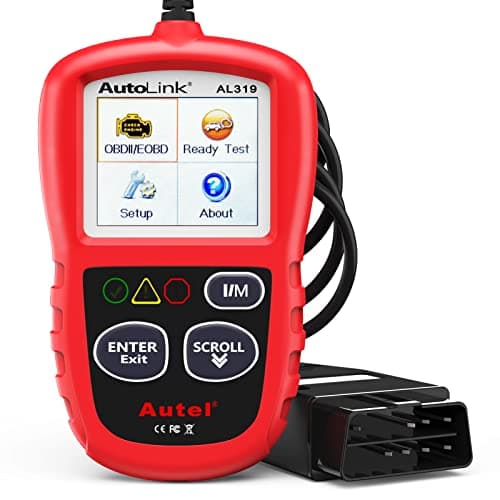
| Code reader | Engine and emissions codes, freeze frame, readiness | No | Autel AL319 |
| Live-data reader | As above, plus graphed sensor data | No | FOXWELL NT301 |
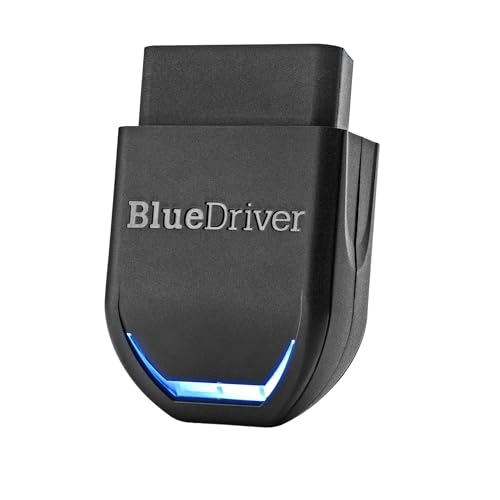
| Enhanced / all-system | Adds ABS, airbag, transmission and more | No | BlueDriver Pro |
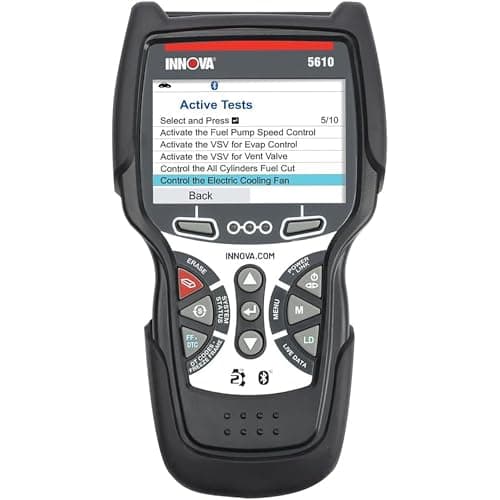
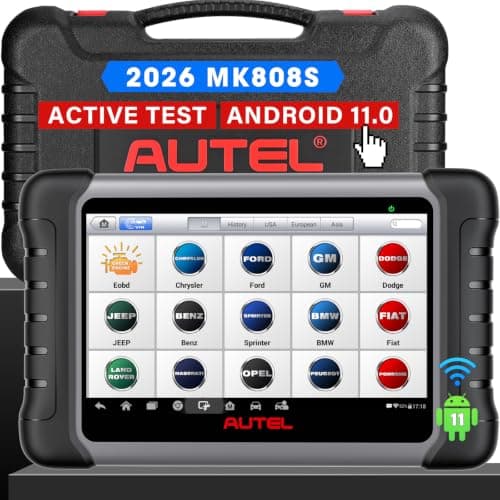
| Bidirectional | All of the above | Yes — active tests, EPB, ABS bleed | Autel MK808S, Innova 5610 |
The tier that matters most for a DIY owner is the third or fourth, and the reason is brakes. Many modern cars have an electronic parking brake that has to be retracted electronically before you can change rear pads, and no code reader can do it. Bidirectional vs basic separates the tiers properly.
How to choose
1. Start from the job, not the spec sheet
If the honest answer is "a light came on and I want to know why", buy a cheap reader. If it is "I want to do my own brakes on a car with an electronic parking brake", you need bi-directional and nothing less will do. Most people over-buy here, and a minority under-buy in the one case that actually blocks a job.
2. Ask about updates before you pay
A scanner is software in a case, and makers handle ageing very differently. Innova states updates for the 5610 are free with no subscription. BlueDriver states no subscriptions and no add-ons. Other tools gate newer vehicle coverage or advanced functions behind paid renewals. A cheap tool with an annual fee can cost more over three years than a dearer one that never asks again.
3. Dongle or self-contained
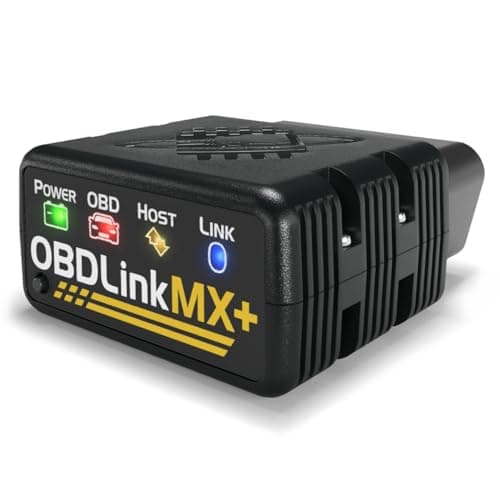
A dongle plus your phone is cheap, small and often more capable per dollar. A self-contained tool has its own screen and battery and works when your phone is dead. Neither is wrong — bluetooth vs wired works through the trade-offs.
4. Check coverage for your actual car
"All systems" means all systems that your vehicle exposes, and a 2009 economy hatchback has far fewer modules than a 2022 SUV. Every manufacturer here publishes a coverage lookup; use it before you buy for a specific job. Note also that Innova states the 5610 works only in the US and Canada.
If you are shopping for one specific car
The field above is ranked without a make lens, because most buyers want one tool for whatever they end up owning. Once you know the car, the question gets narrower and more answerable: which modules does that vehicle put outside the legislated engine set, and which maker publishes access to them? We have worked that through for a BMW, where the service resets matter more than the codes, and for a Subaru, where a CVT warning is usually what started the search. If the module rather than the make is the problem, best OBD2 scanner for transmission sorts the field on published transmission coverage.
What no scanner can do
The short version
- Tell you which part to replace — a code names a symptom and a circuit, not a faulty component
- Diagnose a mechanical fault that throws no code
- Read codes from pre-1996 vehicles, which used manufacturer-specific systems
- Perform functions the vehicle itself does not support, regardless of the tool's feature list
- Tell you whether a sensor, its connector or its wiring is the faulty part — that is a multimeter's job
That last one is the gap worth closing next. A scanner names the circuit; a automotive multimeter tells you which end of it has failed, which is the difference between replacing the right part and replacing three.
The other gap people hit is modules rather than parts. If the light on your dash is the ABS or the airbag warning rather than the check-engine light, the cheaper tools here will not see it at all — best OBD2 scanners for ABS and SRS codes covers which ones publish that coverage and what it depends on.
Four pages go deeper than this roundup can: best OBD2 scanner brands on update policy and published coverage, best bidirectional scanners if you need to command a component rather than read one, best OBD2 scanner for a Ford where the MS-CAN network decides it, and why won't my OBD2 scanner connect for the day one of them will not talk.
Two more entry points into this field. If you have a hard budget, best OBD2 scanners under $100 sets out exactly what a hundred dollars reaches and what it gives up. And if you drive a Chevrolet, GMC, Buick or Cadillac, best OBD2 scanner for GM covers the single-wire SW-CAN network that hides ABS, TPMS and transmission data from a generic tool.
Other ways to narrow this field
If one thing decides your purchase, there is a narrower page that starts from it. By budget: best OBD2 scanners under $100 and best OBD2 scanners under $200, where the second band is the one that introduces bi-directional control. By the question most buyers actually ask: best OBD2 scanner for all cars, which explains why that phrase describes the floor of the category rather than a feature. And if you were specifically comparing against one popular tool, BlueDriver alternatives lays out what matches it and what does not.
Shopping to a budget, or past one brand
Two further pages narrow this field from either end. If the budget stretches, best OBD2 scanners under $500 is the band where full-system access, bi-directional actuation and post-repair service resets arrive together - the point where a code reader becomes a diagnostic tool. And if the tool you have been pricing is a tablet from the best-known name in that band, Autel alternatives sets out exactly which of its published capabilities you can buy for less and which you cannot.