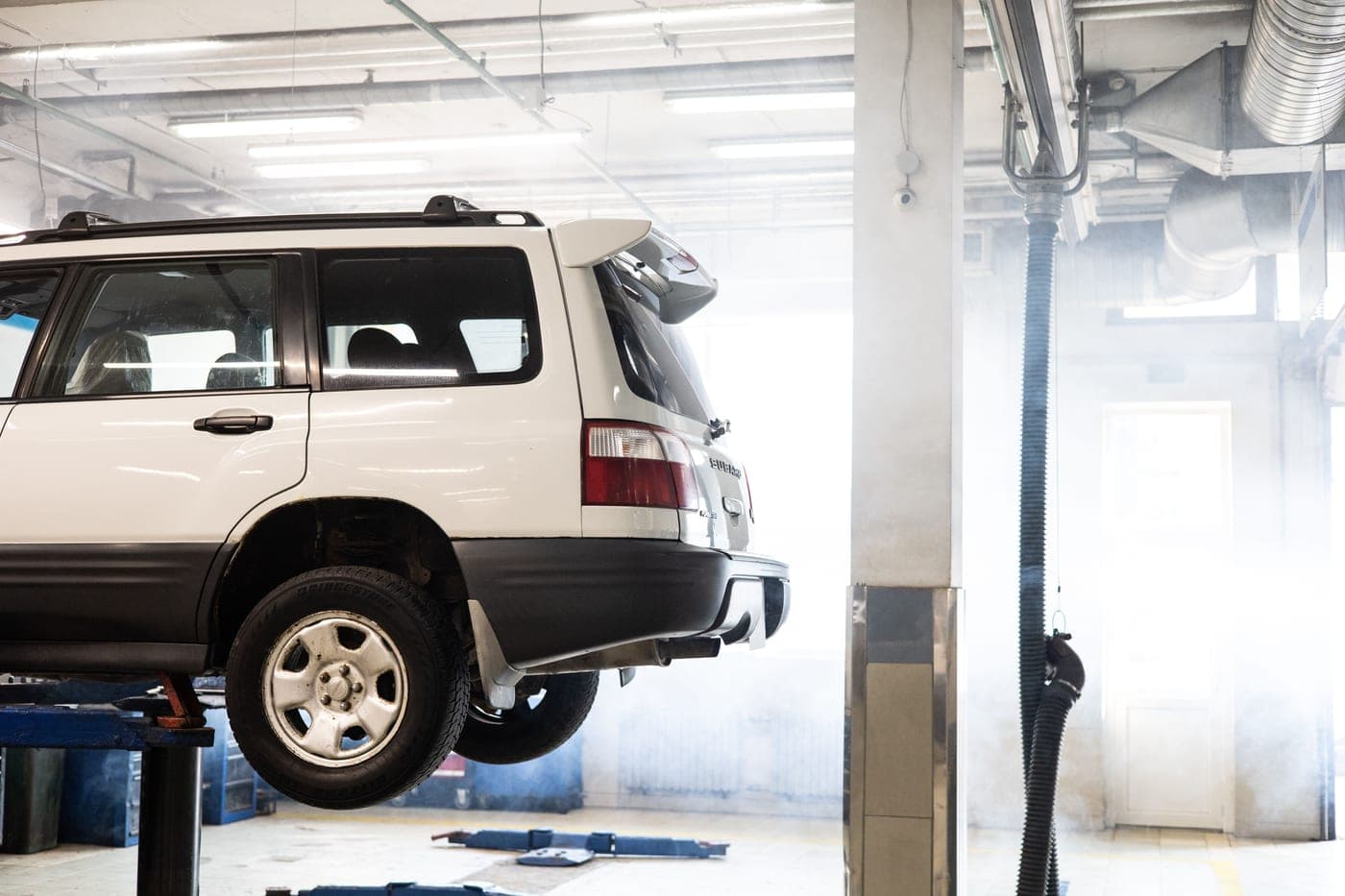
The simplest way to get the front of a car off the ground — and the wrong tool for anything involving a wheel.
We earn a commission when you buy through the Amazon links on this page, at no extra cost to you. It never changes which tool we put first, and we publish no price we have not verified. How this site is funded.
Start here
Our top pick in this category
1. Best first pair of ramps
RhinoGear RhinoRamps MAX (11912)
RhinoGear · score 8.9/10
16,000 lb GVW rating, a 17-degree incline and a non-skid base — the default answer for oil changes on anything that is not slammed.
16,000 lb GVW for the pair covers essentially any car, crossover or half-ton pickup, and the CoreTRAC non-skid base addresses the one failure mode people actually experience — the ramp sliding forward as the tire meets it. The 17-degree incline is the trade-off: fine for a normal car, too steep for a lowered one. They also nest for storage, which matters in a garage.
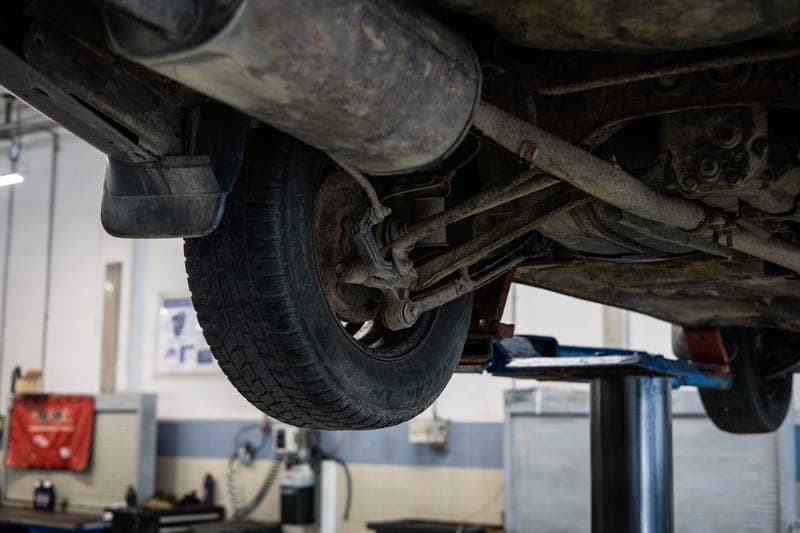
Photographs on this page are licensed stock images that show the category, not the exact model, and not anything we own. We have no test rig and claim none.
A car ramp is a wedge. You drive up it, the front of the car sits higher, and you have room to slide under. There is no hydraulic system, nothing to pump and nothing to fail progressively. For the job most first-time DIY owners actually want to do — an oil change — ramps are faster, simpler and involve fewer decisions than a jack and stands.
They also have a hard limit: the wheels stay on the ground, resting on the ramp. If the job needs a wheel off, ramps cannot help you, and no amount of capacity changes that. That single trade-off is the whole ramps-versus-stands argument, and we lay it out in car ramps vs jack stands.
Capacity is quoted three different ways
Read ramp ratings with care, because manufacturers are not consistent. You will see GVW capacity for the pair, a per-ramp load figure, and sometimes a total "vehicle weight" number. RhinoRamps MAX are listed at 16,000 lb GVW for the pair. Race Ramps RR-56-2 are listed at 1,500 lb per ramp for a 6,000 lb vehicle. Those describe the same kind of limit from different directions, and the second one is far more restrictive than the first despite sounding similar.
How ramp capacity is expressed, and what it means for you
Rating style
Example
How to read it
GVW for the pair
16,000 lb GVW
Compare against your vehicle's gross weight rating on the door sticker
Per ramp
1,500 lb each
Compare against roughly half your FRONT axle weight
Total vehicle weight
6,000 lb vehicle
The most conservative figure. Use it if it is given
How ramp capacity is expressed, and what it means for you
Approach angle decides whether your car fits
The other spec that matters is the incline. A 17-degree ramp is steeper, shorter and cheaper. A 9 or 10-degree ramp is long, expensive and the only thing a lowered car can drive onto without dragging its front lip. If your bumper already scrapes on speed humps, buy for angle and ignore everything else. Ramp angle and clearance shows how to check before you buy, and best ramps for low cars covers the shallow-angle options.
Surface matters more than it does for a jack
A ramp works by friction at its base and by not moving while a tire climbs it. On clean dry concrete that is easy. On dusty concrete, wet asphalt or gravel it is not, and the classic failure is the ramp sliding forward as the tire meets it, which leaves you accelerating slightly harder and then suddenly having a problem. A non-skid base helps genuinely — RhinoGear's CoreTRAC base exists for exactly this. So does sweeping the floor first, which is free.
Are ramps safe, honestly
Used inside their rating, on a flat clean surface, with the car secured, ramps are a reasonable and widely used way to get under the front of a car. They are also plastic or foam objects carrying a very heavy load, and they are unforgiving about being used on a slope, overloaded, or driven onto at an angle. We answer the question directly, with the failure modes named, in are car ramps safe.
The use nobody mentions: getting a jack to fit
Short low ramps that lift a tire only 2-3 in are not really service ramps at all. They are a way to raise a low car just enough that a normal floor jack slides under the sill. If your car is too low for every jack in your budget, a pair of 3 in wedges plus a standard jack is cheaper than a specialist low-profile jack, and you end up with both tools.
No. Brake work means taking a wheel off, and on ramps the wheel is what the car is standing on. Use a jack and jack stands for anything wheel-off.
+−Do I still need wheel chocks with ramps?
Yes. The ramps hold the front wheels; the rear wheels are what keeps the car from rolling. Chock at least one, on the downhill side if there is any slope at all.
+−Are plastic ramps as strong as steel ones?
Within their published rating, reinforced resin ramps carry very high loads — 16,000 lb GVW is a common figure. The difference is margin for misuse: plastic is less tolerant of point loading, uneven ground and being driven onto crooked. Read the rating and respect it.