
Skip to content
JACK & TORQUE

Comparison

Car Ramps vs Jack Stands

Ramps if all you are doing is an oil change. Stands the moment a wheel has to come off. It is a job question, not a safety one.

By Ryder M. · Published September 26, 2026 · Last reviewed September 26, 2026

We earn a commission when you buy through the Amazon links on this page, at no extra cost to you. It never changes which tool we put first, and we publish no price we have not verified. How this site is funded.

Car Ramps vs Jack Stands — ranked picks with scores and a price check for each
#PickCapacityScorePrice
1
A car at the entrance of a service station lit at night
RhinoGear RhinoRamps MAX (11912)The ramps to buy
16,000 lb GVW per pair8.9
2
Close view of a car suspension assembly during a repair in a garage
BIG RED T43002A 3-Ton Double-Locking Jack StandsThe stands to buy
3 ton (6,000 lb) per pair9.1
3
A blue hydraulic floor jack standing beside an open toolbox on a garage floor
Arcan 3-Ton Aluminum Floor Jack (A20018)The jack the stands need
3 ton9.0

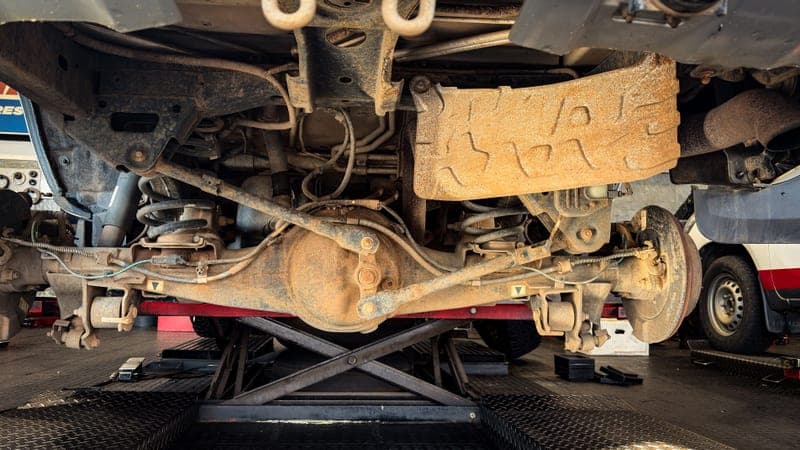
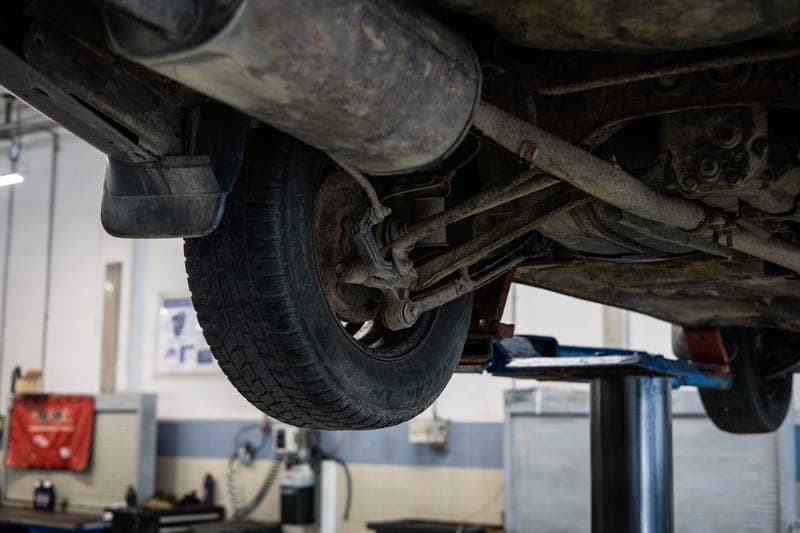
Photographs on this page are licensed stock images that show the category, not the exact model, and not anything we own. We have no test rig and claim none.

Close view of a car undercarriage at a service station

Direct answer: use ramps if the job does not require removing a wheel — oil changes, exhaust inspection, under-car looking. Use a jack and stands the moment a wheel has to come off, because on ramps the wheel is what the car is standing on. Both are safe when used correctly and inside their rating; neither is a substitute for the other.

The framing of "which is safer" is the wrong question, and it leads people to buy the thing they read was safer rather than the thing that does their job. What is genuinely unsafe is using either one outside its intended purpose.

The capability table

What ramps and jack stands can each actually do
JobCar rampsJack and stands
Oil changeYes — easiest optionYes, more steps
Exhaust or underbody inspectionYesYes
Transmission fluid check or changeYes, if level is not criticalYes, and the car can be level
Brake pads or rotorsNo — wheel must come offYes
Tire rotation or wheel swapNoYes
Suspension workNoYes
Lifting one corner onlyNoYes
Wheels-free work of any kindNoYes
What ramps and jack stands can each actually do

Where the real safety difference lies

Ramps have fewer steps and no load transfer. You drive up, the car is supported by its own wheels on a solid object, and nothing had to be lifted, balanced or handed over between two tools. That is a genuine reduction in the number of things that can go wrong — particularly for a first-timer.

Stands have a more demanding procedure: find the lift point, lift, place two stands at matched heights on structural metal, transfer the load, test. Each of those is a place to make a mistake. In exchange you get capability ramps simply do not have.

So the honest version is: ramps have a lower chance of user error, stands have a wider range of use, and the failure mode people actually die from is neither — it is going under a car supported only by a jack.

What beginners get wrong about this choice

  • Buying ramps and then planning a brake job. The most common version. Ramps cannot do wheel-off work, and there is no workaround.
  • Assuming ramps are the "safer beginner option" and therefore sufficient. They are simpler, and they cover fewer jobs. Simplicity is not capability.
  • Thinking stands are only for advanced work. Setting two stands is not difficult; it is just a procedure to learn once. How to use jack stands safely is the whole thing.
  • Using ramps on a slope because the driveway is what is available. A ramp on a slope is the worst configuration in this article.

Most people should own both

They cost little, they store easily, and they cover different jobs. If you can only buy one thing now, buy the jack and stands — they do everything the ramps do plus everything the ramps cannot. If your realistic plan is oil changes only, ramps are faster and you will use them more.

Best car ramps and best jack stands cover the two purchases, and the jack and stand combo page is the one-purchase version.

The picks in full

Every pick, in detail

A car at the entrance of a service station lit at night

1. The ramps to buy

RhinoGear RhinoRamps MAX (11912)

RhinoGear · score 8.9/10

16,000 lb GVW rating, a 17-degree incline and a non-skid base — the default answer for oil changes on anything that is not slammed.

16,000 lb GVW per pair with a non-skid base, which covers almost any household vehicle for the jobs ramps are suited to. The 17-degree incline is the only real constraint and it only bites on low cars.

Published specifications

Capacity
16,000 lb GVW per pair Retail listing
Incline
17 degrees Retail listing
Base
CoreTRAC non-skid Retail listing
Material
Reinforced resin Retail listing

What works

  • GVW rating covers almost any car, crossover or half-ton pickup
  • Non-skid base is the feature that stops the classic ramp-slides-away scare
  • Nesting shape stores against a garage wall

What you give up

  • A 17-degree incline is too steep for low front bumpers
  • Ramps only ever support the front axle — wheels stay on
  • Resin ramps need a flat, clean surface to be trustworthy

Our scoring

  • Fit & reach8.4
  • Safety margin8.8
  • Beginner ease9.4
  • Build quality8.4
  • Value9.2
Check price on Amazon

#ad No price shown — we have no live feed. How this is funded

Specifications published by RhinoGear — we earn nothing from that link.

Close view of a car suspension assembly during a repair in a garage

2. The stands to buy

BIG RED T43002A 3-Ton Double-Locking Jack Stands

Torin (BIG RED) · score 9.1/10

A ratchet bar plus a separate safety pin — two independent locks instead of one — at the height range a car actually needs, and Torin states they meet ASME safety standards.

Double locking — ratchet plus independent safety pin — 11-1/4 in to 16-3/4 in, ASME compliance stated by Torin. If the answer to your job is "stands", this is the cheapest good version of it.

Published specifications

Capacity
3 ton (6,000 lb) per pair Torin
Min height
11-1/4 in Torin
Max height
16-3/4 in Torin
Base footprint
7-11/16 in x 6-7/8 in Torin
Standards
Meets ASME safety standards Torin

What works

  • Two independent locking mechanisms, not one
  • 11-1/4 in to 16-3/4 in matches what a 3-ton floor jack can reach
  • The cheapest way to buy a genuinely double-locked stand

What you give up

  • Rated per pair, not per stand — read the rating before loading two corners
  • 11-1/4 in minimum is taller than some low cars want
  • Torin's own listing says this size is not intended for SUVs or trucks

Our scoring

  • Fit & reach8.6
  • Safety margin9.2
  • Beginner ease9.0
  • Build quality8.2
  • Value9.4
Check price on Amazon

#ad No price shown — we have no live feed. How this is funded

Specifications published by Torin (BIG RED) — we earn nothing from that link.

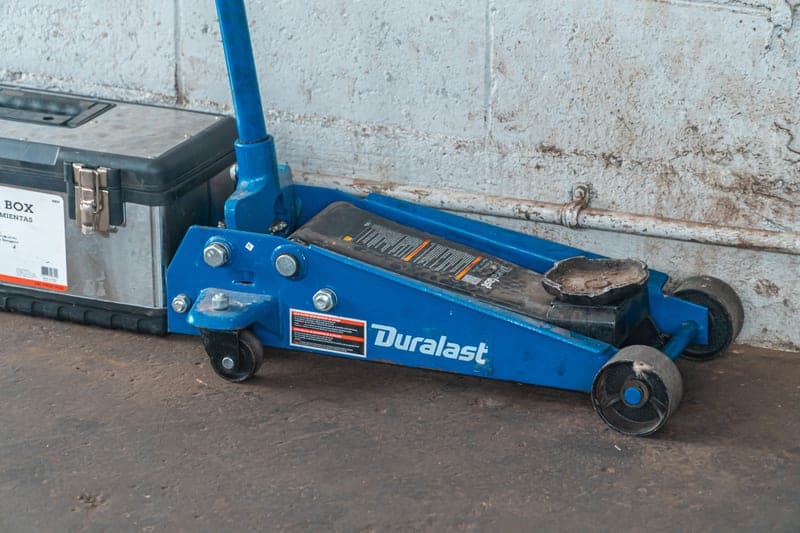
A blue hydraulic floor jack standing beside an open toolbox on a garage floor

3. The jack the stands need

Arcan 3-Ton Aluminum Floor Jack (A20018)

Arcan · score 9.0/10

A 3-ton aluminum service jack that slides under a stock sedan at 3.78 in and still reaches 18.9 in — the widest useful range a beginner can buy at one weight they can actually move.

Stands do not lift. 3.78 in to 18.9 in means this jack gets under a normal car and reaches well past an 11-1/4 in stand's lowest setting.

Published specifications

Min saddle height
3.78 in Arcan Professional Tools
Max lift height
18.9 in Arcan Professional Tools
Material
Aluminum Arcan Professional Tools

What works

  • Fits under most unmodified sedans without ramps or boards
  • 18.9 in of lift clears a wheel on a crossover, not just a car
  • Aluminum keeps it at a weight one person can lift into a trunk

What you give up

  • Costs noticeably more than a steel jack of the same capacity
  • Arcan does not publish an ASME PASE compliance statement for this model
  • 52.91 lb is light for the class, not light in absolute terms

Our scoring

  • Fit & reach9.4
  • Safety margin8.8
  • Beginner ease9.0
  • Build quality8.8
  • Value8.0
Check price on Amazon

#ad No price shown — we have no live feed. How this is funded

Specifications published by Arcan — we earn nothing from that link.

Method

How these picks were chosen

We did not test these tools. We do not run a laboratory, we have not loaded a jack to failure or checked a wrench on a calibration bench, and we will not tell you otherwise. What we did instead is read the published manufacturer specifications, check the figures that matter against the safety standard that applies to portable automotive lifting equipment, and work out which tool suits which job. Every number on this page links to where it came from, so you can check us.

The five things we score are the five that decide a first purchase: will it fit under and lift your car, how much safety margin the rating and the locking mechanism leave you, how hard it is to get right alone in a driveway, what the materials and published standards say about how long it lasts, and what the money buys against the rest of the field.

Read the full method — including how we pick a top pick, and why we publish no prices.

Questions

Frequently asked questions

+Are car ramps or jack stands safer?

Ramps involve fewer steps and no load transfer, so there is less opportunity for user error. Stands are equally safe when set correctly and cover far more jobs. The dangerous option is neither — it is relying on a jack alone.

+Can I use ramps instead of jack stands for brakes?

No. Brake work requires the wheel off, and on ramps the wheel is what the car rests on. There is no version of this that works.

+Which should I buy first?

A jack and stands, if you can only buy one setup — they cover every job ramps do plus wheel-off work. Ramps first only if your plan is genuinely limited to oil changes and inspections.

+Can I use ramps at the back of the car?

You can drive onto them in reverse, yes, and people do for exhaust work. The same rules apply: flat clean ground, straight approach, car secured, and chock the wheels that are still on the ground.

Sources

Where these figures come from

Read next

Related reading