The tool that holds the car. Everything you do under a vehicle depends on these, not on the jack.
We earn a commission when you buy through the Amazon links on this page, at no extra cost to you. It never changes which tool we put first, and we publish no price we have not verified. How this site is funded.
Start here
Our top pick in this category
1. Best first set of stands
BIG RED T43002A 3-Ton Double-Locking Jack Stands
Torin (BIG RED) · score 9.1/10
A ratchet bar plus a separate safety pin — two independent locks instead of one — at the height range a car actually needs, and Torin states they meet ASME safety standards.
Two independent locks — a sawtooth ratchet bar plus a separate safety pin — at the cheapest point in the market where you can get that. The 11-1/4 in to 16-3/4 in range pairs well with any 3-ton floor jack, and Torin states the design meets ASME safety standards. Read the rating carefully: it is quoted as 3 ton (6,000 lb) per pair, and Torin's own listing notes this size is not intended for SUVs and trucks.
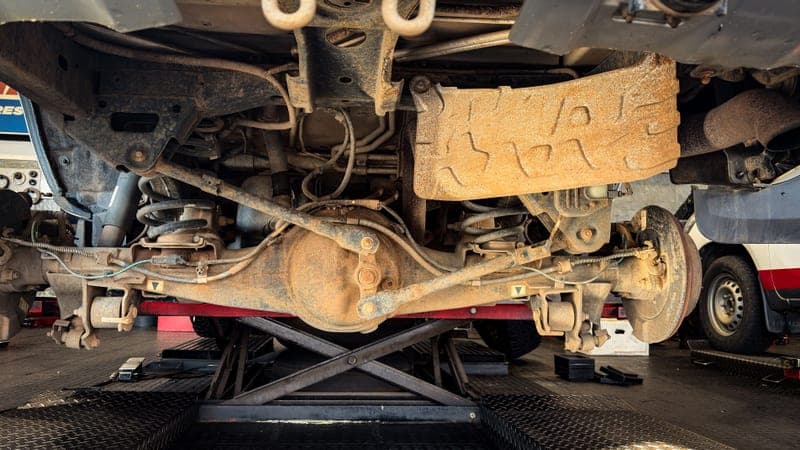
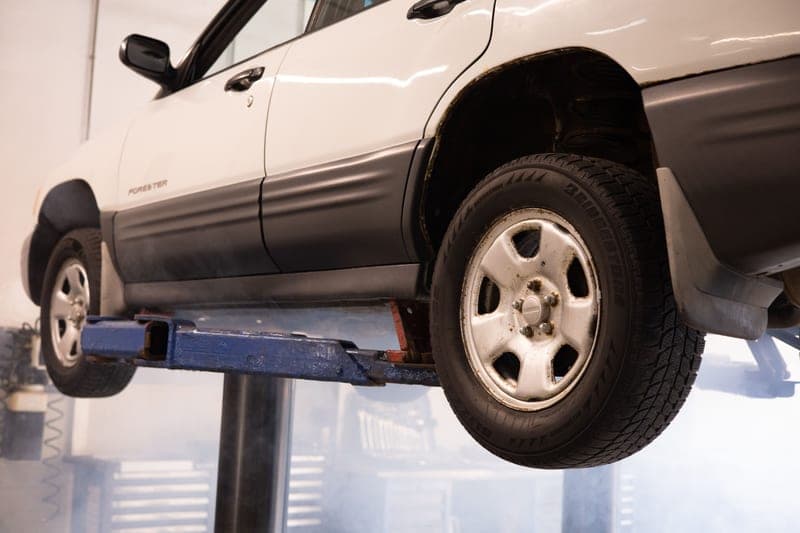
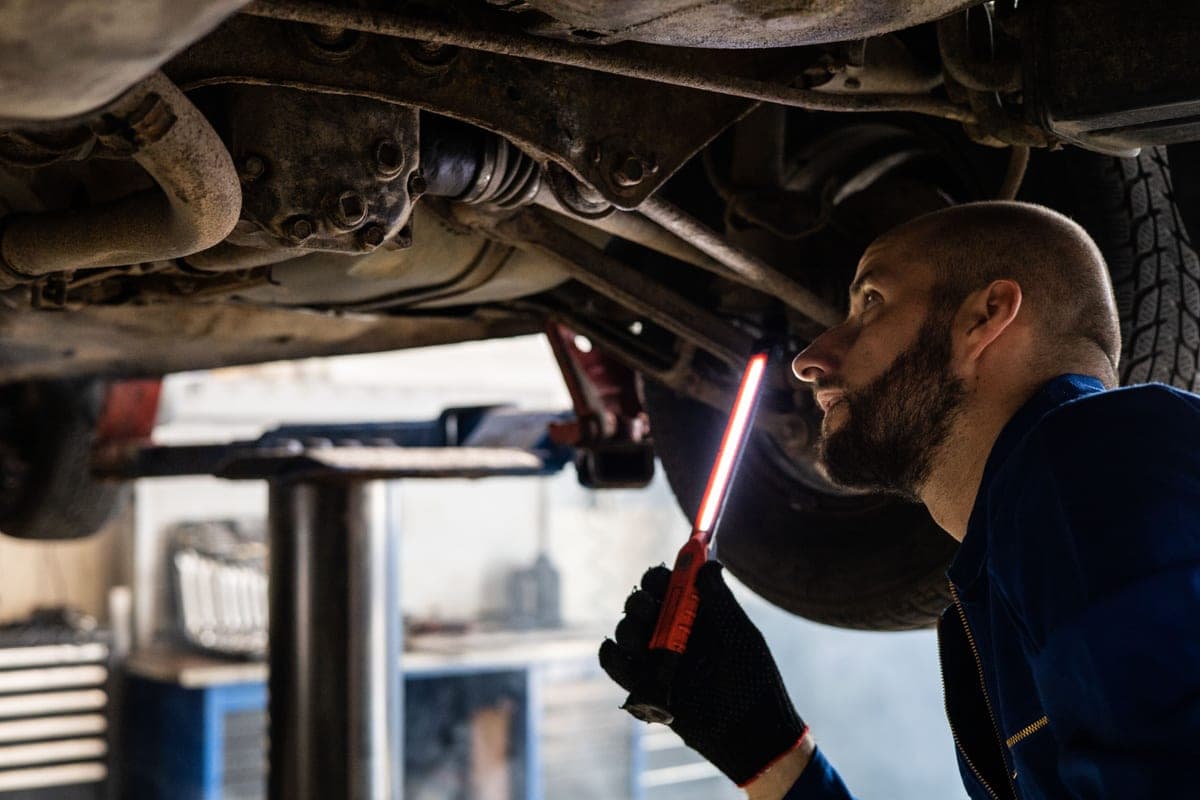
Photographs on this page are licensed stock images that show the category, not the exact model, and not anything we own. We have no test rig and claim none.
A jack stand is a fixed steel column with a saddle on top and a mechanical lock. It has no hydraulics, no seals and nothing to leak. That is the point: once the car's weight is on stands, it is held by metal resting on metal, and the only failure modes left are the ones you can see and check.
If you buy one lifting product on this site, buy these. A jack without stands means either working next to the car rather than under it, or taking a risk nobody should take with a ton of metal above them.
Read the rating carefully — per pair or per stand
This is the single most misread number in the category. Some stands are rated per pair and some per stand, and the marketing copy rarely makes it obvious. A pair of "3 ton" stands rated per pair gives you 3 tons total across two stands. A pair of 3-ton stands rated per stand gives you six. Both are plenty for a car. The problem only appears when someone assumes the per-pair number is per-stand and then loads a heavy truck onto them.
The safe habit: find the figure on the stand's own casting or label, not on the retail listing, and treat the lower interpretation as the truth if there is any ambiguity. More on this in jack stand weight ratings.
Ratchet, pin, or both
Jack stand locking mechanisms compared
Mechanism
How it holds
The trade-off
Ratchet bar
A sawtooth column drops into a pawl
Fast to set; a single mechanism holding the load
Pin and post
A steel pin passes through a drilled column
Very positive; slower, and only adjustable at fixed holes
Double locking
Ratchet bar plus an independent safety pin
Two mechanisms, either of which can hold the load. Slightly more cost
Jack stand locking mechanisms compared
For a first purchase, double locking is the easy call — it is barely more expensive and it removes the "what if the pawl skips" worry entirely. Pin vs ratchet stands goes through the mechanisms in detail, and safest jack stands ranks the field by what the manufacturers actually publish about testing.
Match the height range to your jack, not to your car
A stand that starts taller than your jack can lift is useless. Check the two ranges together: a jack reaching 18 in pairs happily with stands adjusting between 11 and 17 in, because you can lift past the stand's setting and lower onto it. The same stands paired with a 14 in jack leave you almost no working range at the top.
Truck and SUV owners need taller stands, not just stronger ones. A stand topping out at 16-3/4 in will not reach the frame rail on a pickup that sits 20 in off the ground.
Where they go is as important as which you buy
A perfectly rated stand under the wrong part of the car is still a hazard. Stands belong under structural metal: a subframe, a frame rail, a reinforced sill section, or a solid rear axle. They do not belong under a floor pan, a suspension arm that can move, a plastic under-tray or an exhaust. Where to put jack stands is the page to read before the first time, and how to use jack stands safely covers the sequence from lift to load transfer.
The standard, and what a compliance claim is worth
Automotive stands fall under ASME PASE, currently the 2024 edition. It is a real standard with real requirements, and a manufacturer stating compliance is a meaningful signal. It is not a guarantee, and it does not tell you which of two compliant stands is better made. Where a maker names a third-party testing facility, that is stronger — ESCO, for instance, states its stands are tested to ASME standards by an A2LA-certified facility, and that is a checkable claim rather than a bare assertion.
Two, for one end of the car, which covers a wheel change, a brake job or an oil change on most vehicles. Four if you need all four wheels off the ground at once. Buy in pairs — a single stand is only useful in combination with a fixed axle resting elsewhere.
+−Are 3-ton jack stands enough for an SUV?
Usually the capacity is, but the height often is not. Torin, for example, lists its 3-ton stands as not intended for SUVs and trucks and its 6-ton stands with a 15-3/8 in to 23-13/16 in range — that height range, not the extra tonnage, is the reason to step up.
+−Should I leave the jack in place after lowering onto stands?
Yes, with the load off it but still snug against the lift point. It costs nothing and it is one more thing in the way if a stand shifts.