

Most beginner tool lists are inventories: sockets, wrenches, screwdrivers, pliers. That is not wrong, and it is not useful, because it does not tell you what to buy on Saturday.
This list is an order. Each item unlocks a specific job, and nothing appears before the thing that makes it usable.
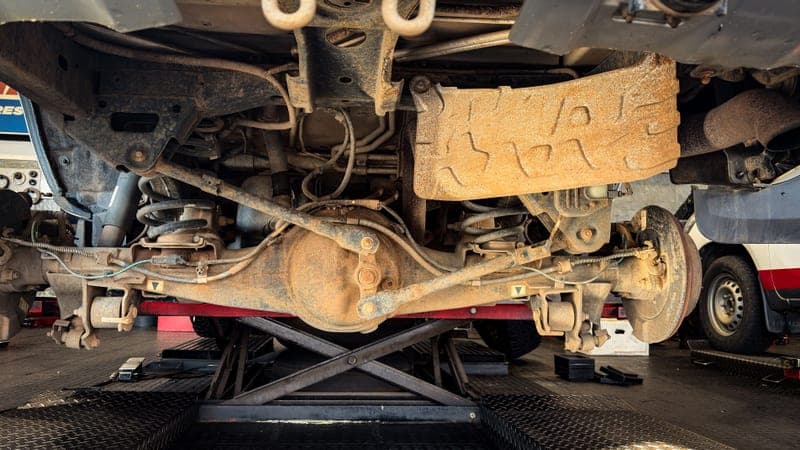
Stage 1: get the car safely off the ground
Everything else depends on this, and the order within it is deliberate.
1.A pair of jack stands
Before the jack. You already own a lifting device — the scissor jack in the trunk — and you own nothing that can support a car. Best jack stands.
2.Two wheel chocks
Cheapest item on the list. Wheel chocks guide.
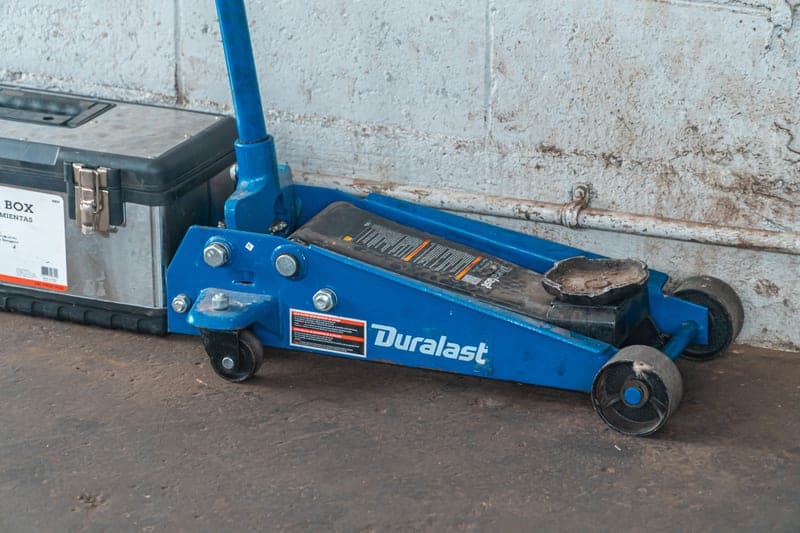
3.A floor jack matched to those stands
Its maximum lift needs to exceed the stands' lowest setting with margin. Best floor jacks, and the combo page if you want to buy both at once.
4.A slotted pinch weld pad, if your car has pinch welds
The damage happens on the first lift, so buy it before then. Pinch weld guide.
What this unlocks: inspection, oil changes, and the ability to look at your own brakes before a shop tells you about them.
Stage 2: take a wheel off and put it back
- A 1/2 in drive breaker bar, 18-24 in. Cheap, simple, and the thing you crack lug nuts with — never your torque wrench.
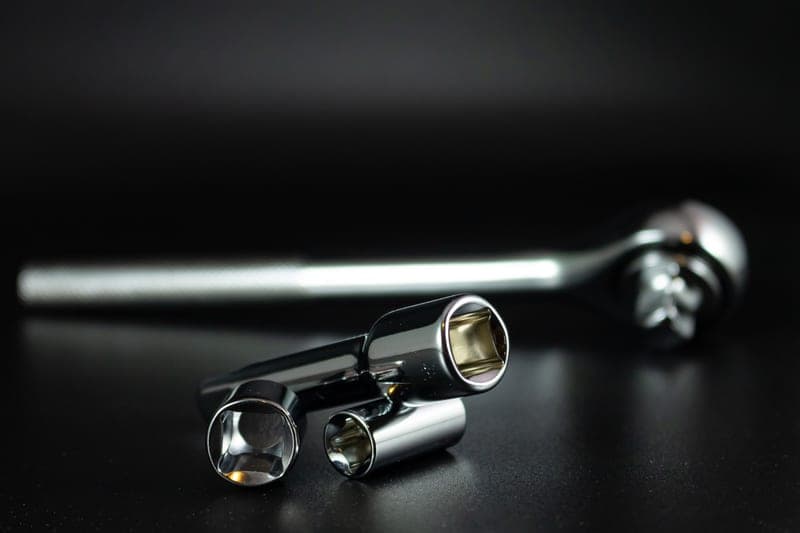
- A 1/2 in socket set with the right wheel size, and a thin-wall or protective socket if you have alloy wheels.
- A 1/2 in torque wrench, 40-200 ft-lb. Best torque wrench for lug nuts.
What this unlocks: wheel and tire changes, tire rotation, and access to everything behind a wheel. How to change a tire.
Stage 3: the first fluid job
- A low-profile oil drain pan sized to your engine's capacity
- The right oil filter wrench for your filter type — cap-style for a cartridge, band or claw for a spin-on
- A socket or square drive for the drain plug, and a new crush washer
- A funnel, and rags
What this unlocks: oil changes, which is the job that saves the most money over time. First oil change tool list, and the ramps that make it easier.
Stage 4: diagnosis
A cheap OBD2 scanner, bought either speculatively or the first time a warning light appears. This is the one item on the list that pays for itself in information rather than labor — best OBD2 scanner for beginners.
If you know you are heading for rear brakes on a car with an electronic parking brake, skip the cheap reader and buy bidirectional once — bidirectional vs basic.
Stage 5: brakes
The first genuinely consequential job, and the one that justifies buying tools specifically for it: the brake job tool list covers what it needs, including the parts people forget.
What not to buy yet
| Tool | Why it can wait | What to do instead |
|---|---|---|
| Impact wrench | A breaker bar loosens everything it does, with more control | Buy the breaker bar |
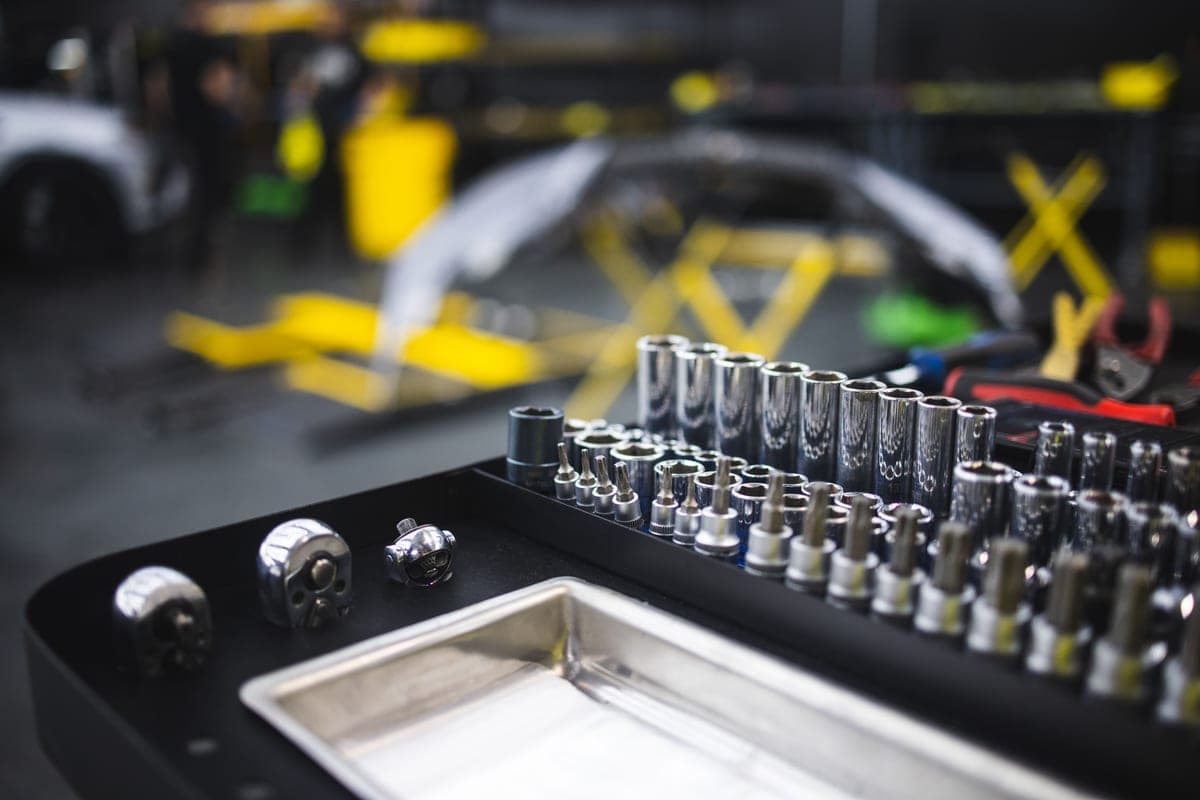
| Enormous socket set | You will use six sizes repeatedly and the rest never | Buy a mid-size set and add sizes as needed |
| Creeper | Pleasant, not enabling | A folded blanket, until you find you want one |
| Air compressor | Nothing on this list needs air | Later, if you go down the air-tool route |
| Spring compressor | The job it does is one to learn with help | Leave suspension springs for now |
| Torque sticks | They approximate; they do not measure | Use the torque wrench |
If the budget is one purchase
Buy the stands. It is a genuinely unglamorous answer and it is the right one: you can lift with what you have, you cannot support with it, and the gap between those two facts is where people get hurt.