

Skip to content
JACK & TORQUE

Task tool list

First Oil Change Tool List

Eight items, one of which is a washer worth about a dollar and causes most of the leaks.

By Ryder M. · Published September 26, 2026 · Last reviewed September 26, 2026

We earn a commission when you buy through the Amazon links on this page, at no extra cost to you. It never changes which tool we put first, and we publish no price we have not verified. How this site is funded.

First Oil Change Tool List — ranked picks with scores and a price check for each
#PickCapacityScorePrice
1
A car at the entrance of a service station lit at night
RhinoGear RhinoRamps MAX (11912)How to get the car up
16,000 lb GVW per pair8.9
2
A blue hydraulic floor jack standing beside an open toolbox on a garage floor
Arcan 3-Ton Aluminum Floor Jack (A20018)If you would rather use a jack
3 ton9.0
3
Close view of a car suspension assembly during a repair in a garage
BIG RED T43002A 3-Ton Double-Locking Jack StandsThe stands that go with it
3 ton (6,000 lb) per pair9.1
4
A car tire resting on a cobblestone road
Camco 44472 Wheel Chock with RopeEither way
8-1/8 in x 4-5/8 in x 5-3/8 in9.0
5
Hands organizing hand tools inside a blue toolbox
TEKTON 3/8 in Drive Micrometer Torque Wrench (TRQ51402)For the drain plug
3/8 in8.5

Photographs on this page are licensed stock images that show the category, not the exact model, and not anything we own. We have no test rig and claim none.

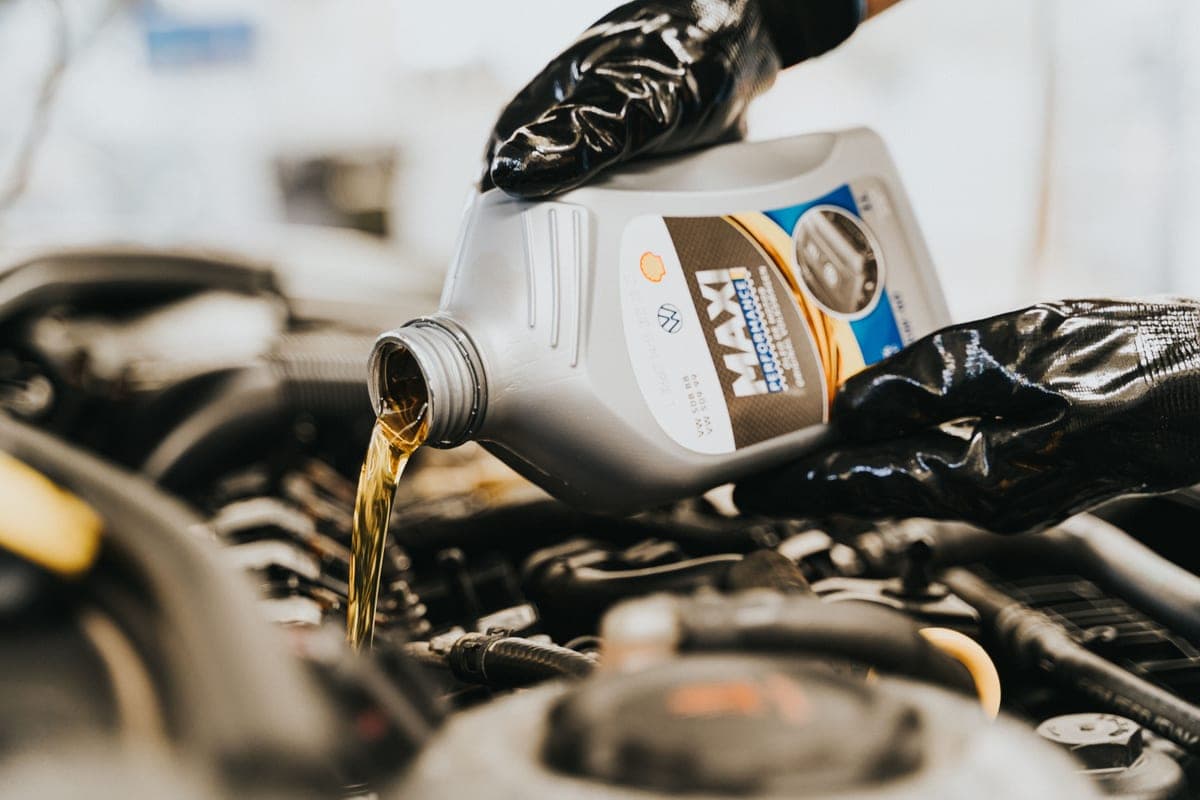
A mechanic pouring engine oil into a car engine

An oil change is the right first job. It is forgiving, it is on a schedule so you will repeat it, and it saves real money. It also has one classic failure mode — a weeping drain plug — which is almost always caused by re-using a one-dollar washer.

The complete list

Everything an oil change needs
ItemWhyThe mistake people make
Ramps, or a jack and standsAccess underneathUsing a jack alone and going under it
Two wheel chocksStop the car rollingRelying on the parking brake
Low-profile drain panCatch the oilA pan too tall to fit under the sump
Socket or square drive for the drain plugRemove the plugUsing an adjustable wrench and rounding it
New crush washerSeal the plugRe-using the old one — the main cause of leaks
Correct oil filter wrenchRemove the filterBuying the wrong type for your filter
Correct oil and filterThe actual consumablesWrong grade, or guessing capacity
Funnel and ragsFill without spillingSkipping the funnel
Torque wrench (3/8 in)Tighten the plug to specOver-tightening into an aluminum sump
Everything an oil change needs

The filter wrench is where people go wrong

There are two completely different filter types and they need different tools. Look at your engine before buying anything:

Cartridge filter

A plastic or metal cap on top of the engine, with a replaceable paper element inside. You need a cap-style socket sized to that specific cap, driven by a ratchet. Advantages: it is on top of the engine, so you need much less clearance underneath, and the element is often cheaper.

Spin-on filter

A metal canister screwed to the engine, usually underneath. You need a band, claw or cap wrench sized to the canister diameter. This is the type that needs real clearance to reach, and the type that dumps oil down your arm if you loosen it in the wrong order.

The crush washer, specifically

Most drain plugs seal with a soft metal washer designed to deform once and conform to both surfaces. Re-using it means the crushed washer no longer deforms, so people compensate by over-tightening — which in an aluminum sump can strip the thread and turn a routine service into a repair.

Buy a new washer with the filter. They cost almost nothing and they are the single highest-value item on this list relative to price.

Ramps or a jack?

For this job specifically, ramps are the better tool: drive up, done, no load transfer, nothing hydraulic holding the car. The exceptions are a car too low to climb the ramp, and a situation where you want the car dead level for draining.

Best ramps for an oil change covers how much lift you actually need, which depends on your filter type. And note: a car on ramps is nose-up, so do not set the final oil level up there — fill short, come down, check on level ground.

The four numbers to look up first

The short version

  • Oil grade and specification (not just the viscosity — the manufacturer spec matters)
  • Oil capacity with a filter change
  • Drain plug torque figure
  • Filter part number, and cap socket size if it is a cartridge type

All four come from your manual or the manufacturer's service information. We do not publish them, because a wrong capacity or torque figure does real damage.

Disposal, which is not optional

Used oil is a regulated waste and pouring it away is both illegal and genuinely harmful. Most auto parts retailers accept used oil free, and many accept used filters. Take the drained oil in a sealed container — the empty bottles from the new oil work perfectly — and do it the same day, because a pan of oil on a garage floor gets knocked over.

The picks in full

Every pick, in detail

A car at the entrance of a service station lit at night

1. How to get the car up

RhinoGear RhinoRamps MAX (11912)

RhinoGear · score 8.9/10

16,000 lb GVW rating, a 17-degree incline and a non-skid base — the default answer for oil changes on anything that is not slammed.

For an oil change, ramps beat a jack: no load transfer, no hydraulics, and faster. 16,000 lb GVW per pair with a non-skid base. 17-degree incline, so check a low car clears it.

Published specifications

Capacity
16,000 lb GVW per pair Retail listing
Incline
17 degrees Retail listing
Base
CoreTRAC non-skid Retail listing
Material
Reinforced resin Retail listing

What works

  • GVW rating covers almost any car, crossover or half-ton pickup
  • Non-skid base is the feature that stops the classic ramp-slides-away scare
  • Nesting shape stores against a garage wall

What you give up

  • A 17-degree incline is too steep for low front bumpers
  • Ramps only ever support the front axle — wheels stay on
  • Resin ramps need a flat, clean surface to be trustworthy

Our scoring

  • Fit & reach8.4
  • Safety margin8.8
  • Beginner ease9.4
  • Build quality8.4
  • Value9.2
Check price on Amazon

#ad No price shown — we have no live feed. How this is funded

Specifications published by RhinoGear — we earn nothing from that link.

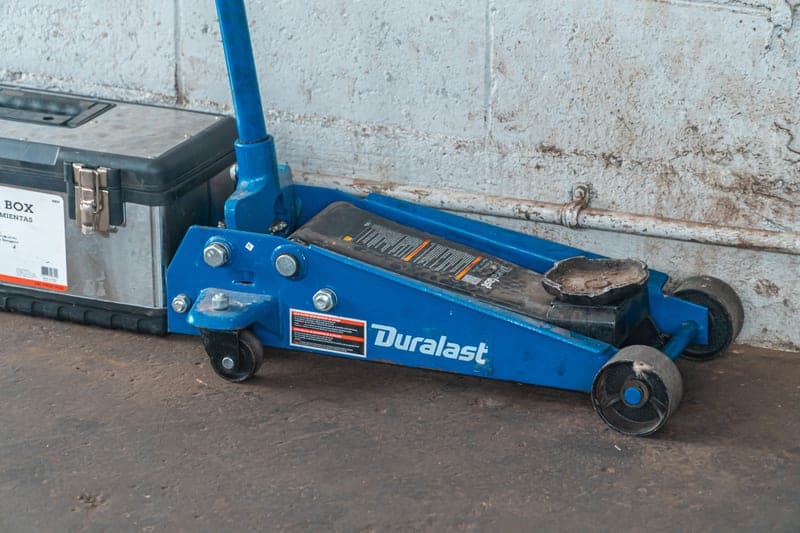
A blue hydraulic floor jack standing beside an open toolbox on a garage floor

2. If you would rather use a jack

Arcan 3-Ton Aluminum Floor Jack (A20018)

Arcan · score 9.0/10

A 3-ton aluminum service jack that slides under a stock sedan at 3.78 in and still reaches 18.9 in — the widest useful range a beginner can buy at one weight they can actually move.

3.78 in to 18.9 in. Use it with stands — an oil change means being under the car, so the weight goes on stands before you are.

Published specifications

Min saddle height
3.78 in Arcan Professional Tools
Max lift height
18.9 in Arcan Professional Tools
Material
Aluminum Arcan Professional Tools

What works

  • Fits under most unmodified sedans without ramps or boards
  • 18.9 in of lift clears a wheel on a crossover, not just a car
  • Aluminum keeps it at a weight one person can lift into a trunk

What you give up

  • Costs noticeably more than a steel jack of the same capacity
  • Arcan does not publish an ASME PASE compliance statement for this model
  • 52.91 lb is light for the class, not light in absolute terms

Our scoring

  • Fit & reach9.4
  • Safety margin8.8
  • Beginner ease9.0
  • Build quality8.8
  • Value8.0
Check price on Amazon

#ad No price shown — we have no live feed. How this is funded

Specifications published by Arcan — we earn nothing from that link.

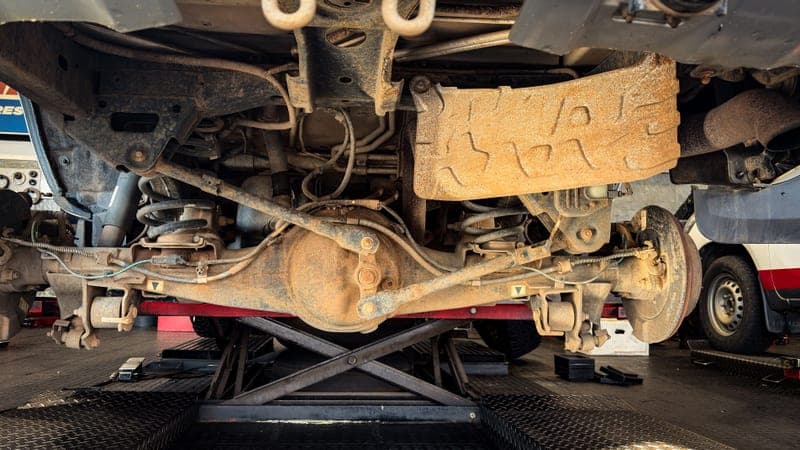
Close view of a car suspension assembly during a repair in a garage

3. The stands that go with it

BIG RED T43002A 3-Ton Double-Locking Jack Stands

Torin (BIG RED) · score 9.1/10

A ratchet bar plus a separate safety pin — two independent locks instead of one — at the height range a car actually needs, and Torin states they meet ASME safety standards.

Double locking, 11-1/4 in to 16-3/4 in, ASME compliance stated by Torin. Non-negotiable if you lift rather than use ramps.

Published specifications

Capacity
3 ton (6,000 lb) per pair Torin
Min height
11-1/4 in Torin
Max height
16-3/4 in Torin
Base footprint
7-11/16 in x 6-7/8 in Torin
Standards
Meets ASME safety standards Torin

What works

  • Two independent locking mechanisms, not one
  • 11-1/4 in to 16-3/4 in matches what a 3-ton floor jack can reach
  • The cheapest way to buy a genuinely double-locked stand

What you give up

  • Rated per pair, not per stand — read the rating before loading two corners
  • 11-1/4 in minimum is taller than some low cars want
  • Torin's own listing says this size is not intended for SUVs or trucks

Our scoring

  • Fit & reach8.6
  • Safety margin9.2
  • Beginner ease9.0
  • Build quality8.2
  • Value9.4
Check price on Amazon

#ad No price shown — we have no live feed. How this is funded

Specifications published by Torin (BIG RED) — we earn nothing from that link.

A car tire resting on a cobblestone road

4. Either way

Camco 44472 Wheel Chock with Rope

Camco · score 9.0/10

A UV-stable plastic chock with a pull rope, sized for tires up to 26 in — the cheapest part of a safe lift and the one people skip.

On ramps the rear wheels stop the car rolling backward; on stands the ground wheels do. Chock them. Two, for tires up to 26 in.

Published specifications

Dimensions
8-1/8 in x 4-5/8 in x 5-3/8 in Camco
Fits tires
Up to 26 in Camco
Rope
23 in Camco
Material
Hard plastic with UV inhibitors Camco

What works

  • The rope means you can pull it out without reaching under the car
  • Costs less than a single lug nut and stops the car rolling
  • UV inhibitors mean it survives being left outside

What you give up

  • Camco states it is not for commercial trucks or trailers
  • Plastic can slide on a dusty or oily floor
  • Sold singly — buy two

Our scoring

  • Fit & reach8.8
  • Safety margin8.8
  • Beginner ease9.6
  • Build quality8.2
  • Value9.6
Check price on Amazon

#ad No price shown — we have no live feed. How this is funded

Specifications published by Camco — we earn nothing from that link.

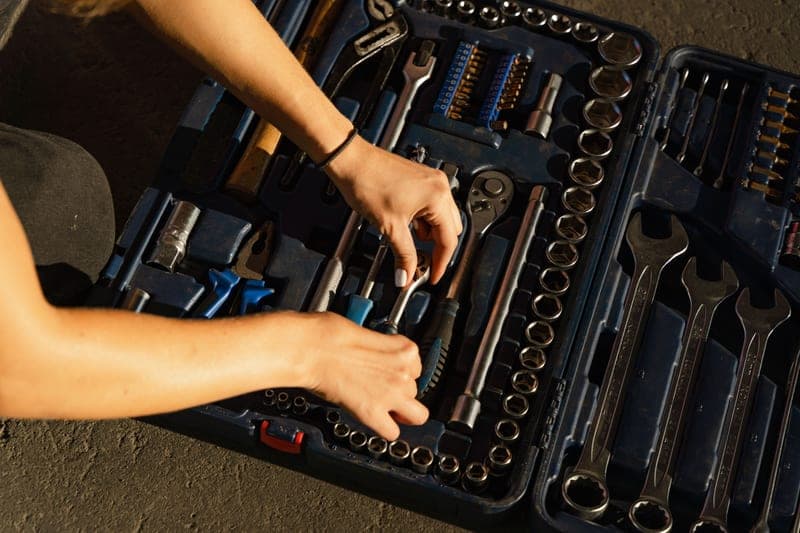
Hands organizing hand tools inside a blue toolbox

5. For the drain plug

TEKTON 3/8 in Drive Micrometer Torque Wrench (TRQ51402)

TEKTON · score 8.5/10

10-100 ft-lb on a 3/8 in drive — the second wrench you buy, for caliper bolts and drain plugs a 1/2 in wrench cannot measure.

Drain plugs are frequently specified in the 15-30 ft-lb range, which a 40 ft-lb-floor wrench cannot measure. This 3/8 in drive wrench covers 10-100 ft-lb.

Published specifications

Drive
3/8 in TEKTON
Range
10 – 100 ft-lb TEKTON
Head
Dual direction TEKTON

What works

  • Covers the 15-45 ft-lb band where most brake hardware lives
  • Smaller head fits between a caliper and a wheel hub
  • Reaches 100 ft-lb, so it can do lug nuts on a small car in a pinch

What you give up

  • No published accuracy figure
  • Not enough range for truck lug nuts
  • A second purchase, not a first one

Our scoring

  • Fit & reach8.4
  • Safety margin8.2
  • Beginner ease8.8
  • Build quality8.4
  • Value8.8
Check price on Amazon

#ad No price shown — we have no live feed. How this is funded

Specifications published by TEKTON — we earn nothing from that link.

Method

How these picks were chosen

We did not test these tools. We do not run a laboratory, we have not loaded a jack to failure or checked a wrench on a calibration bench, and we will not tell you otherwise. What we did instead is read the published manufacturer specifications, check the figures that matter against the safety standard that applies to portable automotive lifting equipment, and work out which tool suits which job. Every number on this page links to where it came from, so you can check us.

The five things we score are the five that decide a first purchase: will it fit under and lift your car, how much safety margin the rating and the locking mechanism leave you, how hard it is to get right alone in a driveway, what the materials and published standards say about how long it lasts, and what the money buys against the rest of the field.

Read the full method — including how we pick a top pick, and why we publish no prices.

Questions

Frequently asked questions

+What tools do I need for an oil change at home?

Ramps or a jack and stands, chocks, a low-profile drain pan, the right socket for the drain plug, a new crush washer, the correct filter wrench for your filter type, the specified oil and filter, a funnel and rags, plus a 3/8 in torque wrench for the plug.

+Do I need to replace the crush washer every time?

Yes, where your vehicle uses one. It is designed to deform once. Re-using it causes weeping, which leads people to over-tighten and strip an aluminum sump thread.

+Are ramps or a jack better for an oil change?

Ramps, for most people — no load transfer and nothing hydraulic holding the car. Use a jack and stands if your car cannot climb the ramps or you need the car level.

+What kind of oil filter wrench do I need?

It depends on your filter. A cartridge filter needs a cap-style socket sized to its housing; a spin-on canister needs a band, claw or cap wrench sized to its diameter. Look at your engine before buying.

+What do I do with the old oil?

Take it to a retailer or facility that accepts used oil — most auto parts stores do, free, and many take filters too. Never pour it away; it is a regulated waste.

Sources

Where these figures come from

Read next

Related reading