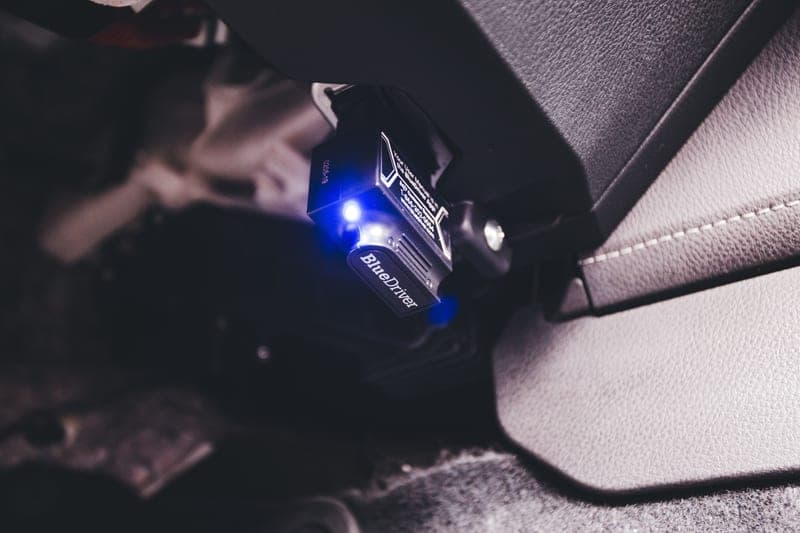
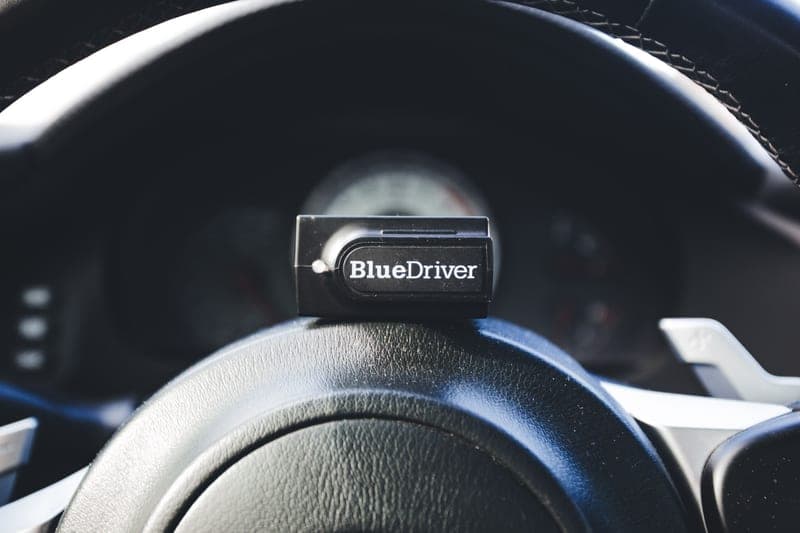
A Bluetooth OBD2 scanner is a small adapter that plugs into the diagnostic port and talks to an app on your phone. It gets you a bigger screen, more processing power and a better interface than any handheld at the same price, because your phone is doing the expensive part.
The cost is a dependency. A dongle is useless without a charged phone, a working app and, on some tools, connectivity.
Protocols are what actually decide coverage
This is the part product pages bury. "OBD2 compliant" means the adapter speaks the legislated protocols, which every 1996-and-newer US vehicle supports for engine and emissions data. Manufacturer-specific data — ABS, airbag, TPMS, transmission temperature — often lives on separate internal networks, and reaching those requires the adapter to support them.
| Protocol group | What it carries | Which pick supports it |
|---|---|---|
| Legislated OBD-II | Engine and emissions codes, live data | All of them |
| Ford MS-CAN | Many Ford body and chassis modules | OBDLink MX+ |
| GM SW-CAN | Many GM body and chassis modules | OBDLink MX+ |
| Manufacturer enhanced (per-make) | ABS, SRS, transmission on supported makes | BlueDriver Pro, TOPDON TopScan |
If you have a Ford or a GM vehicle and want to see beyond the engine, the protocol list is the spec to read, not the feature bullet list.
The app is half the product
With a first-party pair like BlueDriver, the app and the adapter are designed together and the capability is what the maker states. With an open adapter like the MX+, capability depends on which of dozens of third-party apps you pair it with — which is simultaneously its greatest strength and the reason two people can have very different experiences of the same hardware.
Decide which you want. If you enjoy choosing software, the open adapter is more tool for the money. If you want one thing that works, buy the pair.
Leave it plugged in, or not?
A dongle left in the port draws a small standing current. On a car driven daily this is generally immaterial; on a car that sits for weeks it can contribute to a flat battery, and it is an easy thing to forget about. Our recommendation is to unplug it when you are finished, which also keeps it out of sight in a parked car.
Who should buy a dongle rather than a handheld
The short version
- You want enhanced ABS and airbag codes at the lowest cost
- You want to log and graph live data on a decent screen
- You already keep your phone charged and with you
- You do NOT want a dongle if you want a tool that works with a dead phone
- You do NOT want a dongle if navigating app settings is not your idea of a good time
Bluetooth vs wired works through the trade-off in more detail.