

Skip to content
JACK & TORQUE

Comparison

OBD2 Scanner vs Code Reader

A code reader reads engine codes. A scanner reaches the rest of the car. The industry uses both words for both things.

By Ryder M. · Published September 26, 2026 · Last reviewed September 26, 2026

We earn a commission when you buy through the Amazon links on this page, at no extra cost to you. It never changes which tool we put first, and we publish no price we have not verified. How this site is funded.

OBD2 Scanner vs Code Reader — ranked picks with scores and a price check for each
#PickKey capabilityScorePrice
1
An auto mechanic inspecting a car engine in a garage
Autel AutoLink AL319A code reader, properly
TFT color, 220 x 1768.5
2
A mechanic using a digital tablet for vehicle diagnostics in a garage
Autel MaxiCOM MK808SA scanner, properly
7 in capacitive touchscreen, 1024 x 6009.0
3
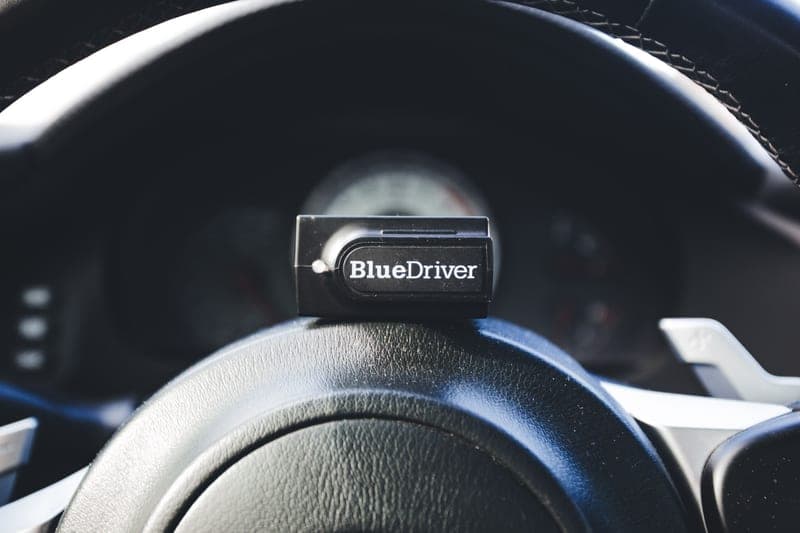
A Bluetooth code reader resting on a car steering wheel
BlueDriver ProThe middle ground
Bluetooth to iOS and Android8.8

Photographs on this page are licensed stock images that show the category, not the exact model, and not anything we own. We have no test rig and claim none.

An auto mechanic inspecting a car engine in a garage

Direct answer: a code reader reads and clears fault codes from the engine and emissions systems. A scan tool does that and reaches other modules — ABS, airbag, transmission — and at the top end can command components rather than just read them. The words are used loosely by manufacturers and retailers, so ignore the name on the box and read the capability list.

The capability matrix

What separates a code reader from a scan tool
CapabilityCode readerEnhanced scannerBidirectional scan tool
Engine and emissions codesYesYesYes
Code definitions on screenUsuallyYesYes
Freeze frame dataYesYesYes
I/M emissions readinessYesYesYes
Live engine dataBasicYesYes
ABS codesNoYesYes
Airbag (SRS) codesNoYesYes
Transmission codes and temperatureNoOftenYes
Service resets (oil, EPB, SAS)NoSometimesYes
Active tests / actuator controlNoNoYes
What separates a code reader from a scan tool

Why the terminology is a mess

There is no regulated definition of either term. "Scanner" sells better, so inexpensive code readers are frequently marketed as scanners. Meanwhile genuinely capable tools are sometimes called code readers because that is what customers search for. BlueDriver's own material describes its product as both a scan tool and a code reader.

The result: you cannot infer capability from the name, and there is no point arguing about it. Read these three lines on the specification instead:

  1. Which systems can it read? Engine only, or ABS and airbag too?
  2. Can it perform active tests or service resets?
  3. Which vehicles, and which regions, does the maker list?

Which do you need

A code reader is enough if

  • You want to know why the check-engine light is on
  • You are checking emissions readiness before a test
  • You want to record codes before a shop visit so you can ask informed questions

You need a scanner if

  • An ABS or airbag warning light is on — a reader cannot see those systems at all
  • You are doing rear brakes on a car with an electronic parking brake
  • You want to watch transmission fluid temperature for a fluid change
  • You want to test a component by commanding it rather than inferring from data

One more distinction worth knowing

"Enhanced" and "bi-directional" are also different things, and they are frequently conflated. Enhanced means the tool can read manufacturer-specific modules. Bi-directional means it can command them. BlueDriver Pro is enhanced and not bi-directional; the Autel MK808S and Innova 5610 are both. Bidirectional vs basic covers that boundary.

The picks in full

Every pick, in detail

An auto mechanic inspecting a car engine in a garage

1. A code reader, properly

Autel AutoLink AL319

Autel · score 8.5/10

A one-button emissions-readiness check, live PCM data and freeze frame on a color screen — everything a first check-engine light actually requires.

Generic, manufacturer-specific and pending codes, freeze frame, live PCM data, VIN/CIN/CVN and a one-click readiness key. Engine and emissions only, no bi-directional. This is what a code reader is and it does it completely.

Published specifications

Display
TFT color, 220 x 176 Autel
Codes
Generic, manufacturer-specific and pending Autel
Live data
Live PCM datastream Autel
Freeze frame
Yes Autel
Vehicle info
VIN, CIN, CVN Autel
Coverage
OBD2-compliant vehicles, 1996 and newer Autel

What works

  • One-click I/M readiness key answers the pre-smog-test question instantly
  • No phone, no app, no pairing — plug in and read
  • Color-coded pass/fail display plus an audible tone

What you give up

  • Engine and emissions only — it will not read ABS or airbag codes
  • No bi-directional control
  • 220 x 176 screen shows very little live data at once

Our scoring

  • Fit & reach7.4
  • Safety margin8.0
  • Beginner ease9.6
  • Build quality8.2
  • Value9.4
Check price on Amazon

#ad No price shown — we have no live feed. How this is funded

Specifications published by Autel — we earn nothing from that link.

A mechanic using a digital tablet for vehicle diagnostics in a garage

2. A scanner, properly

Autel MaxiCOM MK808S

Autel · score 9.0/10

A 7 in Android 11 tablet that reads and clears codes on all available systems and performs bi-directional active tests — the point where a scanner stops being a code reader.

Reads and clears codes on all available systems, performs bi-directional active tests, and carries service functions including oil reset, EPB, SAS, DPF, injector and battery registration on a 7 in Android 11 tablet. The difference is reach and control, not code accuracy.

Published specifications

Display
7 in capacitive touchscreen, 1024 x 600 Autel
Processor
Cortex-A55 quad-core 1.8 GHz Autel
OS
Android 11 Autel
Battery
3.7 V / 5000 mAh Autel
Bi-directional
Yes — active tests Autel
Service functions
Oil reset, EPB, SAS, DPF, injector, battery registration Autel

What works

  • Reads and clears codes across all available modules, not just the engine
  • Bi-directional active tests let you command a component instead of guessing
  • Wi-Fi updates and a real battery — it works away from a laptop

What you give up

  • Far more tool than a first-time owner needs to read a check-engine light
  • Function coverage varies by make and model year
  • A tablet is one more device to keep charged

Our scoring

  • Fit & reach9.4
  • Safety margin8.6
  • Beginner ease8.0
  • Build quality9.0
  • Value8.2
Check price on Amazon

#ad No price shown — we have no live feed. How this is funded

Specifications published by Autel — we earn nothing from that link.

A Bluetooth code reader resting on a car steering wheel

3. The middle ground

BlueDriver Pro

BlueDriver · score 8.8/10

A Bluetooth dongle that reads enhanced ABS, airbag and transmission codes with no subscription, and hands you a repair report instead of a raw code.

Enhanced codes covering ABS, airbag and transmission across 1996-and-newer North American vehicles, with repair reports and no subscription — but no bi-directional actuator control. Marketed as a scan tool and a code reader in different places, which is exactly the confusion this page is about.

Published specifications

Connection
Bluetooth to iOS and Android BlueDriver
Coverage
1996 and newer cars, SUVs and light trucks sold in North America BlueDriver
Enhanced systems
ABS, airbag (SRS), transmission BlueDriver
Subscription
None BlueDriver
Reports
Repair Reports built from verified fixes BlueDriver

What works

  • Reads the enhanced ABS and airbag codes most cheap readers cannot
  • Repair reports translate a code into a likely cause
  • No subscription — the price is the price

What you give up

  • Useless if your phone is dead
  • Enhanced coverage depends on the make
  • No bi-directional actuator control

Our scoring

  • Fit & reach8.8
  • Safety margin8.4
  • Beginner ease9.4
  • Build quality8.6
  • Value8.8
Check price on Amazon

#ad No price shown — we have no live feed. How this is funded

Specifications published by BlueDriver — we earn nothing from that link.

Method

How these picks were chosen

We did not test these tools. We do not run a laboratory, we have not loaded a jack to failure or checked a wrench on a calibration bench, and we will not tell you otherwise. What we did instead is read the published manufacturer specifications, check the figures that matter against the safety standard that applies to portable automotive lifting equipment, and work out which tool suits which job. Every number on this page links to where it came from, so you can check us.

The five things we score are the five that decide a first purchase: will it fit under and lift your car, how much safety margin the rating and the locking mechanism leave you, how hard it is to get right alone in a driveway, what the materials and published standards say about how long it lasts, and what the money buys against the rest of the field.

Read the full method — including how we pick a top pick, and why we publish no prices.

Questions

Frequently asked questions

+What is the difference between an OBD2 scanner and a code reader?

A code reader reads and clears engine and emissions codes. A scanner also reaches other modules such as ABS, airbag and transmission, and at the top end can command components. The terms are used interchangeably in marketing, so read the capability list rather than the name.

+Can a code reader turn off an airbag light?

No. A basic code reader cannot see the airbag (SRS) module at all, so it can neither read the fault nor clear it. That needs an enhanced or all-system tool.

+Is a scanner worth it over a reader for a home mechanic?

If you do brake work on a modern car, yes — electronic parking brakes and ABS service both need capability a reader does not have. If you only want to diagnose warning lights, a reader is enough.

+Does an expensive scanner read codes more accurately?

No. Reading a stored code is a standardized query and the answer is the same. What money buys is reach into more modules, faster live data and the ability to command components.

Sources

Where these figures come from

Read next

Related reading