Skip to content
JACK & TORQUE

Surface guide

Jacking Up a Car on Gravel

Gravel is the hardest surface to do this on safely. Load spreading helps; it does not make gravel into concrete.

By Ryder M. · Published September 26, 2026 · Last reviewed September 26, 2026

We earn a commission when you buy through the Amazon links on this page, at no extra cost to you. It never changes which tool we put first, and we publish no price we have not verified. How this site is funded.

Jacking Up a Car on Gravel — ranked picks with scores and a price check for each
#PickCapacityScorePrice
1
A car raised on a shop lift with its undercarriage visible
Hein-Werner HW93503 3-Ton Jack StandsBest base for soft ground
3 ton8.7
2
A mechanic working under a classic car on pavement in daylight
Powerbuilt 620471 Unijack (3-Ton Jack + Stand in One)Best for a wide flat footprint
3 ton (6,000 lb)8.2
3
Truck tires in a garage awaiting maintenance
BIG RED T46002A 6-Ton Double-Locking Jack StandsWidest pyramid base
6 ton (12,000 lb)8.8

Photographs on this page are licensed stock images that show the category, not the exact model, and not anything we own. We have no test rig and claim none.

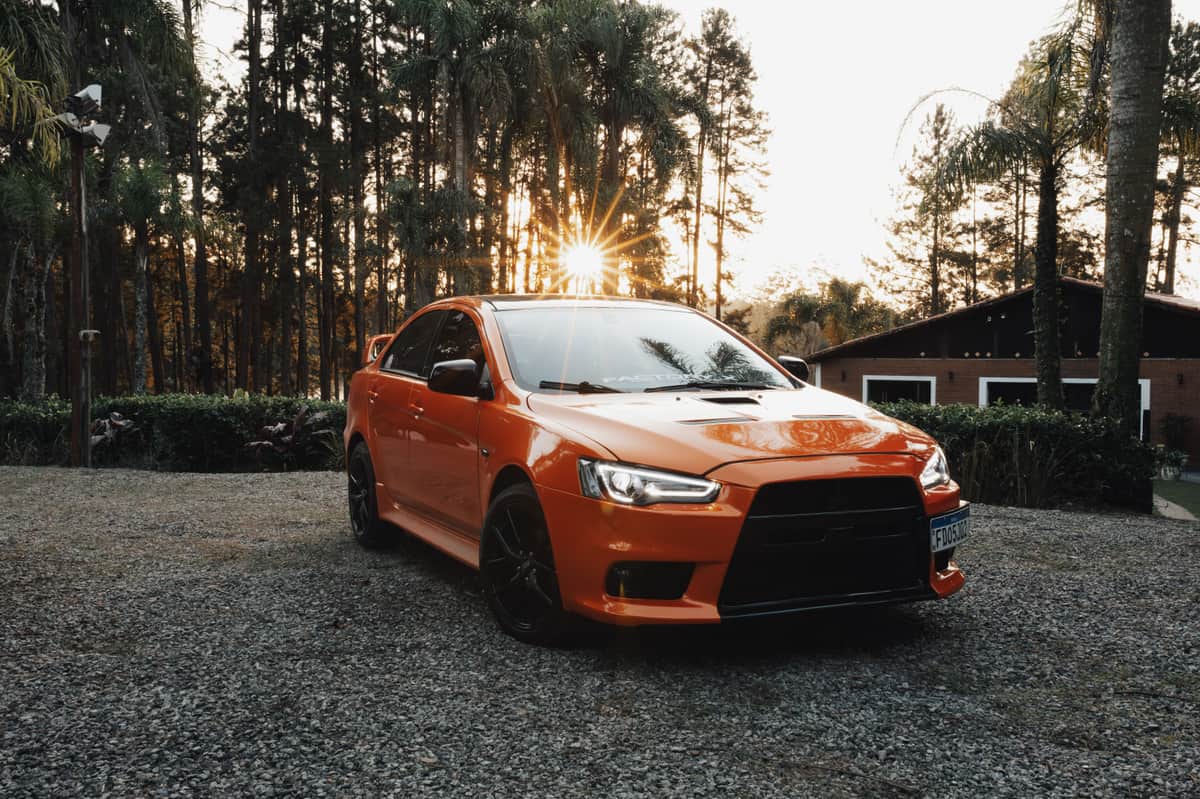
An orange sports car parked on gravel with a rural background at sunset

Direct answer: do not lift a car on gravel, dirt or grass if you have any alternative. These surfaces cannot provide the continuous solid bearing a jack and stands are designed to sit on, and the failure mode — a base sinking or shifting under load — is exactly the one that drops a car. If you genuinely have no concrete or sound asphalt available, load spreading with broad solid boards makes the situation materially better, and it does not make it good.

Why gravel is specifically bad

Three separate problems, and they compound:

  • Point loading into a loose medium. A stand's base concentrates several hundred pounds onto a small area. Gravel does not resist that by being strong; it resists by interlocking, and interlocking fails by rearranging.
  • The surface moves progressively. Unlike concrete, which either holds or cracks, gravel settles slowly and continuously — so a setup that felt solid when you climbed under it can be measurably lower twenty minutes later.
  • A floor jack cannot roll. A jack tracks slightly as its arm swings through its arc. On gravel the wheels dig in instead of rolling, which drags the saddle sideways against the car's lift point.

What actually helps

  1. 1.Move the car, if you possibly can

    The street, a garage floor, a concrete pad, a friend's driveway. This is not a cop-out answer — it is the only one that removes the problem rather than mitigating it.

  2. 2.Lay broad, solid boards under the jack and each stand

    Not plywood offcuts, not a stack — single pieces of solid material, large enough that the entire base sits on the board with margin, and thick enough not to flex. Two-inch-thick solid timber or a steel plate. This converts a point load into a distributed one.

  3. 3.Level and compact the spot first

    Rake the gravel flat, then tamp it. A board on an unlevel bed tilts as it loads, and a tilted base is the start of a sideways failure.

  4. 4.Lift in small increments and re-check

    Raise a little, pause, look at the base. You are watching for the board bedding in unevenly. Expect to reset at least once.

  5. 5.Use wider-based stands if you have a choice

    A formed or pyramid base spreads load better than a small flat plate. It is the single most relevant stand specification on this surface.

  6. 6.Chock both ends, not one

    Gravel gives a chock less to bite into, so use two, on both sides where possible.

What does not help

Common gravel workarounds, assessed
ApproachVerdictWhy
Broad solid board under each baseGenuinely helpsConverts point load to distributed load
Stack of thin boards or plywoodNoLayers slide against each other and compress unevenly
Concrete paving slabSometimesStrong in compression, brittle — it can crack without warning
Digging the stand's base into the gravelNoCreates a socket that can collapse sideways
A bigger jackNoCapacity was never the problem; bearing is
Working quickly to limit exposureNoReduces the time under the car and none of the risk
Common gravel workarounds, assessed

The paving-slab row deserves a note: a slab does spread load well, but concrete is brittle and fails suddenly rather than deforming. If you use one, use it on a properly leveled bed and treat a cracked slab as an immediate stop. The same brittleness argument that rules out cinder blocks as supports applies here — see jack stands vs wood blocks.

Ramps on gravel: no

If a jack on gravel is difficult, ramps on gravel are worse. A ramp depends entirely on friction at its base to stay put while a tire climbs it, and loose stone provides the opposite. There is no load-spreading trick that fixes this, because the problem is horizontal, not vertical. Are car ramps safe covers the sliding failure mode.

Grass and dirt

Similar problems with a different character. Dirt is worse when wet and better when dry and compacted; grass adds a slippery layer between the base and whatever is underneath it. Both respond to the same treatment — broad solid boards, leveled bed, incremental lifting, frequent re-checks — and both are inferior to moving the car.

The picks in full

Every pick, in detail

A car raised on a shop lift with its undercarriage visible

1. Best base for soft ground

Hein-Werner HW93503 3-Ton Jack Stands

Hein-Werner · score 8.7/10

11/16 in height increments and a formed base that resists sinking, made in the USA — the stand to buy if you want engineering rather than the lowest price.

A formed 7-5/8 x 8-3/4 in base is designed to spread load and reduce sinking — Hein-Werner says so explicitly. On imperfect ground the base matters more than the saddle or the capacity.

Published specifications

Capacity
3 ton Hein-Werner
Min height
11-1/2 in Hein-Werner
Max height
17 in Hein-Werner
Height increments
11/16 in Hein-Werner
Base size
7-5/8 in x 8-3/4 in Hein-Werner
Weight
19 lb gross Hein-Werner

What works

  • Fine 11/16 in increments let you match two stands to the same height
  • Formed base is shaped to spread load on asphalt
  • Made in the USA with a dual-purpose carry and release handle

What you give up

  • Hein-Werner does not publish an ASME PASE compliance statement for this model
  • Ratchet bar only — no separate secondary pin
  • Costs more than a double-locking budget pair

Our scoring

  • Fit & reach8.6
  • Safety margin8.6
  • Beginner ease8.8
  • Build quality9.4
  • Value8.0
Check price on Amazon

#ad No price shown — we have no live feed. How this is funded

Specifications published by Hein-Werner — we earn nothing from that link.

A mechanic working under a classic car on pavement in daylight

2. Best for a wide flat footprint

Powerbuilt 620471 Unijack (3-Ton Jack + Stand in One)

Powerbuilt · score 8.2/10

A bottle jack with an integrated locking safety bar, so the tool that lifts the car is also the tool that holds it — Powerbuilt states it meets or exceeds ASME and PALD standards.

Powerbuilt states the wide flat base adds stability and reduces sinking on softer surfaces, and that the unit meets or exceeds ASME and PALD standards. It lifts and holds from one point, 11 in to 21 in.

Published specifications

Capacity
3 ton (6,000 lb) Powerbuilt
Range
11 in – 21 in Powerbuilt
Hold mechanism
Integrated locking safety bar Powerbuilt
Standards
Meets or exceeds ASME and PALD Powerbuilt

What works

  • Lifts and then mechanically holds from a single lift point
  • Wide flat base resists sinking on soft asphalt
  • Manufacturer publishes a standards compliance statement

What you give up

  • 11 in minimum height will not fit under a low car at all
  • A bottle jack needs a flat, strong lift point — not every car has one where you need it
  • One unit lifts one corner; you still need a second support for wheel-off work

Our scoring

  • Fit & reach6.8
  • Safety margin9.0
  • Beginner ease8.0
  • Build quality8.4
  • Value8.6
Check price on Amazon

#ad No price shown — we have no live feed. How this is funded

Specifications published by Powerbuilt — we earn nothing from that link.

Truck tires in a garage awaiting maintenance

3. Widest pyramid base

BIG RED T46002A 6-Ton Double-Locking Jack Stands

Torin (BIG RED) · score 8.8/10

15-3/8 in to 23-13/16 in is the range a pickup actually sits at, on 12,000 lb of rated capacity — buy this instead of stretching a 3-ton stand.

A wide pyramid base is the most stable footprint among the stands we list, and the 15-3/8 in to 23-13/16 in range suits the trucks most likely to be parked on gravel. Tested to meet ASME standards per Torin.

Published specifications

Capacity
6 ton (12,000 lb) Torin
Min height
15-3/8 in Torin
Max height
23-13/16 in Torin
Construction
Forged steel, welded frame, pyramid base Torin
Standards
Tested to meet ASME standards Torin

What works

  • Height range genuinely fits trucks, vans and body-on-frame SUVs
  • Wide pyramid base is the most stable footprint in this set
  • Capacity headroom you will not run out of on a light-duty vehicle

What you give up

  • 15-3/8 in minimum is far too tall for a car
  • Heavy enough to be awkward to position one-handed
  • Overkill, and over-tall, for sedan work

Our scoring

  • Fit & reach8.0
  • Safety margin9.4
  • Beginner ease8.4
  • Build quality8.6
  • Value9.0
Check price on Amazon

#ad No price shown — we have no live feed. How this is funded

Specifications published by Torin (BIG RED) — we earn nothing from that link.

Method

How these picks were chosen

We did not test these tools. We do not run a laboratory, we have not loaded a jack to failure or checked a wrench on a calibration bench, and we will not tell you otherwise. What we did instead is read the published manufacturer specifications, check the figures that matter against the safety standard that applies to portable automotive lifting equipment, and work out which tool suits which job. Every number on this page links to where it came from, so you can check us.

The five things we score are the five that decide a first purchase: will it fit under and lift your car, how much safety margin the rating and the locking mechanism leave you, how hard it is to get right alone in a driveway, what the materials and published standards say about how long it lasts, and what the money buys against the rest of the field.

Read the full method — including how we pick a top pick, and why we publish no prices.

Questions

Frequently asked questions

+Can you safely jack up a car on gravel?

Not as safely as on concrete, and we would not recommend it if any alternative exists. Broad solid boards under the jack and each stand, on a leveled and tamped bed, with incremental lifting and frequent re-checks, materially improves it without making it good.

+What do you put under jack stands on gravel?

A single broad, solid, rigid board per stand — thick timber or a steel plate, large enough that the whole base sits on it with margin. Not a stack of thin boards, which slide and compress unevenly.

+Are car ramps usable on gravel?

No. A ramp relies on friction at its base to resist being pushed forward by the climbing tire, and gravel provides the opposite. Load spreading does not help because the problem is horizontal.

+Is asphalt as bad as gravel?

No, asphalt is much better — it is continuous and solid. Its one weakness is softening in hot weather, so a stand's foot can sink. A wide formed base or a board under each base handles that.

+What about a sloped gravel driveway?

That is the worst combination discussed anywhere on this site: loose bearing plus sideways loading plus somewhere for the car to go. Move the car.

Sources

Where these figures come from

Read next

Related reading