Skip to content
JACK & TORQUE

Guide

Does a Torque Wrench Click Once or Twice?

Once, and then you stop. The second click is not confirmation - it is a second application of torque.

By Ryder M. · Published October 6, 2026 · Last reviewed October 6, 2026

We earn a commission when you buy through the Amazon links on this page, at no extra cost to you. It never changes which tool we put first, and we publish no price we have not verified. How this site is funded.

Does a Torque Wrench Click Once or Twice? — ranked picks with scores and a price check for each
#PickDriveScorePrice
1
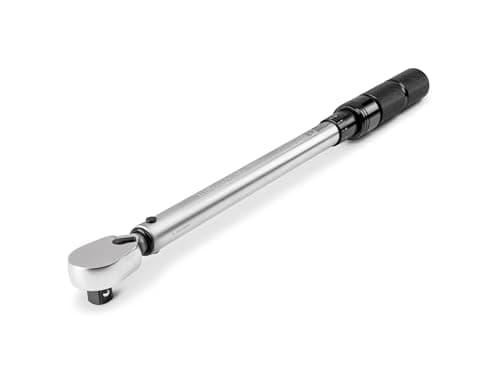
TEKTON 1/2 in Drive Micrometer Torque Wrench (TRQ52402), Amazon product photo
TEKTON 1/2 in Drive Micrometer Torque Wrench (TRQ52402)A click you can feel through the handle
1/2 in8.9
2
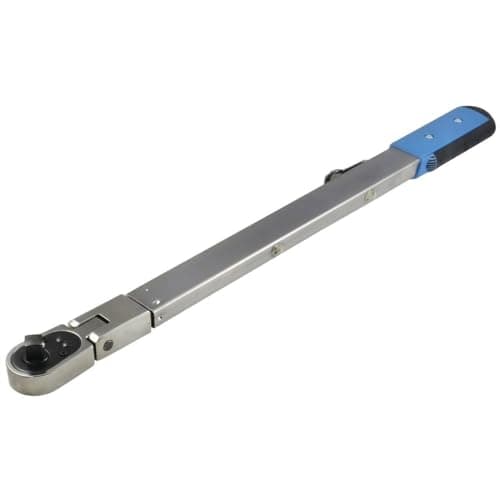
Precision Instruments C3FR250F 1/2 in Split-Beam Torque Wrench, Amazon product photo
Precision Instruments C3FR250F 1/2 in Split-Beam Torque WrenchThe mechanism that solves the wind-down problem
1/2 in8.8
3
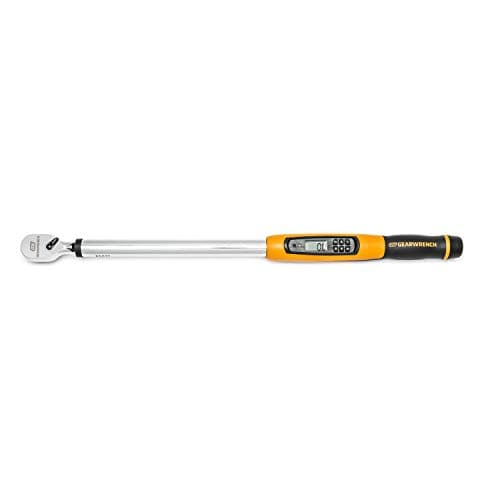
GEARWRENCH 85077 1/2 in Electronic Torque Wrench, Amazon product photo
GEARWRENCH 85077 1/2 in Electronic Torque WrenchWhen you would rather not listen for anything
1/2 in8.9

Product photographs come from each product's own Amazon listing via the Associates program. They are the seller's images, not photographs of anything we own — we have no test rig and claim none.

TEKTON 1/2 in Drive Micrometer Torque Wrench (TRQ52402), Amazon product photo

Short answer: once. A click-type torque wrench clicks when the set torque has been reached, and that first click is the finish line. Pulling again to produce a second click applies the set torque a second time, which on a fastener that has already arrived means over-tightening it. Park Tool puts it plainly: once the head of the wrench deflects, the set torque value has been achieved, and turning the wrench past the point of deflection over-tightens the fastener.

What the click is

Inside a micrometer click wrench, a spring-loaded cam holds the head rigid against the handle. You set the scale, which sets the spring preload. When the torque you apply exceeds that preload, the cam slips over its detent — the head deflects a few degrees relative to the handle, and the detent re-seating is the noise. It is a mechanical threshold, not a counter, and it has no memory of whether it has fired before.

That is why the question matters. The wrench will click again, and again, every time you pull past the threshold, and each of those pulls is another torque application on a joint that is already at spec.

Why people hear two clicks

What is usually happening when a wrench seems to click twice
What you heardWhat it probably wasWhat to do
Two clicks close togetherThe cam slipping and the handle rebounding against the detent as you eased offNothing - the fastener reached spec on the first one
A click then a second click after you pulled againTwo separate torque applicationsStop at the first. The joint is now over-torqued; back it off and redo it if the spec is critical
A faint click you were not sure about, then a clear oneA low setting where the break is quiet, then an overshootWatch and feel for the head deflecting instead of listening
Clicking continuously as you pullCam slipping repeatedly because you are still applying forceRelease pressure the instant the head breaks
A click almost immediatelyWrench set too low, or left wound up in storage and driftedCheck the setting, then check calibration
What is usually happening when a wrench seems to click twice

The second row is the one worth taking seriously. Re-pulling to "confirm" is the most common torque wrench mistake, and on an aluminum component or a small fastener it is enough to do damage. The confirmation you want is visual: the head deflected, so the joint is at spec.

Feel it, do not listen for it

The short version

  • At low settings the click is quiet - sometimes inaudible in a garage with a radio on. The deflection is always visible and always felt.
  • Pull smoothly and slowly through the last part of the travel. A fast pull carries the fastener past the threshold through momentum before you can stop.
  • One hand on the grip, at the grip. Pushing on the head or extending the handle changes the torque actually applied.
  • Release pressure the moment the head breaks. Do not hold it there and do not nudge it again.

The full procedure, including setting the scale and the sequence for a wheel, is in how to use a torque wrench and how to torque lug nuts.

If it clicks immediately

A wrench that clicks as soon as you take up the slack is telling you one of three things. The setting is far lower than you think — check the scale and the lock ring, and check which unit you are in, because a wrench set to 40 Nm will click much earlier than one set to 40 ft-lb. The fastener is already at or above the set torque, which is common when you are checking something a shop tightened with an impact gun. Or the wrench has drifted.

Drift usually comes from storage. A click wrench left wound up to a high setting holds its spring compressed, and over months the relationship between the scale and the actual break point moves. Wind it down to the lowest setting on the scale after every use — not to zero if the manufacturer says otherwise, but to the bottom of the scale. A split-beam wrench is exempt from this, which is the main practical argument for owning one.

Checking whether the click is still honest

You cannot calibrate a wrench at home, but you can find out whether it has moved. A comparison check against a second wrench, or a known weight at a measured distance, will tell you whether the break point is roughly where the scale says. How to check torque wrench calibration sets out what that test can and cannot establish — and where to send the wrench if the answer is bad.

If the click has become something you squint at rather than trust, the honest fix is a mechanism that does not ask you to interpret anything. An electronic wrench signals the target with vibration, a buzzer and an LED simultaneously; click vs digital is the comparison.

The rule

One click, then stop, then move to the next fastener. Pull slowly so you can stop on the break. Watch for the head deflecting rather than waiting for a sound. Wind a click wrench down before it goes in the case. And if you find yourself pulling twice to feel sure, buy the mechanism that tells you properly rather than training yourself to guess better.

The picks in full

Every pick, in detail

TEKTON 1/2 in Drive Micrometer Torque Wrench (TRQ52402), Amazon product photo

1. A click you can feel through the handle

TEKTON 1/2 in Drive Micrometer Torque Wrench (TRQ52402)

TEKTON · score 8.9/10

40-200 ft-lb on a 90-tooth head covers every lug-nut spec a normal car will ask for, and it clicks loudly enough that a beginner can hear it.

1/2 in drive, 40 to 200 ft-lb, 90-tooth dual-direction head. A long 1/2 in wrench at a mid-scale setting gives the clearest break of any mechanism here — the head deflects and the handle goes momentarily slack, which is easier to recognize than a noise in a noisy garage. The 90-tooth head also means a short swing in a wheel arch, so you are less likely to overshoot.

Published specifications

Drive
1/2 in TEKTON
Range
40 – 200 ft-lb TEKTON
Head
90-tooth, dual direction TEKTON
Included
Storage case TEKTON

What works

  • 40-200 ft-lb brackets the 80-100 ft-lb most cars want at the wheel
  • 90-tooth ratchet needs only a small swing in a wheel well
  • Loud, unambiguous click — the thing beginners most need

What you give up

  • TEKTON does not publish an accuracy percentage for this model
  • Cannot do low-torque work — the range starts at 40 ft-lb
  • Must be wound back to its lowest setting after every use

Our scoring

  • Fit & reach9.0
  • Safety margin8.4
  • Beginner ease9.2
  • Build quality8.4
  • Value9.2
$125.00 · View on Amazon

#ad Price as of October 16, 2026. How this is funded

Specifications published by TEKTON — we earn nothing from that link.

Precision Instruments C3FR250F 1/2 in Split-Beam Torque Wrench, Amazon product photo

2. The mechanism that solves the wind-down problem

Precision Instruments C3FR250F 1/2 in Split-Beam Torque Wrench

Precision Instruments · score 8.8/10

±4% accuracy, a flex head, and a split-beam mechanism that does not have to be dialed back to zero after use — the storage mistake stops mattering.

A split-beam wrench, 40 to 250 ft-lb at plus or minus 4%, 22-1/8 in long, in 5 ft-lb increments, supplied with a dated calibration certificate. Split-beam wrenches do not need winding down to their lowest setting after use, which removes the single most common cause of a wrench that clicks early, late, or immediately.

Published specifications

Range
40 – 250 ft-lb Precision Instruments
Length
22-1/8 in Precision Instruments
Increments
5 ft-lb Precision Instruments
Supplied with
Dated calibration certificate; made in USA Precision Instruments

What works

  • No need to wind it down after use — removes the most common storage error
  • Flex head reaches fasteners a fixed head cannot
  • Ships with a dated calibration certificate

What you give up

  • ±4% is looser than the electronic wrench's ±2%
  • 5 ft-lb increments are coarse for precise low-torque work
  • Professional pricing

Our scoring

  • Fit & reach9.2
  • Safety margin8.8
  • Beginner ease9.4
  • Build quality9.4
  • Value7.2
$251.47 · View on Amazon

#ad Price as of October 16, 2026. How this is funded

Specifications published by Precision Instruments — we earn nothing from that link.

GEARWRENCH 85077 1/2 in Electronic Torque Wrench, Amazon product photo

3. When you would rather not listen for anything

GEARWRENCH 85077 1/2 in Electronic Torque Wrench

GEARWRENCH · score 8.9/10

The only wrench here with a published accuracy spec — ±2% clockwise, ±3% counter-clockwise from 20% to 100% of scale — and it warns you before you reach target.

An electronic wrench, 25 to 250 ft-lb, published at plus or minus 2% clockwise and 3% counter-clockwise over 20 to 100% of scale, that signals the target with vibration, a buzzer and an LED at once. If you are asking this question because you cannot tell whether you heard a click, this is the answer that removes the ambiguity rather than teaching you to hear better.

Published specifications

Drive
1/2 in GEARWRENCH
Range
25 – 250 ft-lb GEARWRENCH
Accuracy
±2% CW, ±3% CCW (20-100% of scale) GEARWRENCH
Units
ft-lb, in-lb, Nm, kg-m, kg-cm GEARWRENCH
Alerts
Vibration, buzzer and LED at target GEARWRENCH
Warranty
1 year; calibration warranted 90 days GEARWRENCH

What works

  • Publishes its accuracy spec, which most brands in this price class do not
  • Target-torque alert makes over-tightening much harder
  • Three-way feedback — you cannot miss the target in a noisy garage

What you give up

  • Needs batteries, which is one more thing to fail mid-job
  • Calibration is only warranted for 90 days
  • Costs several times a basic click wrench

Our scoring

  • Fit & reach9.0
  • Safety margin9.2
  • Beginner ease9.0
  • Build quality9.0
  • Value7.4
$189.00 · View on Amazon

$239.00 21% off

#ad Price as of October 16, 2026. How this is funded

Specifications published by GEARWRENCH — we earn nothing from that link.

Method

How these picks were chosen

We did not test these tools. We do not run a laboratory, we have not loaded a jack to failure or checked a wrench on a calibration bench, and we will not tell you otherwise. What we did instead is read the published manufacturer specifications, check the figures that matter against the safety standard that applies to portable automotive lifting equipment, and work out which tool suits which job. Every number on this page links to where it came from, so you can check us.

The five things we score are the five that decide a first purchase: will it fit under and lift your car, how much safety margin the rating and the locking mechanism leave you, how hard it is to get right alone in a driveway, what the materials and published standards say about how long it lasts, and what the money buys against the rest of the field.

Read the full method — including how we pick a top pick, and how prices get on the page.

Questions

Frequently asked questions

+Should a torque wrench click twice?

No. The first click is the set torque being reached. Pulling again produces a second click and applies the torque a second time, which over-tightens the fastener. Park Tool states that turning past the point of deflection over-tightens the joint.

+What happens if you keep pulling after a torque wrench clicks?

You keep tightening. The cam slips each time you exceed the set threshold, so the clicking continues while the fastener goes further past spec. On a small fastener or in an aluminum thread, that is how threads get stripped.

+Why does my torque wrench click immediately?

Three likely causes: the scale is set far lower than you think or is in a different unit; the fastener is already at or above the set torque, which is common after an impact gun; or the wrench has drifted from being stored wound up. Check the setting first, then check the calibration.

+Do split-beam and digital torque wrenches click?

A split-beam wrench gives a single clear break and does not need winding down after use. An electronic wrench does not rely on a click at all — the GEARWRENCH 85077, for example, signals the target with vibration, a buzzer and an LED together, which removes the question entirely.

Sources

Where these figures come from

Read next

Related reading