Skip to content
JACK & TORQUE

Maintenance guide

How to Check Torque Wrench Calibration

You can verify a wrench at home with a bathroom scale and a tape measure. You cannot recalibrate one that way.

By Ryder M. · Published October 4, 2026 · Last reviewed October 4, 2026

We earn a commission when you buy through the Amazon links on this page, at no extra cost to you. It never changes which tool we put first, and we publish no price we have not verified. How this site is funded.

How to Check Torque Wrench Calibration — ranked picks with scores and a price check for each
#PickDriveScorePrice
1
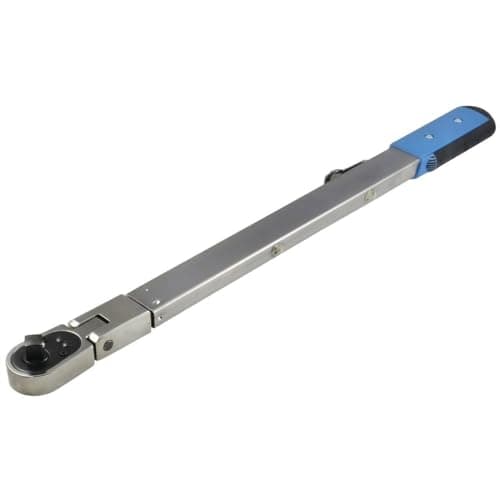
Precision Instruments C3FR250F 1/2 in Split-Beam Torque Wrench, Amazon product photo
Precision Instruments C3FR250F 1/2 in Split-Beam Torque WrenchBest wrench for staying in calibration
1/2 in8.8
2
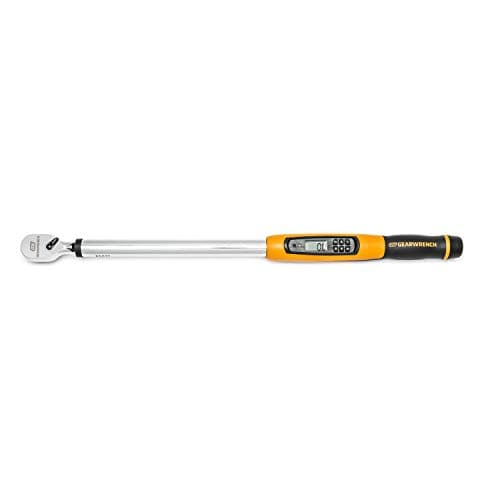
GEARWRENCH 85077 1/2 in Electronic Torque Wrench, Amazon product photo
GEARWRENCH 85077 1/2 in Electronic Torque WrenchBest for knowing where you stand
1/2 in8.9
3
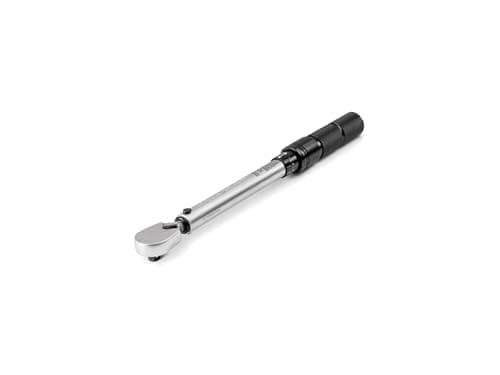
TEKTON 1/4 in Drive Micrometer Torque Wrench (TRQ50402), Amazon product photo
TEKTON 1/4 in Drive Micrometer Torque Wrench (TRQ50402)Best certificate in the box
1/4 in8.8

Product photographs come from each product's own Amazon listing via the Associates program. They are the seller's images, not photographs of anything we own — we have no test rig and claim none.

Precision Instruments C3FR250F 1/2 in Split-Beam Torque Wrench, Amazon product photo

Direct answer: hang a known weight from a measured point on the wrench and see whether it clicks where the arithmetic says it should. Torque is force times distance, so a 25 lb weight hung 2 ft from the center of the drive square should trip a wrench set to 50 ft-lb. If it clicks early or late by more than the manufacturer's published tolerance, the wrench needs recalibrating — which is a job for the manufacturer or a calibration lab, not for you.

When to check

Park Tool's published guidance for its own torque tools is recalibration every 5000 clicks, or at least once a year for wrenches that see frequent use, and the company notes that over time, especially with repetitive daily use, Park Tool torque devices may come out of calibration and no longer meet the original +/- specifications given for each tool when new. A home mechanic will not reach 5,000 clicks in a decade, so the calendar is the binding half of that for most people — but events matter more than either.

The short version

  • After the wrench is dropped onto a hard floor. This is the common one.
  • After it has been used to loosen a seized fastener, which it should never be.
  • After it has been stored at a high setting for months instead of wound down.
  • If a fastener you torqued came loose, or one you torqued sheared.
  • Before any job where the figure genuinely matters and you have not used the wrench in a year.

The at-home check, step by step

  1. 1.Clamp the wrench square in a vise by its drive end

    Fit a socket to the drive, clamp the socket — not the handle, not the head casting — so the wrench sits horizontal. Anything that lets the wrench twist or sag spoils the measurement.

  2. 2.Measure from the center of the drive square to a marked point on the handle

    Mark the point and measure to it in feet. Two feet is convenient because it makes the arithmetic easy. Measure to the mark you will actually pull from, not to the end of the grip.

  3. 3.Work out the weight you need

    Torque in foot-pounds equals weight in pounds multiplied by distance in feet. For a 50 ft-lb test at 2 ft, you need 25 lb. Set the wrench to that figure.

  4. 4.Apply the load slowly and watch for the click

    Hang the weight from the marked point, or pull down on a bathroom scale hooked at the mark and read it at the moment of the click. Add the load gradually; a jerk reads high.

  5. 5.Compare against the published tolerance

    A wrench rated plus or minus 4% at a 50 ft-lb setting should click between 48 and 52 ft-lb. Outside that, it has drifted. Repeat the test three times and use the average, because one reading is not a measurement.

  6. 6.Test again near the top of the scale

    A wrench can be fine at mid-scale and off at the ends. If you only ever test at one setting, test at the one you actually use for lug nuts.

What your own check is worth

The weight-and-arm method is only as good as your weight, your tape measure and your patience. A bathroom scale that is itself 3% out, read at the moment of a click, on a wrench rated plus or minus 4%, cannot tell you whether a 2% error exists. What it can tell you, reliably, is whether a wrench is badly wrong — 10%, 20%, or clicking at a completely different figure from the one on the scale. For a home mechanic that is the useful question, because a wrench that has been dropped or abused usually fails by a lot, not a little.

Keeping a wrench in calibration

Most drift in a home garage is self-inflicted and preventable. Park Tool states that click-type torque wrenches should be wound down to the lowest value on the scale (not zero) when not in use, and the same company warns that turning past the point of deflection over-tightens the fastener regardless of what the wrench sounds like.

The short version

  • Wind a click wrench down to its lowest scale value after every use - not to zero, and not left at 100 ft-lb in a drawer.
  • Never use a torque wrench to loosen anything. Keep a breaker bar for that.
  • Never add a pipe to the handle. The reading becomes meaningless and the mechanism takes the overload.
  • Store it in its case, out of a toolbox drawer where it gets knocked.
  • Pull smoothly with one hand on the grip and stop at the click or the deflection.

If winding down after every use is the habit you know you will not keep, that is a genuine argument for a split-beam wrench, which does not need it. The mechanism comparison is in beam vs click, and the care routine in full is in how to use a torque wrench.

When to send it away

Send it if your check fails, if the wrench has been dropped from bench height or higher, if it has been used as a breaker bar, or if you have no record of it ever being calibrated and you are about to use it on something that matters. Several manufacturers offer a calibration service for their own tools, and independent calibration labs will test any wrench and return it with a dated certificate. A certificate with a date on it is the only thing that converts "probably fine" into a number.

The picks in full

Every pick, in detail

Precision Instruments C3FR250F 1/2 in Split-Beam Torque Wrench, Amazon product photo

1. Best wrench for staying in calibration

Precision Instruments C3FR250F 1/2 in Split-Beam Torque Wrench

Precision Instruments · score 8.8/10

±4% accuracy, a flex head, and a split-beam mechanism that does not have to be dialed back to zero after use — the storage mistake stops mattering.

A split-beam mechanism does not have to be wound back down to its lowest setting after use, which removes the single most common way a home mechanic puts a click wrench out of spec. Plus or minus 4%, 40-250 ft-lb, flex head, and it ships with a dated calibration certificate so you know where the clock started.

Published specifications

Range
40 – 250 ft-lb Precision Instruments
Length
22-1/8 in Precision Instruments
Increments
5 ft-lb Precision Instruments
Supplied with
Dated calibration certificate; made in USA Precision Instruments

What works

  • No need to wind it down after use — removes the most common storage error
  • Flex head reaches fasteners a fixed head cannot
  • Ships with a dated calibration certificate

What you give up

  • ±4% is looser than the electronic wrench's ±2%
  • 5 ft-lb increments are coarse for precise low-torque work
  • Professional pricing

Our scoring

  • Fit & reach9.2
  • Safety margin8.8
  • Beginner ease9.4
  • Build quality9.4
  • Value7.2
$251.47 · View on Amazon

#ad Price as of October 17, 2026. How this is funded

Specifications published by Precision Instruments — we earn nothing from that link.

GEARWRENCH 85077 1/2 in Electronic Torque Wrench, Amazon product photo

2. Best for knowing where you stand

GEARWRENCH 85077 1/2 in Electronic Torque Wrench

GEARWRENCH · score 8.9/10

The only wrench here with a published accuracy spec — ±2% clockwise, ±3% counter-clockwise from 20% to 100% of scale — and it warns you before you reach target.

Publishes plus or minus 2% clockwise and 3% counter-clockwise from 20% to 100% of scale, which gives you an actual number to check your readings against. Read the warranty terms before you rely on it: GEARWRENCH warrants the tool for a year and the calibration for 90 days. An electronic wrench also drifts differently from a mechanical one — the battery is a failure mode a click wrench does not have.

Published specifications

Drive
1/2 in GEARWRENCH
Range
25 – 250 ft-lb GEARWRENCH
Accuracy
±2% CW, ±3% CCW (20-100% of scale) GEARWRENCH
Units
ft-lb, in-lb, Nm, kg-m, kg-cm GEARWRENCH
Alerts
Vibration, buzzer and LED at target GEARWRENCH
Warranty
1 year; calibration warranted 90 days GEARWRENCH

What works

  • Publishes its accuracy spec, which most brands in this price class do not
  • Target-torque alert makes over-tightening much harder
  • Three-way feedback — you cannot miss the target in a noisy garage

What you give up

  • Needs batteries, which is one more thing to fail mid-job
  • Calibration is only warranted for 90 days
  • Costs several times a basic click wrench

Our scoring

  • Fit & reach9.0
  • Safety margin9.2
  • Beginner ease9.0
  • Build quality9.0
  • Value7.4
$189.00 · View on Amazon

$239.00 21% off

#ad Price as of October 17, 2026. How this is funded

Specifications published by GEARWRENCH — we earn nothing from that link.

TEKTON 1/4 in Drive Micrometer Torque Wrench (TRQ50402), Amazon product photo

3. Best certificate in the box

TEKTON 1/4 in Drive Micrometer Torque Wrench (TRQ50402)

TEKTON · score 8.8/10

20-200 in-lb in 1 in-lb steps, certified to +/- 3% against ISO 6789-1:2017 and ASME B107.300-2021 — a published, standards-referenced accuracy claim at the low-torque end, which is rare.

Certified to plus or minus 3% against ISO 6789-1:2017 and ASME B107.300-2021, supplied with a certificate of calibration. Naming the standards is the difference between a certificate that means something and a piece of paper. On a 1/4 in in-lb wrench this matters more than usual, because small fasteners have no margin for a wrench reading 10% high.

Published specifications

Drive
1/4 in TEKTON
Range
20 – 200 in-lb TEKTON
Accuracy
+/- 3% CW/CCW, ISO 6789-1:2017 and ASME B107.300-2021 TEKTON
Increments
1 in-lb TEKTON
Head
90-tooth, 4-degree swing arc TEKTON
Length
10.1 in TEKTON
Weight
0.73 lb TEKTON
Supplied with
Case, certificate of calibration, 1/4 in hex bit holder, drive adapter TEKTON

What works

  • Names the standards its accuracy is certified against, which most brands do not
  • 20 in-lb floor reaches the small fasteners a ft-lb wrench cannot measure at all
  • 4-degree swing arc is usable in a crowded engine bay or between spokes

What you give up

  • 200 in-lb is only 16.7 ft-lb — nowhere near a lug nut
  • 1/4 in drive needs its own sockets if you only own 3/8 in and 1/2 in
  • Must be wound back to its lowest setting after every use

Our scoring

  • Fit & reach8.6
  • Safety margin9.2
  • Beginner ease8.8
  • Build quality8.8
  • Value9.0
$85.00 · View on Amazon

#ad Price as of October 17, 2026. How this is funded

Specifications published by TEKTON — we earn nothing from that link.

Method

How these picks were chosen

We did not test these tools. We do not run a laboratory, we have not loaded a jack to failure or checked a wrench on a calibration bench, and we will not tell you otherwise. What we did instead is read the published manufacturer specifications, check the figures that matter against the safety standard that applies to portable automotive lifting equipment, and work out which tool suits which job. Every number on this page links to where it came from, so you can check us.

The five things we score are the five that decide a first purchase: will it fit under and lift your car, how much safety margin the rating and the locking mechanism leave you, how hard it is to get right alone in a driveway, what the materials and published standards say about how long it lasts, and what the money buys against the rest of the field.

Read the full method — including how we pick a top pick, and how prices get on the page.

Questions

Frequently asked questions

+How often should a torque wrench be calibrated?

Park Tool's published guidance for its own torque tools is every 5000 clicks or at least once a year for wrenches in frequent use. A home mechanic will reach the calendar limit long before the click count. Recalibrate immediately after a drop, an overload, or any use as a breaker bar, regardless of when it was last done.

+Can I calibrate a torque wrench myself?

You can check one at home with a known weight and a measured arm. You should not adjust one — the result is a wrench you believe and cannot verify. Recalibration belongs with the manufacturer or a calibration lab, which returns the tool with a dated certificate.

+Does a new torque wrench need calibrating?

Usually not. Several wrenches ship with a certificate of calibration in the box — the TEKTON 1/4 in drive model names ISO 6789-1:2017 and ASME B107.300-2021, and the Precision Instruments split beam ships with a dated certificate. Where no certificate is supplied, a manufacturer accuracy claim is what you have, and an at-home check is a reasonable sanity test.

+Does leaving a torque wrench set ruin it?

Leaving a click wrench under spring tension for long periods is the standard explanation for drift, and manufacturers advise winding it back down to the lowest value on the scale — not to zero — after use. A split-beam wrench does not need this, which is its main practical advantage.

Sources

Where these figures come from

Read next

Related reading