Skip to content
JACK & TORQUE

Buying guide

How to Torque Lug Nuts Without a Torque Wrench

There is an honest answer to this question and it is not a trick for feeling the right tightness.

By Ryder M. · Published October 10, 2026 · Last reviewed October 10, 2026

We earn a commission when you buy through the Amazon links on this page, at no extra cost to you. It never changes which tool we put first, and we publish no price we have not verified. How this site is funded.

How to Torque Lug Nuts Without a Torque Wrench — ranked picks with scores and a price check for each
#PickDriveScorePrice
1
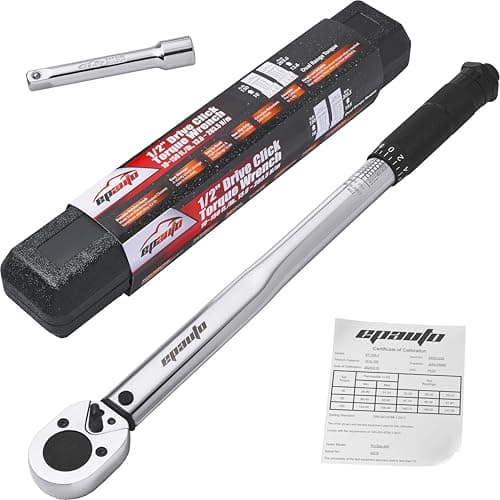
EPAuto 1/2 in Drive Click Torque Wrench (10-150 ft-lb), Amazon product photo
EPAuto 1/2 in Drive Click Torque Wrench (10-150 ft-lb)The answer to this question, honestly
1/2 in8.4
2
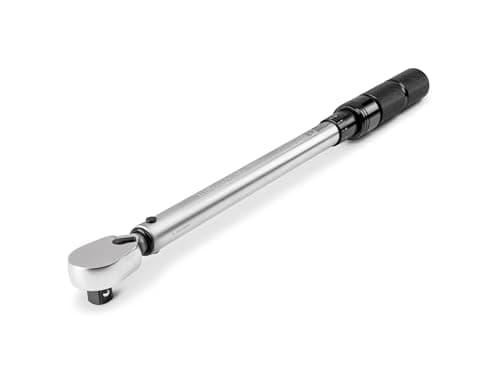
TEKTON 1/2 in Drive Micrometer Torque Wrench (TRQ52402), Amazon product photo
TEKTON 1/2 in Drive Micrometer Torque Wrench (TRQ52402)If you would rather buy it once
1/2 in8.9
3
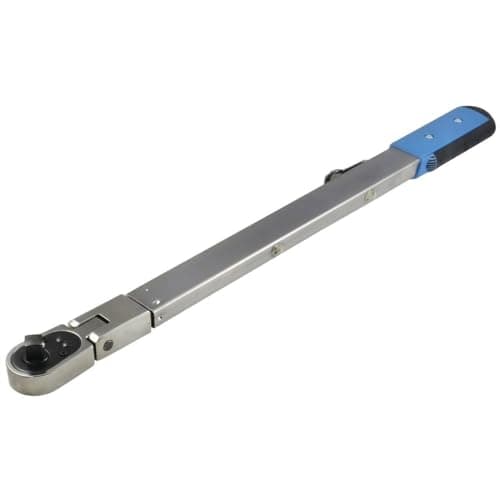
Precision Instruments C3FR250F 1/2 in Split-Beam Torque Wrench, Amazon product photo
Precision Instruments C3FR250F 1/2 in Split-Beam Torque WrenchFor someone who will never remember to wind it down
1/2 in8.8

Product photographs come from each product's own Amazon listing via the Associates program. They are the seller's images, not photographs of anything we own — we have no test rig and claim none.

EPAuto 1/2 in Drive Click Torque Wrench (10-150 ft-lb), Amazon product photo

Short answer: you cannot accurately torque lug nuts without a torque wrench, and nobody — including us — can give you a method that gets you to within 10% by feel. What you can do, when you have no choice, is this: tighten in a crisscross pattern with the wheel on the ground, using only the wrench supplied with the car and one hand on the end of it, until the nuts stop turning easily; then drive to somewhere with a torque wrench and check them. That is a get-home procedure, not a substitute.

The roadside procedure, when you genuinely have no choice

This is for a flat tire on a shoulder with the car's own kit. It is designed to be conservative — slightly under rather than over — because an under-tightened wheel announces itself and an over-torqued stud snaps later without warning.

  1. 1.Run every nut down by hand first

    Thread all of them finger-tight before using any tool. This is what keeps the wheel square on the hub, and a cocked wheel is the real roadside failure mode.

  2. 2.Lower the car until the tire just touches

    Enough weight to stop the wheel spinning, not enough to load the suspension fully. You cannot tighten anything properly against a rotating wheel.

  3. 3.Snug them in a crisscross pattern

    Opposite pairs, never around the circle — on a five-stud wheel that is a star. This is the step that seats the wheel flat, and it matters more than the final figure.

  4. 4.Lower the car fully, then tighten with one hand on the wrench end

    One hand, at the end of the standard wrench, pulling smoothly. No foot on it, no jumping on it, no pipe over the handle. Those are the actions that produce 200 ft-lb.

  5. 5.Go round the pattern a second time

    The first pass compresses the wheel against the hub and the second takes up what that movement released.

  6. 6.Drive gently and check within 50 miles

    Wheel makers publish re-torque guidance for exactly this reason. Continental publishes a re-torquing procedure after wheel fitment, and Alcoa's wheel guidance covers torque and re-torque. Get a torque wrench on them at the first opportunity.

The four methods that do not work

The short version

  • Counting turns past finger-tight. Thread pitch, thread condition and seat type all change how far a nut travels for a given torque. It is not repeatable between wheels, let alone between cars.
  • Standing on the lug wrench. Your body weight on a 12 in handle is in the region of several hundred foot-pounds. This is the single commonest cause of stretched studs.
  • An impact wrench on a low setting. Impact guns are not calibrated and their output varies with air pressure, battery charge and socket mass. The 'low setting' number on the housing is not a torque figure.
  • A cheater pipe over the handle, 'applied carefully'. Doubling the lever doubles the force for the same pull. Careful does not help; the leverage did the damage.
  • Matching the feel of a shop-fitted wheel. Shop-fitted wheels are frequently over-torqued by an impact gun, so you would be copying the error.
  • Torque sticks without a final check. They cap what an impact gun transmits but they are a speed tool, not a measuring one.

What you are actually aiming at, and why feel misses it

It helps to know the size of the target before accepting that you cannot hit it blind. Published wheel-nut figures for passenger cars cluster around 80-100 ft-lb, with light trucks and larger wheels running higher. Capri Tools publishes a reference organized by thread size, which is the honest way to present it — the figure follows the stud, not the badge.

Now consider the leverage. Torque is force multiplied by distance, so the same pull at the end of a 10 in wrench and a 20 in wrench produces double the figure. The folding L-bar in a trunk is typically around a foot long; a breaker bar is two or three times that. This is why there is no "pull until it feels right" rule that transfers between two people, or even between two tools in the same person's hands — change the handle and you change the answer by a factor, not a few percent.

It also explains the direction of the common error. A person who has been told to make wheel nuts "really tight", using a long bar and both hands, routinely passes 150 ft-lb without feeling they have done anything unusual. The procedure below deliberately restricts both the tool and the grip for exactly that reason.

What to look for when you buy the tool

Because the real answer to this question is "buy a torque wrench", here is what a first one needs. Three things, and price is not one of them.

A range that puts your spec mid-scale

Passenger cars generally want somewhere between 80 and 100 ft-lb. A wrench spanning 40-200 or 10-150 ft-lb puts that comfortably in the middle, which is where a click mechanism is most reliable. Get your own figure from the owner's handbook; the lug nut torque chart collects published specifications by thread size for reference.

A click you cannot miss

You will be crouched by a wheel in a driveway. A loud mechanical click is worth more to a beginner than any specification on the box, and whether to stop at the first one is answered in does a torque wrench click once or twice.

A published accuracy figure, if you can get one

Not every maker provides one. EPAuto states pre-calibration to 4% in its manual and Precision Instruments publishes +/- 4% with a dated certificate; TEKTON publishes no percentage for its larger micrometer wrenches. Best torque wrench brands sorts the field on this basis, and best budget torque wrenches covers the cheap end honestly.

The free options, in order of preference

If the purchase genuinely is not happening today, there are three ways to get a calibrated wrench on your wheels without owning one. Most US auto parts chains run a free tool loan program that includes torque wrenches — you leave a deposit and get it back on return. Any tire shop will check and re-torque a wheel, usually for nothing, because an unseated wheel is their liability too. And a neighbour who works on cars owns one.

All three beat the roadside method above, and all three beat a formula. The roadside method is for the shoulder of a highway, not for a planned job in your own driveway.

What we would do

Buy the EPAuto. It is the cheapest tool on this site that turns a guess into a measurement, it covers 10-150 ft-lb so it does brakes as well as wheels, and it costs a fraction of one alloy wheel or one snapped stud. Until it arrives, use the roadside procedure above — crisscross, one hand, wheel on the ground, re-check within 50 miles — and do not let anyone sell you a formula based on your body weight.

The picks in full

Every pick, in detail

EPAuto 1/2 in Drive Click Torque Wrench (10-150 ft-lb), Amazon product photo

1. The answer to this question, honestly

EPAuto 1/2 in Drive Click Torque Wrench (10-150 ft-lb)

EPAuto · score 8.4/10

Pre-calibrated to 4% with 1 ft-lb increments and a 10 ft-lb floor — the cheapest wrench here that can still do a brake caliper and a lug nut.

10-150 ft-lb in 1 ft-lb increments, pre-calibrated to 4% per EPAuto's manual, extension bar included. This page exists because people are trying to avoid buying a tool, so the useful fact is how little the tool costs relative to one wheel, one stud or one rotor. The 4% claim has no third-party certificate behind it; it is still a measurement where you currently have none.

Published specifications

Range
10 – 150 ft-lb (13.6 – 203.5 Nm) EPAuto instruction manual
Accuracy
Pre-calibrated to 4% EPAuto instruction manual
Increments
1 ft-lb EPAuto instruction manual
Material
Chrome vanadium steel EPAuto instruction manual

What works

  • 10 ft-lb floor means one wrench covers brakes and wheels
  • 1 ft-lb increments are finer than several wrenches costing more
  • Extension bar included

What you give up

  • 4% accuracy claim comes with no third-party certificate
  • Must be wound back to its lowest setting after every use
  • Case latches are the first thing to wear out

Our scoring

  • Fit & reach8.8
  • Safety margin7.8
  • Beginner ease8.8
  • Build quality7.4
  • Value9.6
$36.87 · View on Amazon

#ad Price as of October 16, 2026. How this is funded

Specifications published by EPAuto — we earn nothing from that link.

TEKTON 1/2 in Drive Micrometer Torque Wrench (TRQ52402), Amazon product photo

2. If you would rather buy it once

TEKTON 1/2 in Drive Micrometer Torque Wrench (TRQ52402)

TEKTON · score 8.9/10

40-200 ft-lb on a 90-tooth head covers every lug-nut spec a normal car will ask for, and it clicks loudly enough that a beginner can hear it.

40-200 ft-lb on a 1/2 in drive with a 90-tooth head that needs only a small swing in a wheel well, and a click loud enough to hear through gloves. Most passenger cars want 80-100 ft-lb, so this sits mid-scale where a click wrench is most trustworthy. TEKTON publishes no accuracy percentage for it.

Published specifications

Drive
1/2 in TEKTON
Range
40 – 200 ft-lb TEKTON
Head
90-tooth, dual direction TEKTON
Included
Storage case TEKTON

What works

  • 40-200 ft-lb brackets the 80-100 ft-lb most cars want at the wheel
  • 90-tooth ratchet needs only a small swing in a wheel well
  • Loud, unambiguous click — the thing beginners most need

What you give up

  • TEKTON does not publish an accuracy percentage for this model
  • Cannot do low-torque work — the range starts at 40 ft-lb
  • Must be wound back to its lowest setting after every use

Our scoring

  • Fit & reach9.0
  • Safety margin8.4
  • Beginner ease9.2
  • Build quality8.4
  • Value9.2
$125.00 · View on Amazon

#ad Price as of October 16, 2026. How this is funded

Specifications published by TEKTON — we earn nothing from that link.

Precision Instruments C3FR250F 1/2 in Split-Beam Torque Wrench, Amazon product photo

3. For someone who will never remember to wind it down

Precision Instruments C3FR250F 1/2 in Split-Beam Torque Wrench

Precision Instruments · score 8.8/10

±4% accuracy, a flex head, and a split-beam mechanism that does not have to be dialed back to zero after use — the storage mistake stops mattering.

40-250 ft-lb, +/- 4%, dated calibration certificate, flex head, and a split-beam mechanism that does not need resetting after use. If the reason you do not own a torque wrench is that you ruined one by leaving it loaded in a drawer, this is the version of the tool that forgives that. Professional pricing and coarse 5 ft-lb increments.

Published specifications

Range
40 – 250 ft-lb Precision Instruments
Length
22-1/8 in Precision Instruments
Increments
5 ft-lb Precision Instruments
Supplied with
Dated calibration certificate; made in USA Precision Instruments

What works

  • No need to wind it down after use — removes the most common storage error
  • Flex head reaches fasteners a fixed head cannot
  • Ships with a dated calibration certificate

What you give up

  • ±4% is looser than the electronic wrench's ±2%
  • 5 ft-lb increments are coarse for precise low-torque work
  • Professional pricing

Our scoring

  • Fit & reach9.2
  • Safety margin8.8
  • Beginner ease9.4
  • Build quality9.4
  • Value7.2
$251.47 · View on Amazon

#ad Price as of October 16, 2026. How this is funded

Specifications published by Precision Instruments — we earn nothing from that link.

Method

How these picks were chosen

We did not test these tools. We do not run a laboratory, we have not loaded a jack to failure or checked a wrench on a calibration bench, and we will not tell you otherwise. What we did instead is read the published manufacturer specifications, check the figures that matter against the safety standard that applies to portable automotive lifting equipment, and work out which tool suits which job. Every number on this page links to where it came from, so you can check us.

The five things we score are the five that decide a first purchase: will it fit under and lift your car, how much safety margin the rating and the locking mechanism leave you, how hard it is to get right alone in a driveway, what the materials and published standards say about how long it lasts, and what the money buys against the rest of the field.

Read the full method — including how we pick a top pick, and how prices get on the page.

Questions

Frequently asked questions

+How tight should lug nuts be without a torque wrench?

Snug, applied with one hand at the end of the car's own lug wrench, in a crisscross pattern, with the wheel on the ground — and then checked with a real torque wrench at the first opportunity. We will not give you a number of turns or a body-weight formula, because the spread between people doing that is several-fold and the figure you are aiming at is around 80-100 ft-lb.

+Can I use an impact wrench instead?

Not for final tightening. Impact guns are uncalibrated and their output moves with air pressure, battery state and socket mass, so the setting on the housing is not a torque figure. They are the fastest way to over-torque a wheel ever invented — torque wrench vs impact wrench covers it.

+Is it safe to drive after tightening lug nuts by hand?

For a short, gentle drive to somewhere with a torque wrench, if you ran every nut down by hand first, used a crisscross pattern and did the final pass with the wheel on the ground. Not as a permanent arrangement. Re-check within 50 miles either way.

+Where can I borrow a torque wrench?

Most US auto parts chains run a free loan-a-tool program that includes torque wrenches against a refundable deposit, and any tire shop will check and re-torque a wheel. Both are better than any technique on this page.

+What happens if lug nuts are over-tightened?

The stud stretches past its elastic limit and loses clamping force, the brake rotor can distort and pulse under braking, and the next removal risks snapping the stud. It is the more expensive of the two errors, which is why the method on this page deliberately errs low.

Sources

Where these figures come from

Read next

Related reading