Skip to content
JACK & TORQUE

Maintenance guide

Why Your Floor Jack Leaks Down

Four symptoms, three causes, one procedure. Most of the time the oil is fine and the air is not.

By Ryder M. · Published October 10, 2026 · Last reviewed October 10, 2026

We earn a commission when you buy through the Amazon links on this page, at no extra cost to you. It never changes which tool we put first, and we publish no price we have not verified. How this site is funded.

Why Your Floor Jack Leaks Down — ranked picks with scores and a price check for each
#PickCapacityScorePrice
1
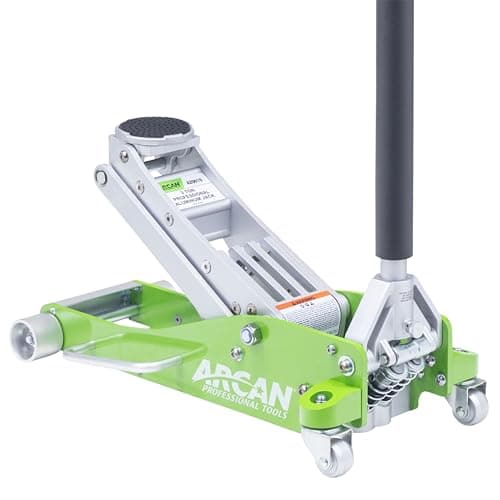
Arcan A20019 3-Ton Aluminum Low-Profile Floor Jack, Amazon product photo
Arcan A20019 3-Ton Aluminum Low-Profile Floor JackThe jack to replace a dying one with
3 ton (6,000 lb)9.0
2
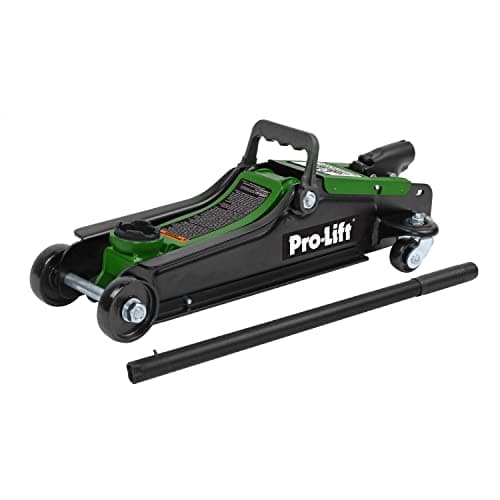
Pro-Lift F-757G 2-Ton Floor Jack, Amazon product photo
Pro-Lift F-757G 2-Ton Floor JackThe cheap replacement that still starts low
2 ton (4,000 lb)7.8
3
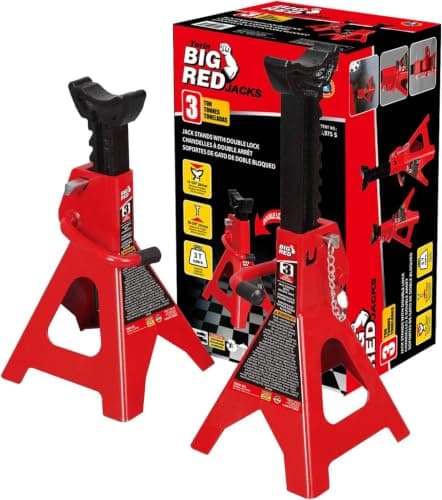
BIG RED T43002A 3-Ton Double-Locking Jack Stands, Amazon product photo
BIG RED T43002A 3-Ton Double-Locking Jack StandsWhat should have been under the car anyway
3 ton (6,000 lb) per pair9.1

Product photographs come from each product's own Amazon listing via the Associates program. They are the seller's images, not photographs of anything we own — we have no test rig and claim none.

Arcan A20019 3-Ton Aluminum Low-Profile Floor Jack, Amazon product photo

Short answer: a floor jack that sinks under load is most often carrying air in its hydraulic system, not a failed seal — and the fix is the manufacturer's bleed procedure, which takes about ten minutes and no parts. The three causes, in the order you should check them, are a release valve that is not fully closed, trapped air, and a blocked valve. Worn seals come fourth, and they are the only one of the four that means the jack is finished.

Match the symptom first

The manual groups these faults into a single troubleshooting table, because several symptoms share a cause. Find yours before you touch anything.

Symptom to cause, from the manufacturer's troubleshooting table
What the jack doesMost likely causeFirst thing to try
Lowers under loadRelease valve not fully closed, or air in the systemClose the valve hard, then bleed
Pump stroke feels spongyAir in the systemBleed the system
Saddle will not lift all the wayLow on oil, or air in the systemCheck the oil level, then bleed
Handle moves up when under loadValve blocked and not closing fullyFlush the valves
Oil weeping from the filler plugOverfilled, or the plug is not seatedDrop the level to spec and reseat the plug
Oil weeping from the ram itselfWorn sealThis is the one that ends the jack
Symptom to cause, from the manufacturer's troubleshooting table

Notice how much of that table resolves to "bleed it". Air is compressible and hydraulic oil is not, so a pocket of air in the cylinder behaves exactly like a leak: the saddle rises, then settles, and the stroke feels soft. It is the single most common reason a jack appears to be dying and the cheapest to put right.

Cause one: the release valve is not fully closed

Check this before anything else, because it costs nothing and it is embarrassingly common. The manual's first remedy for both "lowers under load" and "will not lift" is "check that release valve is fully closed". The valve is operated by rotating the handle, and a handle that is a few degrees short of home leaves the circuit slightly open. Turn it clockwise until it stops, then try again with no load.

Cause two: air in the system, and how to get it out

The manual says to bleed before each use or if jack performance decreases — that is the manufacturer treating air as a routine condition rather than a defect, which tells you how normal it is. Jacks stored on their side, shipped a long way, or left unused for a season all pick it up.

  1. 1.Lower the saddle fully and remove the load

    Nothing on this page is done with a car in the air. Get the jack down, clear and on a level floor.

  2. 2.Turn the handle counter-clockwise to open the release valve

    Fully open, not partly. The circuit has to be able to vent back to the reservoir.

  3. 3.Remove the cover plate, then the oil fill plug

    On the 70482 that is four screws holding the cover plate, and the fill plug underneath it. Your jack may put the plug somewhere else — check the parts diagram in your manual.

  4. 4.Top off the hydraulic fluid

    The manual's wording is to add high-grade hydraulic fluid slowly until it reaches the specified level. See the oil section below for what qualifies and what will destroy the seals.

  5. 5.Apply pressure to the saddle and pump the handle quickly, several times

    This is the step that actually does the work: pumping against the open fill hole drives trapped air back out of the cylinder instead of compressing it.

  6. 6.Re-check the fill hole, top off, refit the plug and cover

    Expect the level to have dropped once the air left. Do not overfill — an overfilled jack weeps from the plug, which is a different fault with the same puddle.

  7. 7.Close the valve and test several times before lifting a load

    The manual is explicit about testing for proper operation before attempting to lift a load. Run the full stroke, leave it up for a few minutes, and watch whether it holds height.

Cause three: a blocked valve

If the handle rises on its own while the jack is under load, the manual attributes it to valves that are blocked and not closing fully, and gives a flush procedure: lower the saddle, close the release valve securely, then manually lift the saddle several inches. That pulls fluid back through the valve seat in the opposite direction and can shift the debris that is holding it open. It is worth two or three attempts before you conclude the jack is beyond help.

What oil goes in a floor jack

The honest answer is the one your manual gives, because the specified grade genuinely varies between makers. Harbor Freight's wording for the 70482 is high-grade hydraulic fluid, purchased separately. What matters more than the exact viscosity number is what you must not put in:

The short version

  • Buy fluid sold as hydraulic jack oil. It is cheap, it is stocked in every auto parts store, and it is formulated for jack seals.
  • Never brake fluid. It is glycol-based and it attacks the seals a jack uses — this is the single most expensive substitution people make.
  • Never engine oil or transmission fluid. The detergents and friction modifiers are wrong for the job and the viscosity is wrong for the pump.
  • Never improvise with whatever is on the shelf. A jack holds a car over your body; the fluid is not the place to economize.
  • Check your own manual for the grade and the fill level. Both vary, and overfilling causes its own leak.
  • Change it on a schedule, not on failure. Harbor Freight specifies a full fluid change at least once every three years.

The same manual also asks for the grease fitting to be lubricated once a month and the jack to be wiped dry after each use, and gives a drain, refill and bleed sequence for the three-year fluid change. None of that is demanding, and a jack that has had it done does not usually develop the fault that brought you here.

When to stop repairing and replace it

Seal kits exist and they are inexpensive, but the labor is fiddly and the outcome is uncertain on a jack that has already been apart once. We would replace rather than repair in four situations: oil weeping from the ram body rather than the fill plug; a bent or visibly distorted lifting arm; a cracked weld anywhere on the chassis; or a jack that still sinks after a correct bleed and a fluid change. The last of those is the decisive one, because it means the fault is not air.

If you are replacing, best floor jacks is the ranked field, best floor jacks under $100 is the cheap end, and best floor jack brands covers which makers publish real specifications and which do not.

The order to work through

Close the release valve properly. Bleed the system following the sequence above. Flush the valves if the handle rises under load. Change the fluid if it has been three years or you do not know. Test with no load, twice. If it still sinks, buy a new jack — and in the meantime, keep the car on stands like you were already supposed to.

The picks in full

Every pick, in detail

Arcan A20019 3-Ton Aluminum Low-Profile Floor Jack, Amazon product photo

1. The jack to replace a dying one with

Arcan A20019 3-Ton Aluminum Low-Profile Floor Jack

Arcan · score 9.0/10

A 3-ton aluminum service jack that slides under a stock sedan at 3.75 in and still reaches 18 in — the widest useful range a beginner can buy at one weight they can actually move.

3.75 in to 18 in in aluminum at 56 lb. If your current jack has reached the point where the ram seal is weeping rather than the system holding air, this is the replacement that covers the widest set of vehicles. Buying once is cheaper than a seal kit plus the afternoon, and a jack you trust is the point of the exercise.

Published specifications

Capacity
3 ton (6,000 lb) Arcan Professional Tools
Min saddle height
3.75 in Arcan Professional Tools
Max lift height
18 in Arcan Professional Tools
Material
Aircraft-grade aluminum Arcan Professional Tools

What works

  • Fits under most unmodified sedans without ramps or boards
  • 18 in of lift clears a wheel on a crossover, not just a car
  • Aluminum keeps it at a weight one person can lift into a trunk

What you give up

  • Costs noticeably more than a steel jack of the same capacity
  • Arcan does not publish an ASME PASE compliance statement for this model
  • 56 lb is light for the class, not light in absolute terms

Our scoring

  • Fit & reach9.4
  • Safety margin8.8
  • Beginner ease9.0
  • Build quality8.8
  • Value8.0
$326.65 · View on Amazon

#ad Price as of October 16, 2026. How this is funded

Specifications published by Arcan — we earn nothing from that link.

Pro-Lift F-757G 2-Ton Floor Jack, Amazon product photo

2. The cheap replacement that still starts low

Pro-Lift F-757G 2-Ton Floor Jack

Pro-Lift · score 7.8/10

A 3-5/8 in starting height at the very bottom of the market — the rare cheap jack that actually fits under a modern sedan, bought at the cost of a 13-3/8 in ceiling.

3-5/8 in to 13-3/8 in, 2 ton, 22 lb, with an overload valve bypass system stated by Pro-Lift. The honest option when the jack that failed was a cheap one and the car is a sedan. A new budget jack with a working seal beats an old one you have stopped believing.

Published specifications

Capacity
2 ton (4,000 lb) Pro-Lift
Lift range
3-5/8 in – 13-3/8 in Pro-Lift
Material
Steel Pro-Lift
Weight
22 lb Pro-Lift
Overload protection
Overload valve bypass system Pro-Lift
Casters
2 fixed steel, 2 swivel Pro-Lift
Warranty
1 year, stated by Pro-Lift Pro-Lift

What works

  • 3-5/8 in minimum height is unusual at this end of the market
  • 22 lb, so it lifts in and out of a trunk one-handed
  • Pro-Lift publishes an overload valve bypass system on the specification

What you give up

  • 13-3/8 in of maximum lift will not clear the tire on a crossover or truck
  • Pro-Lift publishes no ASME PASE compliance statement for this model
  • 2 ton and a short chassis means less headroom and more flex than a 3-ton jack

Our scoring

  • Fit & reach7.2
  • Safety margin7.4
  • Beginner ease8.6
  • Build quality7.0
  • Value9.4
$59.91 · View on Amazon

#ad Price as of October 16, 2026. How this is funded

Specifications published by Pro-Lift — we earn nothing from that link.

BIG RED T43002A 3-Ton Double-Locking Jack Stands, Amazon product photo

3. What should have been under the car anyway

BIG RED T43002A 3-Ton Double-Locking Jack Stands

Torin (BIG RED) · score 9.1/10

A ratchet bar plus a separate safety pin — two independent locks instead of one — at the height range a car actually needs, and Torin states they meet ASME safety standards.

A ratchet bar plus a separate safety pin — two independent locks — rated 3 ton per pair over 11-1/4 in to 16-3/4 in, and Torin states they meet ASME safety standards. A jack that leaks down is only a frightening story if the car was resting on it. On stands, the same fault is an inconvenience. That difference is the whole argument for owning these.

Published specifications

Capacity
3 ton (6,000 lb) per pair Torin
Min height
11-1/4 in Torin
Max height
16-3/4 in Torin
Base footprint
7-11/16 in x 6-7/8 in Torin
Standards
Meets ASME safety standards Torin

What works

  • Two independent locking mechanisms, not one
  • 11-1/4 in to 16-3/4 in matches what a 3-ton floor jack can reach
  • The cheapest way to buy a genuinely double-locked stand

What you give up

  • Rated per pair, not per stand — read the rating before loading two corners
  • 11-1/4 in minimum is taller than some low cars want
  • Torin's own listing says this size is not intended for SUVs or trucks

Our scoring

  • Fit & reach8.6
  • Safety margin9.2
  • Beginner ease9.0
  • Build quality8.2
  • Value9.4
$35.99 · View on Amazon

#ad Price as of October 16, 2026. How this is funded

Specifications published by Torin (BIG RED) — we earn nothing from that link.

Method

How these picks were chosen

We did not test these tools. We do not run a laboratory, we have not loaded a jack to failure or checked a wrench on a calibration bench, and we will not tell you otherwise. What we did instead is read the published manufacturer specifications, check the figures that matter against the safety standard that applies to portable automotive lifting equipment, and work out which tool suits which job. Every number on this page links to where it came from, so you can check us.

The five things we score are the five that decide a first purchase: will it fit under and lift your car, how much safety margin the rating and the locking mechanism leave you, how hard it is to get right alone in a driveway, what the materials and published standards say about how long it lasts, and what the money buys against the rest of the field.

Read the full method — including how we pick a top pick, and how prices get on the page.

Questions

Frequently asked questions

+Why does my floor jack slowly go down?

In order of likelihood: the release valve is not fully closed, there is air in the hydraulic system, a valve is partly blocked, or a seal has worn out. The first three are fixable at home in about ten minutes with no parts. Only the fourth means a new jack.

+How do I bleed air out of a floor jack?

Lower the saddle, open the release valve by turning the handle counter-clockwise, remove the cover plate and oil fill plug, top off the fluid, then apply pressure to the saddle and pump the handle quickly several times. Re-check the level, refit the plug, close the valve and test with no load. That is the manufacturer's own sequence for the PITTSBURGH 70482.

+What kind of oil goes in a floor jack?

Fluid sold specifically as hydraulic jack oil, in the grade your manual specifies. Never brake fluid, engine oil or automatic transmission fluid — brake fluid in particular will attack the seals. Harbor Freight's wording for the 70482 is simply "high-grade hydraulic fluid", bought separately.

+Can I add oil to a floor jack without bleeding it?

You can, but you usually should not. Opening the fill plug lets air in, and air is what makes a jack feel spongy and settle under load. The manufacturer's procedure treats topping off and bleeding as one job for exactly that reason.

+Is a floor jack that leaks down dangerous?

It is dangerous only in combination with a second mistake. A hydraulic jack is a lifting tool and nothing more — no jack at any price or condition is rated to hold a car while you are under it. If the weight is on stands, a leaking jack is an annoyance. If it is not, it is an emergency waiting for a trigger.

+How often should I change floor jack fluid?

Harbor Freight specifies a full fluid change at least once every three years for the 70482 — drain it with the jack fully lowered, refill with high quality hydraulic fluid, open the valve and pump to bleed air, then re-check the level. Monthly grease-fitting lubrication is the other scheduled item.

Sources

Where these figures come from

Read next

Related reading