
What you need before you start
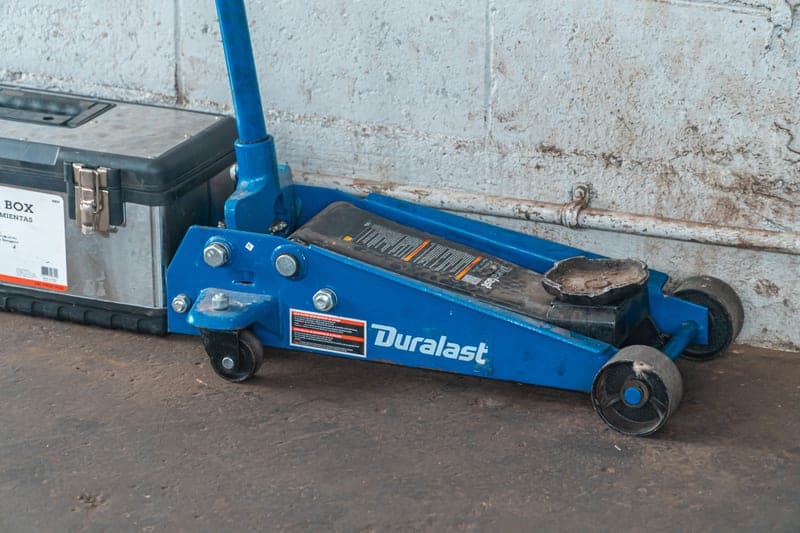
- The floor jack, with its handle
- A pair of jack stands
- At least one wheel chock
- Your owner's manual, for the lift points
- A slotted pinch weld pad if your car has pinch welds
The sequence
1.Park on level, solid ground
Flat concrete is ideal; sound asphalt is fine. Not a slope, not gravel, not grass. A slope loads the jack sideways, which is the one direction it is not designed for. If your driveway slopes and the street is flat, use the street.
2.Secure the car
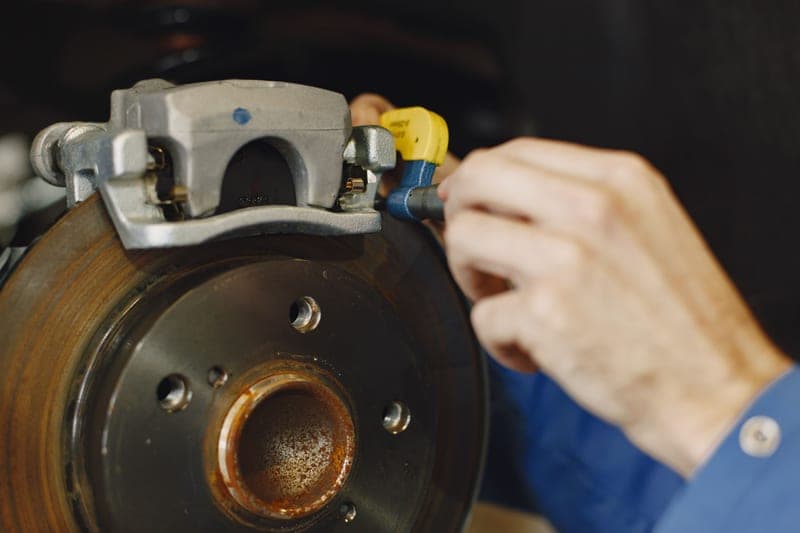
Engine off. Automatic in park, manual in gear. Parking brake on — unless you are about to work on the rear brakes, in which case leave it off and rely on chocks and the transmission instead.
3.Chock a wheel at the other end
Lifting the front? Chock a rear wheel. The chock is what stops the car rolling while one end is off the ground, and it costs almost nothing.
4.Find the lift point
In the manual, and usually marked on the car — a notch in the plastic sill trim, an arrow, or a visibly reinforced section of seam. Do not improvise this. Car jack points shows what you are looking for and what to avoid.
5.Position the jack
Roll it in so the saddle is centered under the lift point and flat against it. If the car has a pinch weld, the slotted pad goes in the saddle now, with the seam sitting in the slot. A saddle touching on one edge only will damage the car and can slip.
6.Lift slowly
Pump until the saddle just touches, then stop and look. Square? Centered? Then keep going. Raise until the tire is clear of the ground plus enough room to slide a stand under at its lowest setting — usually an inch or two more than you think.
7.Set the stands and transfer the load
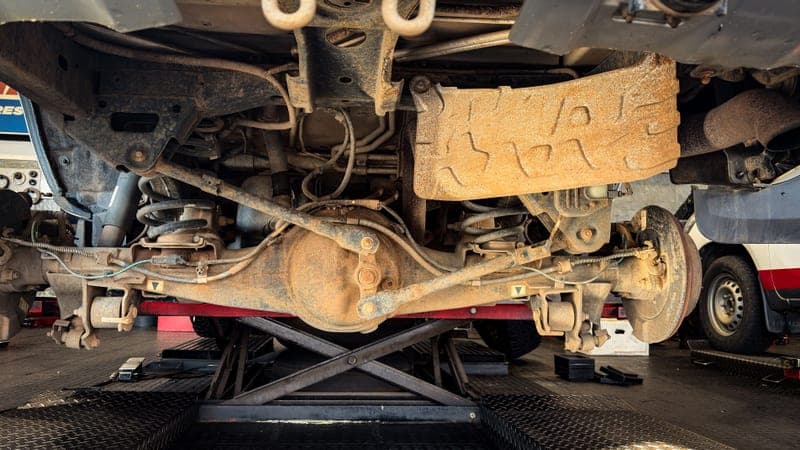
Stands go under structural metal — a subframe, a frame rail, a reinforced sill section — set to the same height on both sides. Then release the jack valve slowly until the car settles onto the stands and the jack is no longer carrying the load. Where to put jack stands covers the placement. Leave the jack in place, snug but unloaded, as a backup.
8.Test it
Push the raised corner firmly sideways and front-to-back. It should feel dead. Any rocking, creaking or settling means something is not right — raise it on the jack and reset the stands rather than hoping.
9.Lower in reverse
Jack up just enough to unload the stands, remove them, then open the release valve slowly. A floor jack's release is often more sensitive than people expect and the car will drop if you open it fully. Control the descent; let the car settle onto its tires rather than land on them.
Common first-time mistakes
The short version
- Jacking on a floor pan or a suspension arm instead of the designed lift point
- Not raising high enough to fit a stand, then discovering it mid-lift
- Opening the release valve all at once and dropping the car the last two inches
- Forgetting the chock, because the parking brake feels like enough
- Working on the rear brakes with the parking brake on, which holds the rear drums or calipers you are trying to service
After the job
Lower the jack saddle fully before you store it, so the seals are not held under pressure. Check the ram for weeping oil. If you removed a wheel, the lug nuts need torquing properly once the car is back on the ground — not while it is in the air — and re-checking after a short drive. See how to torque lug nuts.