Skip to content
JACK & TORQUE

Budget roundup

Best Floor Jacks Under $100

$100 is enough for a jack that fits your car. It is not enough for a jack that fits every car.

By Ryder M. · Published October 9, 2026 · Last reviewed October 9, 2026

We earn a commission when you buy through the Amazon links on this page, at no extra cost to you. It never changes which tool we put first, and we publish no price we have not verified. How this site is funded.

Best Floor Jacks Under $100 — ranked picks with scores and a price check for each
#PickCapacityScorePrice
1
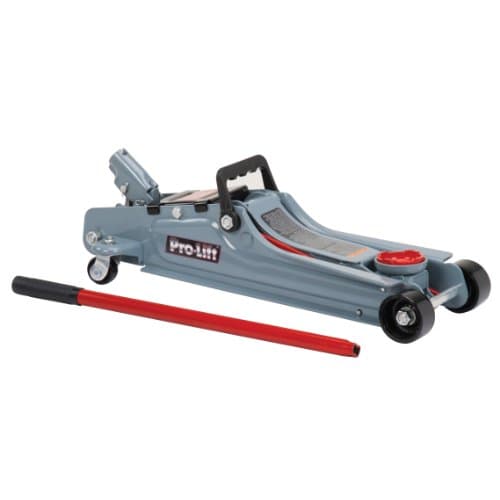
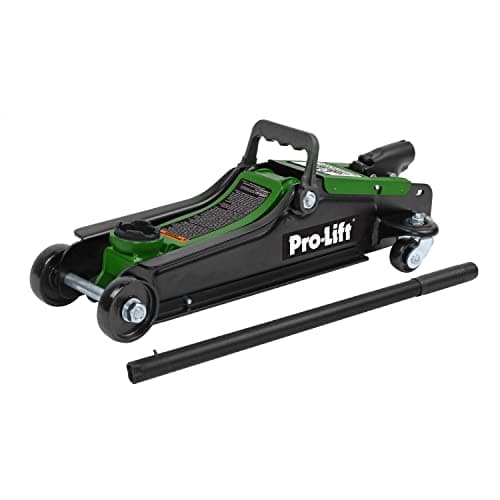
Pro-Lift F-757G 2-Ton Floor Jack, Amazon product photo
Pro-Lift F-757G 2-Ton Floor JackThe jack to buy at this cap
2 ton (4,000 lb)7.8
2
Pro-Lift F-767 2-Ton Low-Profile Floor Jack, Amazon product photo
Pro-Lift F-767 2-Ton Low-Profile Floor JackLowest published start in the band
2 ton7.8
3
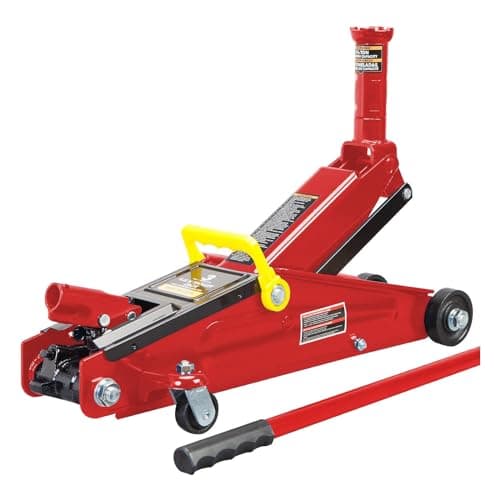
BIG RED T83006 3-Ton Hydraulic Trolley Jack, Amazon product photo
BIG RED T83006 3-Ton Hydraulic Trolley JackIf the cap can stretch a little
3 ton (6,000 lb)8.5
4
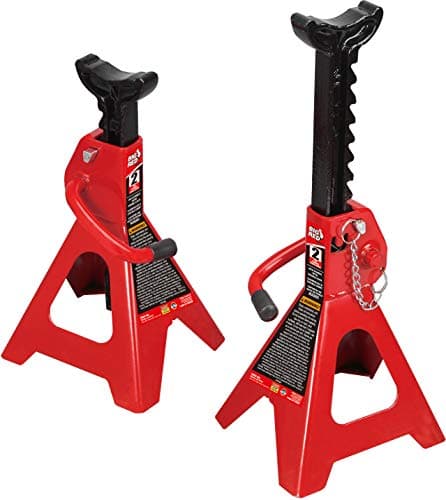
BIG RED T42002A 2-Ton Double-Locking Jack Stands, Amazon product photo
BIG RED T42002A 2-Ton Double-Locking Jack StandsWhere the rest of the hundred goes
2 ton (4,400 lb) each8.5
5
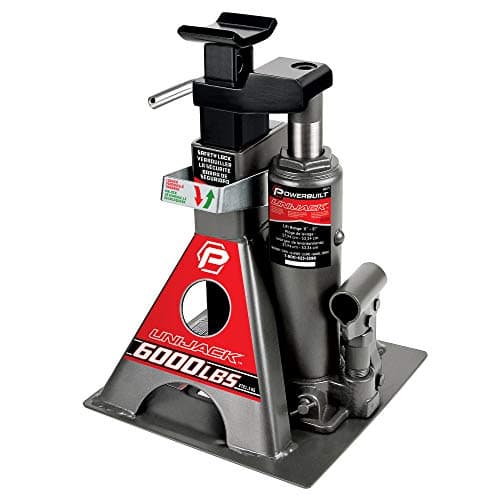
Powerbuilt 620471 Unijack (3-Ton Jack + Stand in One), Amazon product photo
Powerbuilt 620471 Unijack (3-Ton Jack + Stand in One)Lift and hold in one, if you own nothing
3 ton (6,000 lb)8.2

Product photographs come from each product's own Amazon listing via the Associates program. They are the seller's images, not photographs of anything we own — we have no test rig and claim none.

Pro-Lift F-757G 2-Ton Floor Jack, Amazon product photo

Short answer: yes, $100 buys a genuine hydraulic floor jack, and the Pro-Lift F-757G is the one we would buy at that cap because it publishes a 3-5/8 in starting height — the spec that decides whether a cheap jack is usable at all. What a hundred dollars does not buy is maximum lift. Nearly everything in this band tops out between 13 in and 14 in, which is enough to get a sedan wheel off the ground and not enough for a crossover or a pickup.

What we judged these on

A hundred dollars is a real constraint, and the only way to spend it well is to decide in advance which specifications you refuse to compromise. These are ours, in order, and every pick above was chosen against them.

1. Minimum height, which is not negotiable

The number that decides whether the jack works on your car at all. A jack whose saddle starts at 5-7/8 in cannot get under a car whose jacking point sits 5 in off the ground, and no amount of saving money fixes that. At this end of the market the published figures spread from about 3-1/2 in to nearly 6 in, which is an enormous range in a context where an inch matters.

Measure before you shop. Park on level ground, find the pinch weld or the reinforced lift pad nearest the wheel you want up, and measure from the floor to the lowest part of the sill in front of it. Then subtract about half an inch for the saddle pad and the chance that your driveway is not as flat as you think. Car jack points shows where to look on a unibody car, and the pinch weld guide covers the one place beginners most often bend sheet metal.

2. Maximum lift, which is where the money went

This is the spec the budget takes out. A 13-3/8 in ceiling sounds generous until you remember what it has to achieve: enough height that the tire clears the ground and enough height that a jack stand fits underneath at a setting you trust. A stand that starts at 10.8 in and a jack that stops at 13-3/8 in leave you a workable but narrow window. A stand that starts at 11-1/4 in and a jack that stops at 14 in leave you less. Work the arithmetic on paper before you buy either half.

If the numbers do not come out, the fix is not a more expensive jack — it is recognizing that your vehicle needs the next class up. See how high a floor jack lifts for every published range on this site side by side.

3. Whether the maker publishes an overload valve

An overload bypass valve stops the pump building pressure past the rated load. It is standard on competent jacks and it is the first thing that quietly disappears from a specification sheet at the bottom of the market. We treated a published overload statement as a requirement, and we treated its absence as a reason to look elsewhere rather than as a detail.

The five picks on the numbers

Published specifications for every pick on this page
PickCapacityLift rangeWhat it is for
Pro-Lift F-757G2 ton3-5/8 in – 13-3/8 inThe default buy at this cap
Pro-Lift F-7672 ton3-1/2 in – 14 inLowest start, slightly higher ceiling
BIG RED T830063 ton5-7/8 in – 20-7/8 inTaller vehicles, if the cap stretches
BIG RED T42002A (stands)2 ton each10.8 in – 16.5 inThe half of the budget that holds the car
Powerbuilt 620471 Unijack3 ton11 in – 21 inOne tool that lifts and holds, one corner
Published specifications for every pick on this page

Read that table as a fit problem rather than a ranking. The two Pro-Lifts are for cars; the BIG RED jack is for things with ride height; the Unijack is for someone who owns nothing at all and wants the smallest possible number of purchases. Capacity is the least interesting column — a jack lifts one corner, which on a 3,500 lb sedan is nowhere near a 2-ton rating. The capacity guide works that arithmetic through properly.

What $100 does not buy

The short version

  • Maximum lift. Expect 13-14 in, which is a sedan spec. Anything taller needs the next budget band.
  • Aluminum. Every jack in this band is steel, so expect 20-30 lb rather than the sub-15 lb of a race jack.
  • A rapid-rise or dual-piston pump. You will be pumping the handle more times, from a lower start.
  • A long chassis. Short jacks reach a shorter way under the car, which limits which lift points you can use.
  • A published standards compliance statement, in most cases. The specification will cover capacity and travel and stop there.
  • Stands. This is the important one, and it is the subject of the next section.

None of that list makes a cheap jack unsafe to lift with. What it does is narrow the set of vehicles and lift points the jack can serve, which is why the fit questions above matter more at $100 than they do at $300.

The stands are not an upgrade

The commonest way to waste a hundred dollars in this category is to spend all of it on the jack. A floor jack raises a car; it does not hold one. Hydraulic seals leak, release valves can be nudged, and a jack on a sloping driveway can roll on its own casters. Nothing goes under a car supported only by the thing that lifted it.

A pair of 2-ton stands is a small fraction of a $100 budget and it is the fraction that keeps you alive. If buying both at once is easier, read floor jack and jack stand combos, which covers the kits that bundle them, and best budget jack stands for the stands alone. Two 26 in-capable wheel chocks are the other few dollars worth spending — the wheel chocks guide explains why the parking brake is not a substitute.

The cheaper answer, for some jobs

If the whole reason you are shopping is an oil change, a pair of plastic ramps does the job for less than any jack on this page and removes the load-transfer step entirely. Ramps are useless the moment you need a wheel off, so they are not a replacement for a jack — but as a first purchase under $100 for under-car access, they are frequently the better buy. See best budget car ramps and floor jack vs ramps for the comparison in full.

When to spend more instead

Three situations where we would tell you to raise the cap rather than buy from this page. First, if you own anything with ride height — a crossover, an SUV, a pickup — because 13-14 in of lift simply will not clear the tire. Second, if you plan to move the jack between a garage and a driveway often, where the weight of steel becomes a daily annoyance. Third, if you want a jack that will still be the right tool when you own a different car in five years, which is an argument for buying 3 ton with a low start once.

Best floor jacks under $300 sets out what each extra hundred dollars actually adds, and best budget floor jacks covers the band immediately above this one.

What we would buy for under $100

The Pro-Lift F-757G, plus a pair of BIG RED T42002A stands, plus two wheel chocks — in that order, from one hundred dollars, for a sedan or a hatchback whose lift point sits above 4 in. That combination lifts the car, holds the car, and stops it rolling, which is the complete job. If your car is lower than that, the F-767 buys you an eighth of an inch at the bottom. If your vehicle has any real ride height, stop shopping at this cap: the BIG RED T83006 is the jack you want, and it usually costs a little more than a hundred dollars.

The one thing we would not do is spend the entire hundred on the jack. A better cheap jack with nothing underneath the car is a worse purchase than an adequate cheap jack with a pair of stands beside it.

The picks in full

Every pick, in detail

Pro-Lift F-757G 2-Ton Floor Jack, Amazon product photo

1. The jack to buy at this cap

Pro-Lift F-757G 2-Ton Floor Jack

Pro-Lift · score 7.8/10

A 3-5/8 in starting height at the very bottom of the market — the rare cheap jack that actually fits under a modern sedan, bought at the cost of a 13-3/8 in ceiling.

A 3-5/8 in starting height is the thing worth having here, and almost nothing else this cheap publishes a figure that low. 2 ton, 22 lb, and an overload valve bypass system stated on Pro-Lift's own specification. The price of entry is the 13-3/8 in ceiling: on a sedan that clears the tire, on a crossover it does not, and you need to know which one you own before you order.

Published specifications

Capacity
2 ton (4,000 lb) Pro-Lift
Lift range
3-5/8 in – 13-3/8 in Pro-Lift
Material
Steel Pro-Lift
Weight
22 lb Pro-Lift
Overload protection
Overload valve bypass system Pro-Lift
Casters
2 fixed steel, 2 swivel Pro-Lift
Warranty
1 year, stated by Pro-Lift Pro-Lift

What works

  • 3-5/8 in minimum height is unusual at this end of the market
  • 22 lb, so it lifts in and out of a trunk one-handed
  • Pro-Lift publishes an overload valve bypass system on the specification

What you give up

  • 13-3/8 in of maximum lift will not clear the tire on a crossover or truck
  • Pro-Lift publishes no ASME PASE compliance statement for this model
  • 2 ton and a short chassis means less headroom and more flex than a 3-ton jack

Our scoring

  • Fit & reach7.2
  • Safety margin7.4
  • Beginner ease8.6
  • Build quality7.0
  • Value9.4
$59.91 · View on Amazon

#ad Price as of October 16, 2026. How this is funded

Specifications published by Pro-Lift — we earn nothing from that link.

Pro-Lift F-767 2-Ton Low-Profile Floor Jack, Amazon product photo

2. Lowest published start in the band

Pro-Lift F-767 2-Ton Low-Profile Floor Jack

Pro-Lift · score 7.8/10

The cheapest jack here that still starts at 3-1/2 in — but 14 in of maximum lift is the ceiling you have to plan around.

3-1/2 in to 14 in, which is a hair lower at the bottom and a hair taller at the top than the F-757G. If your car has a shallow sill or an air dam, that eighth of an inch is the difference between a jack you can use and a jack you cannot get under. It sits above a hundred dollars more often than below it, so read the figure in the button before you commit.

Published specifications

Capacity
2 ton Pro-Lift
Lift range
3-1/2 in – 14 in Pro-Lift
Material
Steel Pro-Lift
Overload protection
Built-in safety valve and bypass Pro-Lift

What works

  • 3-1/2 in minimum height fits under most sedans
  • Cheapest route into a real hydraulic floor jack
  • Small enough to keep in a car trunk

What you give up

  • 14 in maximum lift is not enough for many SUVs or trucks
  • 2 ton leaves less capacity headroom than a 3-ton jack
  • Steel at this price means more flex under load than the aluminum jacks

Our scoring

  • Fit & reach7.0
  • Safety margin7.6
  • Beginner ease8.4
  • Build quality7.2
  • Value9.2
$107.99 · View on Amazon

#ad Price as of October 16, 2026. How this is funded

Specifications published by Pro-Lift — we earn nothing from that link.

BIG RED T83006 3-Ton Hydraulic Trolley Jack, Amazon product photo

3. If the cap can stretch a little

BIG RED T83006 3-Ton Hydraulic Trolley Jack

Torin (BIG RED) · score 8.5/10

Reaches 20-7/8 in, which is the number that matters if your vehicle sits high — but its 5-7/8 in minimum means it will not slide under a low car.

3 ton and 20-7/8 in of lift — more capacity and over 7 in more reach than anything genuinely under $100 — and it sits around the cap rather than comfortably inside it. The catch is a 5-7/8 in minimum height, which is taller than many cars will accept. It is the right jack for a pickup or a crossover and the wrong jack for a low sedan, at any price.

Published specifications

Capacity
3 ton (6,000 lb) Torin
Lift range
5-7/8 in – 20-7/8 in Torin
Material
Steel Torin
Handle length
24.5 in Torin
Overload protection
Safety bypass system Torin

What works

  • 20-7/8 in of lift handles pickup and SUV ride heights
  • Extra-long saddle neck saves pumping on tall vehicles
  • Steel construction at a price most first-time buyers will accept

What you give up

  • 5-7/8 in minimum height rules out most low cars
  • Heavier to move around than an aluminum jack of the same capacity
  • Single-piston pump means more strokes than a dual-piston jack

Our scoring

  • Fit & reach8.2
  • Safety margin8.6
  • Beginner ease8.4
  • Build quality8.2
  • Value9.0
$93.59 · View on Amazon

#ad Price as of October 16, 2026. How this is funded

Specifications published by Torin (BIG RED) — we earn nothing from that link.

BIG RED T42002A 2-Ton Double-Locking Jack Stands, Amazon product photo

4. Where the rest of the hundred goes

BIG RED T42002A 2-Ton Double-Locking Jack Stands

Torin (BIG RED) · score 8.5/10

10.8 in at the lowest setting — the shortest stand on this site, and the reason a low car can be supported at all without a lift.

10.8 in at the lowest setting, 16.5 in at the highest, a double locking pin on top of the ratchet bar, and Torin states compliance with ASME PASE-2019. The honest version of a $100 budget is a cheap jack plus a pair of stands, not a slightly better jack and nothing to put under the car.

Published specifications

Capacity
2 ton (4,400 lb) each Torin
Min height
10.8 in Torin
Max height
16.5 in Torin
Locking
10-level ratchet support bar plus a double locking pin Torin
Standards
Complies with ASME PASE-2019 Torin

What works

  • 10.8 in minimum clears the gap a low car leaves after a modest lift
  • Torin states compliance with ASME PASE-2019, not just a generic nod to ASME
  • Cheapest route to a stand that will actually fit under a lowered vehicle

What you give up

  • Rated 2 ton each, which is the lowest capacity of any stand here
  • Only 5.7 in of adjustment between lowest and highest
  • Too short for anything with truck or SUV ride height

Our scoring

  • Fit & reach9.2
  • Safety margin8.0
  • Beginner ease9.0
  • Build quality7.8
  • Value9.2
$31.49 · View on Amazon

#ad Price as of October 16, 2026. How this is funded

Specifications published by Torin (BIG RED) — we earn nothing from that link.

Powerbuilt 620471 Unijack (3-Ton Jack + Stand in One), Amazon product photo

5. Lift and hold in one, if you own nothing

Powerbuilt 620471 Unijack (3-Ton Jack + Stand in One)

Powerbuilt · score 8.2/10

A bottle jack with an integrated locking safety bar, so the tool that lifts the car is also the tool that holds it — Powerbuilt states it meets or exceeds ASME and PALD standards.

A bottle jack with an integrated locking safety bar, which Powerbuilt states meets or exceeds ASME and PALD standards. Worth knowing about at this budget because it is the only single purchase here that both lifts and holds. 11 in of minimum height rules out low cars entirely, and one unit supports one corner — it supplements a pair of stands rather than replacing them.

Published specifications

Capacity
3 ton (6,000 lb) Powerbuilt
Range
11 in – 21 in Powerbuilt
Hold mechanism
Integrated locking safety bar Powerbuilt
Standards
Meets or exceeds ASME and PALD Powerbuilt

What works

  • Lifts and then mechanically holds from a single lift point
  • Wide flat base resists sinking on soft asphalt
  • Manufacturer publishes a standards compliance statement

What you give up

  • 11 in minimum height will not fit under a low car at all
  • A bottle jack needs a flat, strong lift point — not every car has one where you need it
  • One unit lifts one corner; you still need a second support for wheel-off work

Our scoring

  • Fit & reach6.8
  • Safety margin9.0
  • Beginner ease8.0
  • Build quality8.4
  • Value8.6
$99.11 · View on Amazon

$129.99 24% off

#ad Price as of October 16, 2026. How this is funded

Specifications published by Powerbuilt — we earn nothing from that link.

Method

How these picks were chosen

We did not test these tools. We do not run a laboratory, we have not loaded a jack to failure or checked a wrench on a calibration bench, and we will not tell you otherwise. What we did instead is read the published manufacturer specifications, check the figures that matter against the safety standard that applies to portable automotive lifting equipment, and work out which tool suits which job. Every number on this page links to where it came from, so you can check us.

The five things we score are the five that decide a first purchase: will it fit under and lift your car, how much safety margin the rating and the locking mechanism leave you, how hard it is to get right alone in a driveway, what the materials and published standards say about how long it lasts, and what the money buys against the rest of the field.

Read the full method — including how we pick a top pick, and how prices get on the page.

Questions

Frequently asked questions

+Is a floor jack under $100 safe to use?

A hydraulic jack from a named maker with a published overload bypass valve is safe to lift with, at any price in this band. No jack at any price is safe to work under — that is what stands are for. The real risk at a low budget is not failure but fit: a jack that does not properly reach your lift point gets used on the wrong part of the car, which is how sills get bent.

+What is the cheapest floor jack that fits a low car?

Of the jacks on this site, the Pro-Lift F-767 publishes the lowest starting height at 3-1/2 in, with the F-757G a shade behind at 3-5/8 in. Both are in or near this page's band. If your car is lower than either will clear, a pair of shallow-angle ramps to gain 2-3 in is the cheap fix — car ramps for low cars covers it.

+Can I get a 3-ton floor jack for under $100?

Sometimes, and the BIG RED T83006 is the usual candidate — but it moves above and below a hundred dollars depending on the day, so check the current listing rather than trusting any published number. Be aware that 3 ton at this price comes with a 5-7/8 in minimum height, which is the spec that will stop it fitting a low car.

+Should I buy a 2-ton jack to save money?

For a car, 2 ton is genuinely enough. A jack lifts roughly a quarter to a third of the vehicle, so a 3,500 lb sedan puts about 1,000 lb on the saddle — a quarter of a 2-ton rating. The reason we normally recommend 3 ton is the lift range that comes bundled with it, not the capacity. 2 ton vs 3 ton has the arithmetic.

+Do I need jack stands if I only change tires?

For a roadside wheel swap with nothing of you under the car, the jack alone is the accepted procedure — that is what the jack in your trunk is for. For anything in a driveway that has you reaching under a wheel arch, or for a rotation where two corners come up, put it on stands. The tire rotation tool list sets out the full kit for that job.

+Why does this page not show prices?

Because a stale price is worse than no price. The number lives inside each buy button instead, read from Amazon daily and dated, and it expires by itself if the check stops. It also means the $100 cap is enforced against today's figure, which is the only honest way to do it.

Sources

Where these figures come from

Read next

Related reading