Skip to content
JACK & TORQUE

Budget roundup

Best Budget Jack Stands

Stands are the cheapest part of a safe lift. Here is where the money comes out, and the two places it must not.

By Ryder M. · Published September 26, 2026 · Last reviewed September 26, 2026

We earn a commission when you buy through the Amazon links on this page, at no extra cost to you. It never changes which tool we put first, and we publish no price we have not verified. How this site is funded.

Best Budget Jack Stands — ranked picks with scores and a price check for each
#PickCapacityScorePrice
1
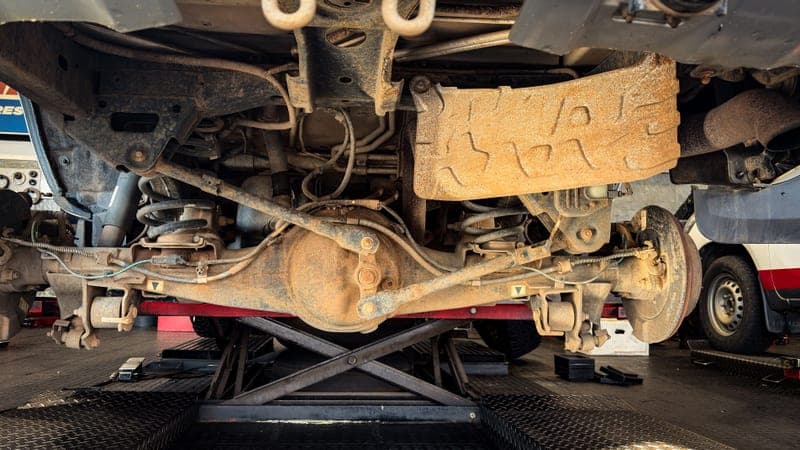
Close view of a car suspension assembly during a repair in a garage
BIG RED T43002A 3-Ton Double-Locking Jack StandsBest budget pair overall
3 ton (6,000 lb) per pair9.1
2
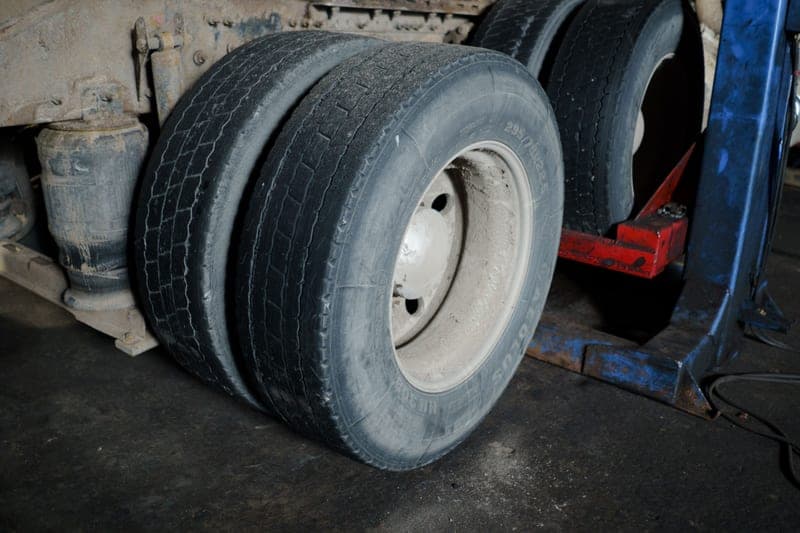
Truck tires in a garage awaiting maintenance
BIG RED T46002A 6-Ton Double-Locking Jack StandsBest budget stands for a truck
6 ton (12,000 lb)8.8
3
A mechanic working under a classic car on pavement in daylight
Powerbuilt 620471 Unijack (3-Ton Jack + Stand in One)Cheapest way to lift and support together
3 ton (6,000 lb)8.2

Photographs on this page are licensed stock images that show the category, not the exact model, and not anything we own. We have no test rig and claim none.

Truck tires in a garage awaiting maintenance

Jack stands are already the cheap part of the kit, which makes this a short page with a clear conclusion: a double-locking pair with a published ASME statement costs very little more than the cheapest thing on the shelf, and it is the pair we would buy. The rest of this page is about what you are actually choosing between.

Where cost comes out

What gets cheaper in a budget jack stand
What changesCheap standDoes it matter?
Locking mechanismSingle ratchet barYes — redundancy is the main safety feature available
SaddleCurved axle cradle, bare steelYes, on a unibody car with a flat sill
Base sizeSmaller footprintYes on asphalt, less so on good concrete
Increment sizeCoarse ratchet teethModerate — coarse steps make matching two stands harder
FinishThinner paintNo, cosmetic
Rating basisOften quoted per pairRead it — it is not a cost cut, it is a disclosure difference
What gets cheaper in a budget jack stand

The two things never worth saving money on

First, redundancy. A second independent lock is the cheapest meaningful safety upgrade in the whole category. Skipping it to save a few dollars on a product whose entire job is holding a car above your body is a poor trade.

Second, buying stands at all. The genuinely dangerous budget decision is not a cheap pair of stands — it is a jack and no stands. If the choice is a better jack or any stands, buy the stands.

Used stands: when it is fine and when it is not

A used steel jack stand can be perfectly serviceable, because there is very little in one to wear out. Inspect for three things and walk away if you find any of them: cracked or re-welded joints, deformed or rounded ratchet teeth, and a bent column or pin. Also walk away if you cannot identify the model well enough to check its rating and recall history.

Check them before the first use

  1. 1.Set both stands to the same notch and stand them side by side

    They should be the same height. If they are not, one is damaged or they are not a matched pair.

  2. 2.Work the lock through its full travel

    The ratchet should engage positively at every tooth and the pin should slide freely and fully home.

  3. 3.Look at the welds around the base

    Visible cracks, porosity or a base that rocks on a flat floor means the stand is scrap.

The picks in full

Every pick, in detail

Close view of a car suspension assembly during a repair in a garage

1. Best budget pair overall

BIG RED T43002A 3-Ton Double-Locking Jack Stands

Torin (BIG RED) · score 9.1/10

A ratchet bar plus a separate safety pin — two independent locks instead of one — at the height range a car actually needs, and Torin states they meet ASME safety standards.

This is the answer to the question. A double-locking design — ratchet bar plus independent safety pin — with an ASME compliance statement, at the cheap end of the market. 11-1/4 in to 16-3/4 in on a 7-11/16 x 6-7/8 in base. There is very little reason to spend less, and not much to spend more unless you need a flat saddle or more height.

Published specifications

Capacity
3 ton (6,000 lb) per pair Torin
Min height
11-1/4 in Torin
Max height
16-3/4 in Torin
Base footprint
7-11/16 in x 6-7/8 in Torin
Standards
Meets ASME safety standards Torin

What works

  • Two independent locking mechanisms, not one
  • 11-1/4 in to 16-3/4 in matches what a 3-ton floor jack can reach
  • The cheapest way to buy a genuinely double-locked stand

What you give up

  • Rated per pair, not per stand — read the rating before loading two corners
  • 11-1/4 in minimum is taller than some low cars want
  • Torin's own listing says this size is not intended for SUVs or trucks

Our scoring

  • Fit & reach8.6
  • Safety margin9.2
  • Beginner ease9.0
  • Build quality8.2
  • Value9.4
Check price on Amazon

#ad No price shown — we have no live feed. How this is funded

Specifications published by Torin (BIG RED) — we earn nothing from that link.

Truck tires in a garage awaiting maintenance

2. Best budget stands for a truck

BIG RED T46002A 6-Ton Double-Locking Jack Stands

Torin (BIG RED) · score 8.8/10

15-3/8 in to 23-13/16 in is the range a pickup actually sits at, on 12,000 lb of rated capacity — buy this instead of stretching a 3-ton stand.

Same double-locking principle and ASME statement, with the 15-3/8 in to 23-13/16 in range a truck needs, for a modest step up in price. Cheaper than buying 3-ton stands and then discovering they will not reach.

Published specifications

Capacity
6 ton (12,000 lb) Torin
Min height
15-3/8 in Torin
Max height
23-13/16 in Torin
Construction
Forged steel, welded frame, pyramid base Torin
Standards
Tested to meet ASME standards Torin

What works

  • Height range genuinely fits trucks, vans and body-on-frame SUVs
  • Wide pyramid base is the most stable footprint in this set
  • Capacity headroom you will not run out of on a light-duty vehicle

What you give up

  • 15-3/8 in minimum is far too tall for a car
  • Heavy enough to be awkward to position one-handed
  • Overkill, and over-tall, for sedan work

Our scoring

  • Fit & reach8.0
  • Safety margin9.4
  • Beginner ease8.4
  • Build quality8.6
  • Value9.0
Check price on Amazon

#ad No price shown — we have no live feed. How this is funded

Specifications published by Torin (BIG RED) — we earn nothing from that link.

A mechanic working under a classic car on pavement in daylight

3. Cheapest way to lift and support together

Powerbuilt 620471 Unijack (3-Ton Jack + Stand in One)

Powerbuilt · score 8.2/10

A bottle jack with an integrated locking safety bar, so the tool that lifts the car is also the tool that holds it — Powerbuilt states it meets or exceeds ASME and PALD standards.

If the budget has to cover both lifting and holding, this does both from one lift point on a mechanical locking bar, with a stated ASME and PALD compliance claim. 11 in to 21 in. It supports one corner, so it is not a replacement for a pair of stands on wheel-off work — but as a single-purchase safe support it is the cheapest honest option.

Published specifications

Capacity
3 ton (6,000 lb) Powerbuilt
Range
11 in – 21 in Powerbuilt
Hold mechanism
Integrated locking safety bar Powerbuilt
Standards
Meets or exceeds ASME and PALD Powerbuilt

What works

  • Lifts and then mechanically holds from a single lift point
  • Wide flat base resists sinking on soft asphalt
  • Manufacturer publishes a standards compliance statement

What you give up

  • 11 in minimum height will not fit under a low car at all
  • A bottle jack needs a flat, strong lift point — not every car has one where you need it
  • One unit lifts one corner; you still need a second support for wheel-off work

Our scoring

  • Fit & reach6.8
  • Safety margin9.0
  • Beginner ease8.0
  • Build quality8.4
  • Value8.6
Check price on Amazon

#ad No price shown — we have no live feed. How this is funded

Specifications published by Powerbuilt — we earn nothing from that link.

Method

How these picks were chosen

We did not test these tools. We do not run a laboratory, we have not loaded a jack to failure or checked a wrench on a calibration bench, and we will not tell you otherwise. What we did instead is read the published manufacturer specifications, check the figures that matter against the safety standard that applies to portable automotive lifting equipment, and work out which tool suits which job. Every number on this page links to where it came from, so you can check us.

The five things we score are the five that decide a first purchase: will it fit under and lift your car, how much safety margin the rating and the locking mechanism leave you, how hard it is to get right alone in a driveway, what the materials and published standards say about how long it lasts, and what the money buys against the rest of the field.

Read the full method — including how we pick a top pick, and why we publish no prices.

Questions

Frequently asked questions

+Are cheap jack stands safe?

A stand used inside its rating, on level ground, under a structural point, with both stands matched, is being used correctly regardless of price. What cheap stands give up is redundancy, saddle shape and base size — and the first of those is worth paying to get.

+What is the cheapest safe way to support a car?

A double-locking pair of steel stands, which is inexpensive, or ramps if the job does not need a wheel off. Never improvised blocks.

+Can I buy just one jack stand?

Stands are sold and used in pairs. A single stand is only ever part of an arrangement where something else is carrying the other side, and that is not a beginner setup.

+Are used jack stands worth buying?

They can be — there is little to wear out in a steel stand. Reject anything with cracked welds, deformed ratchet teeth, a bent column, or no identifiable model number to check the rating and recall history.

Sources

Where these figures come from

Read next

Related reading