Skip to content
JACK & TORQUE

Guide

Pinch Welds: How to Lift Without Folding One

A slotted pad costs very little and prevents the most common cosmetic damage a first-time jack owner does.

By Ryder M. · Published September 26, 2026 · Last reviewed September 26, 2026

We earn a commission when you buy through the Amazon links on this page, at no extra cost to you. It never changes which tool we put first, and we publish no price we have not verified. How this site is funded.

Pinch Welds: How to Lift Without Folding One — ranked picks with scores and a price check for each
#PickCapacityScorePrice
1
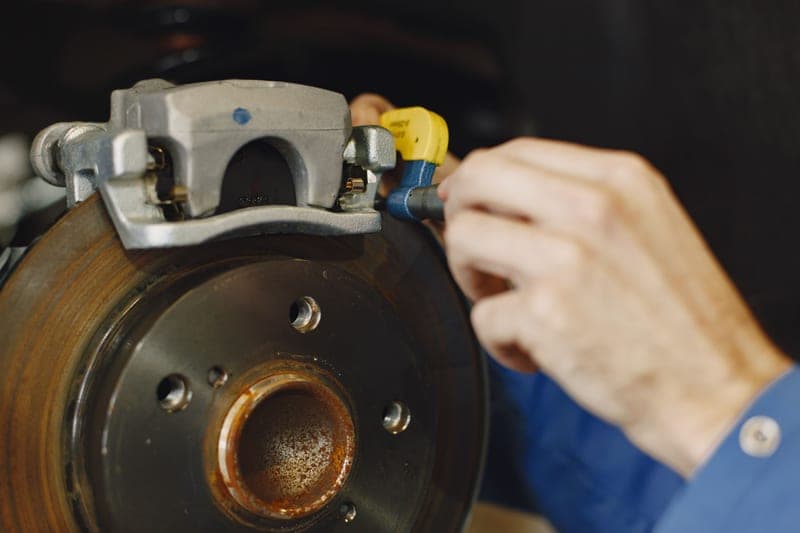
A mechanic working on a car disc brake
Schwaben Pinch Weld ProtectorThe pad that solves this
3 in8.8
2
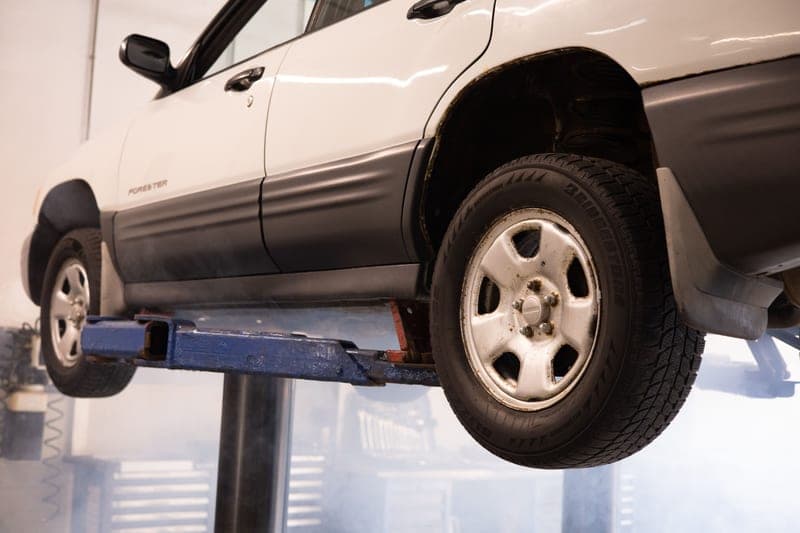
A white car suspended above the floor in an automotive repair shop
ESCO 10498 3-Ton Performance Jack StandStands with the right saddle
3 ton per stand8.8
3
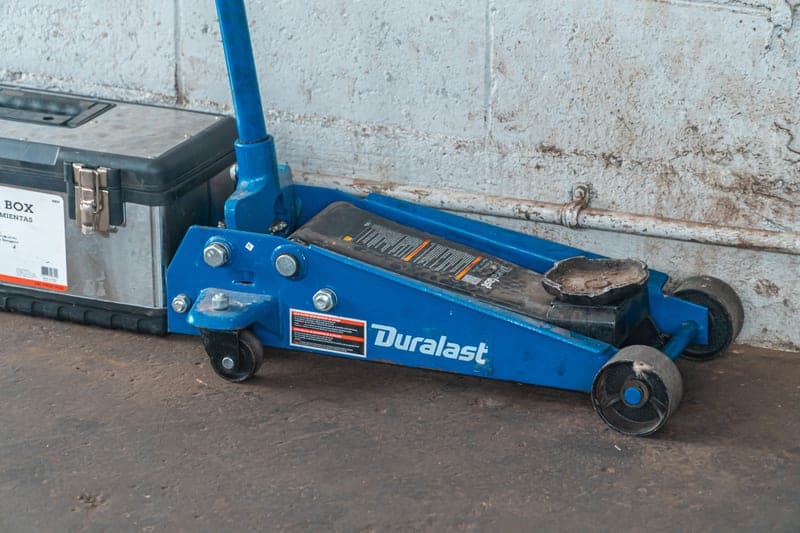
A blue hydraulic floor jack standing beside an open toolbox on a garage floor
Arcan 3-Ton Aluminum Floor Jack (A20018)A jack with clearance to spare
3 ton9.0

Photographs on this page are licensed stock images that show the category, not the exact model, and not anything we own. We have no test rig and claim none.

A mechanic working on a car disc brake

Short version: a pinch weld is the welded seam running under each door on a unibody car, and the reinforced sections of it are your jacking points. A bare jack saddle presses on the narrow edge of that seam and folds it over. A slotted pad — a rubber or polyurethane block with a groove — lets the seam sit in the groove while the load bears on the metal on either side. It costs very little and it is the difference between lifting your car and quietly damaging it.

What a pinch weld is, and why it exists

A unibody car has no separate chassis. Its structure comes from pressed steel panels welded into a stiff shell, and where the floor pan meets the outer sill panel the two are pressed together and spot-welded along a seam. That seam — two or three thicknesses of sheet steel standing proud by an inch or so — is structurally significant, which is why manufacturers designate reinforced sections of it as lift points.

It is also, unavoidably, thin metal on edge. Strong in the plane of the panel, easy to deform across it.

What goes wrong with a bare saddle

Failure modes when lifting on a pinch weld without a pad
What happensHow it looksConsequence
Seam folds sidewaysA visible kink or curl in the seamCosmetic, plus a stress point
Paint and sealant crackBare metal at the foldRust starts where the coating broke
Saddle slips off the seamA scrape on the sill, or a sudden dropThe dangerous version of this failure
Seam crushes flatFlattened section of the weldReduced local stiffness; hard to straighten
Failure modes when lifting on a pinch weld without a pad

The third row is the one that matters for safety. A saddle balanced on the edge of a seam has a very small contact area and nothing preventing lateral movement. If it slips as the car rises, the car comes down, or lands on the jack arm.

How a slotted pad fixes it

A slotted jack pad is a block of rubber or polyurethane with a groove across the top. It sits in your jack's saddle. The pinch weld drops into the groove, and the load is carried by the flat surfaces on either side of the seam — spread across the sill structure instead of concentrated on a metal edge.

It also mechanically captures the seam, which stops the sideways slip. The Schwaben pad, for example, is a 3 in wide, 1 in tall block designed to fit between any jack cradle and the vehicle, with a slot specifically to straddle the weld.

One consequence to plan for

A pad adds its own height — about an inch — to the clearance you need under the car. On a low vehicle that can be the difference between the jack fitting and not, which is another argument for a genuinely low-profile jack. See low-profile floor jacks.

The same problem on the support side

If you put a jack stand under a sill point, a conventional curved axle cradle has exactly the same issue — it contacts the seam on two edges. A flat-topped stand, ideally rubber-faced, is the right shape. This is the main reason we rank ESCO's removable flat rubber saddle highly for unibody cars in best jack stands.

If yours is already bent

  1. 1.Assess whether it is cosmetic or structural

    A slightly curled seam edge is cosmetic. A crushed or torn section, or one with visible cracking in the metal itself, is worth having looked at — particularly on a car that may need to pass a structural inspection.

  2. 2.Deal with the coating, not just the shape

    The real long-term damage is where paint and seam sealer have cracked, because that is where rust starts. Clean it, treat any surface rust, and re-seal or paint it.

  3. 3.Do not try to hammer it straight on the car

    Working a folded seam back and forth work-hardens and cracks it. If it matters enough to straighten, it matters enough to have a body shop do it.

  4. 4.Use a pad from now on, and find the reinforced section

    Most folds happen because the jack was on an unreinforced part of the seam. See car jack points for finding the designed points.

Cars without pinch welds

Some vehicles use dedicated jacking pads — molded plastic or rubber blocks bonded to the sill, or threaded sockets for a lift adapter — and some body-on-frame vehicles have frame rails instead. If your car has these, use them as designed; a slotted pad is not needed and may not fit. As always, the manual decides.

The picks in full

Every pick, in detail

A mechanic working on a car disc brake

1. The pad that solves this

Schwaben Pinch Weld Protector

Schwaben · score 8.8/10

A 3 in slotted pad that straddles the pinch weld so the jack saddle cannot fold it over — the cheapest way to avoid the classic first-jack mistake.

3 in wide, 1 in tall, with a slot that straddles the seam so the load bears on the metal either side rather than crushing the weld. Sits in any jack cradle. One pad covers one lift point, so two is often the right number.

Published specifications

Width
3 in Rennline
Height
1 in Rennline
Fitment
Sits between any jack cradle and the vehicle Rennline

What works

  • The slot captures the pinch weld instead of crushing it
  • Works with a jack you already own
  • Cheap insurance against bodywork damage

What you give up

  • One pad covers one lift point — you may want two
  • Adds 1 in of height, which matters on a low car
  • Does nothing for a car without a pinch weld

Our scoring

  • Fit & reach8.6
  • Safety margin8.8
  • Beginner ease9.2
  • Build quality8.6
  • Value9.2
Check price on Amazon

#ad No price shown — we have no live feed. How this is funded

Specifications published by Schwaben — we earn nothing from that link.

A white car suspended above the floor in an automotive repair shop

2. Stands with the right saddle

ESCO 10498 3-Ton Performance Jack Stand

ESCO · score 8.8/10

A removable flat rubber saddle instead of the usual curved axle cradle, rated 3 ton per stand and tested to ASME standards by an A2LA-certified lab.

A removable flat-top rubber saddle is the equivalent solution on the support side — it spreads load rather than concentrating it on a seam. 3 ton per stand, 13.2 in to 21.5 in.

Published specifications

Capacity
3 ton per stand ESCO
Height range
13.2 in – 21.5 in ESCO
Positions
10 adjustable positions ESCO
Saddle
Removable flat-top rubber cushion ESCO
Weight
11.4 lb ESCO
Testing
Tested to ASME standards by an A2LA-certified facility ESCO

What works

  • Flat rubber saddle sits against a sill or subframe without digging in
  • Rated per stand rather than per pair — easier to reason about
  • Third-party ASME testing named on the manufacturer listing

What you give up

  • 13.2 in minimum is the tallest low setting of the car stands here
  • Pin-and-post adjustment is slower than a ratchet
  • The most expensive stand in this set

Our scoring

  • Fit & reach8.4
  • Safety margin9.4
  • Beginner ease8.2
  • Build quality9.2
  • Value7.8
Check price on Amazon

#ad No price shown — we have no live feed. How this is funded

Specifications published by ESCO — we earn nothing from that link.

A blue hydraulic floor jack standing beside an open toolbox on a garage floor

3. A jack with clearance to spare

Arcan 3-Ton Aluminum Floor Jack (A20018)

Arcan · score 9.0/10

A 3-ton aluminum service jack that slides under a stock sedan at 3.78 in and still reaches 18.9 in — the widest useful range a beginner can buy at one weight they can actually move.

A pad adds about 1 in to the height you need underneath, so a jack with a 3.78 in minimum has room for one where a 5 in jack may not. 18.9 in of lift.

Published specifications

Min saddle height
3.78 in Arcan Professional Tools
Max lift height
18.9 in Arcan Professional Tools
Material
Aluminum Arcan Professional Tools

What works

  • Fits under most unmodified sedans without ramps or boards
  • 18.9 in of lift clears a wheel on a crossover, not just a car
  • Aluminum keeps it at a weight one person can lift into a trunk

What you give up

  • Costs noticeably more than a steel jack of the same capacity
  • Arcan does not publish an ASME PASE compliance statement for this model
  • 52.91 lb is light for the class, not light in absolute terms

Our scoring

  • Fit & reach9.4
  • Safety margin8.8
  • Beginner ease9.0
  • Build quality8.8
  • Value8.0
Check price on Amazon

#ad No price shown — we have no live feed. How this is funded

Specifications published by Arcan — we earn nothing from that link.

Method

How these picks were chosen

We did not test these tools. We do not run a laboratory, we have not loaded a jack to failure or checked a wrench on a calibration bench, and we will not tell you otherwise. What we did instead is read the published manufacturer specifications, check the figures that matter against the safety standard that applies to portable automotive lifting equipment, and work out which tool suits which job. Every number on this page links to where it came from, so you can check us.

The five things we score are the five that decide a first purchase: will it fit under and lift your car, how much safety margin the rating and the locking mechanism leave you, how hard it is to get right alone in a driveway, what the materials and published standards say about how long it lasts, and what the money buys against the rest of the field.

Read the full method — including how we pick a top pick, and why we publish no prices.

Questions

Frequently asked questions

+Do I need a jack pad for pinch welds?

If your car has pinch welds and you lift it yourself, yes. A slotted pad spreads the load either side of the seam and mechanically captures it, which prevents both the folding and the sideways slip.

+What happens if you jack on a pinch weld without a pad?

The seam usually folds or crushes, cracking the paint and seam sealer where rust then starts. The worse outcome is the saddle slipping off the narrow seam while the car is rising.

+Can a bent pinch weld be repaired?

A body shop can straighten a folded seam. The part worth attending to regardless is the broken coating — clean, treat and re-seal it, because that is where corrosion begins. Do not work it back and forth yourself; the metal work-hardens and cracks.

+Does a jack pad reduce how low my jack can go?

It adds its own height — roughly an inch for a typical pad — to the clearance you need. On a low car that can matter, which is one reason the genuinely low-profile jacks are worth the money.

Sources

Where these figures come from

Read next

Related reading