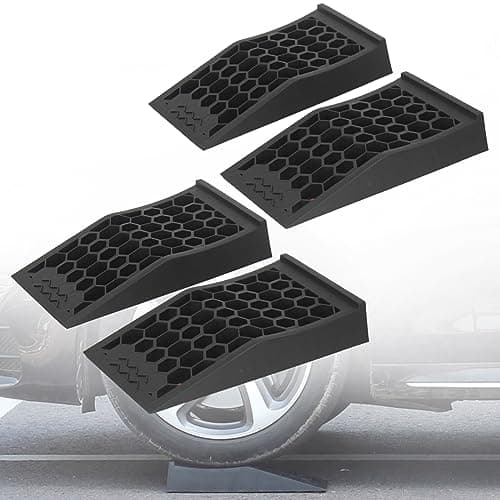
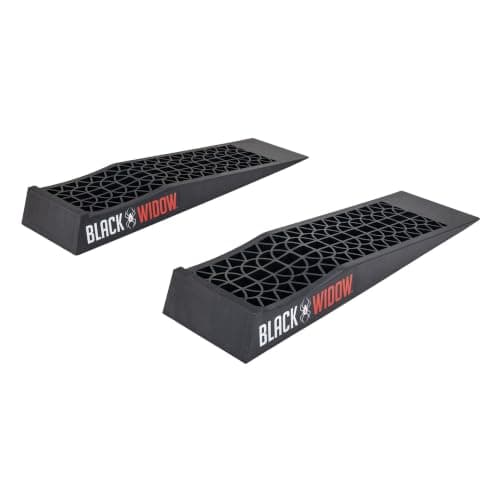
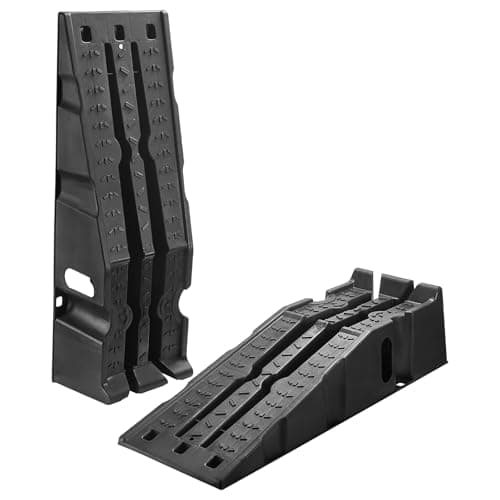
Short answer: the VEVOR service ramps are the best car ramps under $100 - 6.7 in of lift, 4,000 lb per ramp, molded polypropylene - and they sit comfortably inside the cap rather than scraping under it. The budget pick is the Black Widow 6009-V2: 4-1/2 lb per ramp, a 9.05 degree loading angle and 2-1/2 in of lift, which is the right answer if the car is low or storage is tight. If the job is simply getting a jack under a low sill, the 2.44 in four-pack does that for less than either. Spend the change on chocks.
What we judged these on
1. Lift height, because it decides what you can do
Published lift inside this band runs 6.7 in, 2-1/2 in and 2.44 in. That is not a small spread - it is the difference between two kinds of tool. At 6.7 in you can get under the nose of a car and reach a drain plug and a filter. At around 2-1/2 in you can get a low-profile jack, a drain pan or an inspection light under the car and not much else. Decide which job you are buying for before you compare prices, because the cheaper ramps are cheaper partly because they are smaller.
2. Incline angle, because it decides whether the car can climb
The 6009-V2 publishes 9.05 degrees and the VEVOR publishes 17 degrees. On a stock sedan or crossover either will usually work. On a car with a front splitter, an air dam or a long front overhang, 17 degrees can mean the bumper contacts the ramp before the tire does, and the fix is a shallower ramp rather than a running start. Car ramp angle and clearance has the geometry.
3. Capacity, and what it is a rating of
Three framings appear in this band and they are not comparable as written. VEVOR publishes 16,000 lb GVW per pair and 4,000 lb per ramp. Black Widow publishes 5,000 lb per axle (10,000 lb GVW) on the 6009-V2. The low four-pack states 6 ton with no basis given. Read the units, not the number: a "6 ton" ramp with no stated basis tells you less than a "4,000 lb per ramp" one. Ramps fall under ASME PASE alongside jacks and stands, and none of the ramps in this band publishes a PASE compliance statement.
4. Weight and footprint
Black Widow publishes 4-1/2 lb per ramp on a 27-1/2 in ramp. The VEVOR is 35.8 in long. The ramps you keep are the ones that store against a wall rather than in a parking space, and in a one-car garage that is a genuine purchasing factor rather than a footnote.
The band on published figures
| Ramp | Capacity (as published) | Incline | Lift height | Size |
|---|---|---|---|---|
| VEVOR service ramps | 16,000 lb GVW per pair; 4,000 lb per ramp | 17 deg | 6.7 in | 35.8 x 12 x 8.5 in |
| Low-profile tire ramps (4-pack) | 6 ton, basis not stated | Not published | 2.44 in | 17 x 9.5 x 3.1 in |
| Black Widow 6009-V2 | 5,000 lb per axle (10,000 lb GVW) | 9.05 deg | 2-1/2 in | 27-1/2 x 7-3/4 x 3 in |
Nothing in the cap gives you a shallow angle and 6 in of lift at the same time, because that needs length and length costs money. That is the one real limit of the band.
What no ramp at any price can do
Hold a car with a wheel off. A ramp supports the vehicle through its tires, so the moment a wheel comes off there is nothing under that corner. Brakes, hubs, bearings, wheel seals and suspension all need a jack and a pair of stands instead - car ramps vs jack stands draws the line, and do I need jack stands with ramps answers the follow-up. Ramps are for oil changes, filters, exhaust inspection, underbody looks and transmission pans. For everything else, the hundred dollars is better spent on jack stands under $100 and a jack.
What we would buy
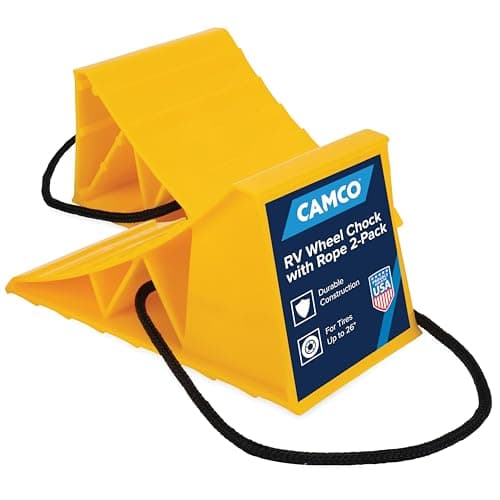
The VEVOR ramps plus a pair of chocks, which together still leave change inside the cap and give you a usable 6.7 in of access. If your car is low, or the garage has no room, the Black Widow 6009-V2 at 9.05 degrees and 4-1/2 lb per ramp - accepting that 2-1/2 in means jack clearance rather than working room. And if the only reason you are buying ramps is that your floor jack will not fit under the sill, buy the 2.44 in four-pack and put the rest of the money into the jack.