Skip to content
JACK & TORQUE

Guide

Do I Need Jack Stands With Car Ramps?

A ramp is a support, not a lift. Adding a stand under the same wheel does not make it safer.

By Ryder M. · Published October 6, 2026 · Last reviewed October 6, 2026

We earn a commission when you buy through the Amazon links on this page, at no extra cost to you. It never changes which tool we put first, and we publish no price we have not verified. How this site is funded.

Do I Need Jack Stands With Car Ramps? — ranked picks with scores and a price check for each
#PickCapacityScorePrice
1
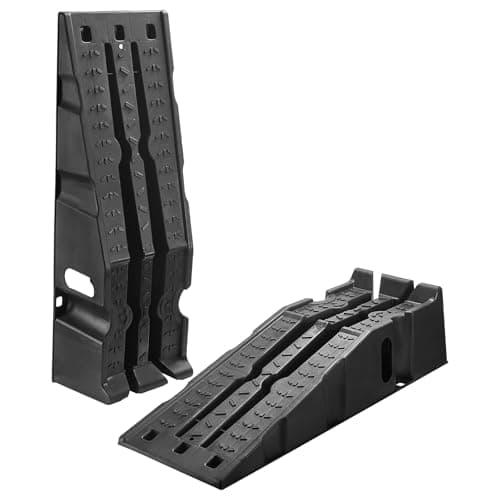
VEVOR Car Service Ramps (16,000 lb GVW, 6.7 in Lift), Amazon product photo
VEVOR Car Service Ramps (16,000 lb GVW, 6.7 in Lift)The support you are standing on
16,000 lb GVW per pair8.9
2
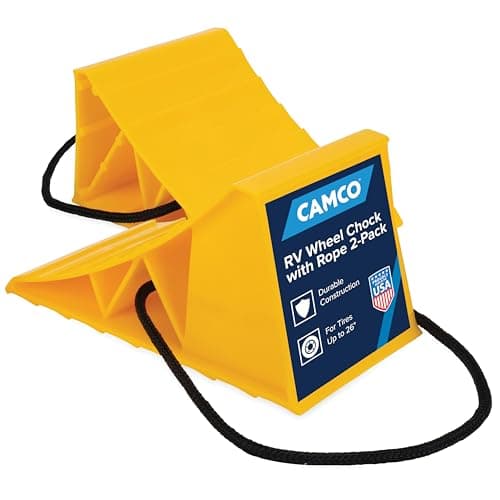
Camco 44471 Wheel Chock with Rope (2-Pack), Amazon product photo
Camco 44471 Wheel Chock with Rope (2-Pack)The part that replaces the stand
2 chocks9.0
3
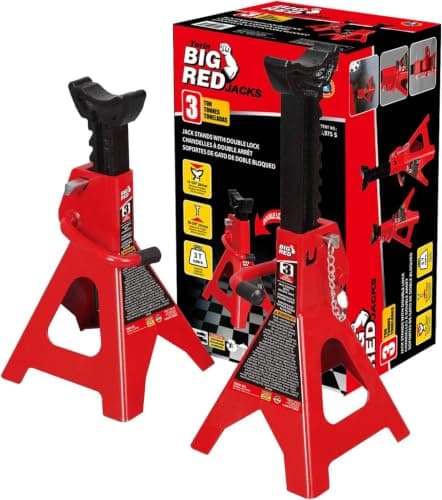
BIG RED T43002A 3-Ton Double-Locking Jack Stands, Amazon product photo
BIG RED T43002A 3-Ton Double-Locking Jack StandsWhen the job really does want a stand
3 ton (6,000 lb) per pair9.1

Product photographs come from each product's own Amazon listing via the Associates program. They are the seller's images, not photographs of anything we own — we have no test rig and claim none.

VEVOR Car Service Ramps (16,000 lb GVW, 6.7 in Lift), Amazon product photo

Short answer: no. If the car is driven fully onto both ramps, the ramps are rated for the vehicle, and the wheels still on the ground are chocked, the ramps are the support — there is nothing for a jack stand to add. Putting a stand under a wheel that is already resting on a ramp does not create redundancy; it creates two supports at slightly different heights, and the car ends up carried by whichever one is higher.

Why a ramp is already a support

The distinction this whole site runs on is between tools that lift and tools that hold. A floor jack lifts: it is hydraulic, it has a valve, and it can lower under load, which is why the car always comes off it and onto something mechanical. A jack stand holds. A car ramp also holds — it is a solid molded or welded structure with no moving parts and no hydraulics, carrying the tire directly.

That is why a ramp needs no backup of the same kind. It is not holding the car up through a mechanism that could release; it is a shaped block the tire is sitting on. The published rating is the thing to respect — 16,000 lb GVW per pair on the VEVOR ramps, 5,000 lb per axle on the Black Widow low-profile — and the comparison is to the gross weight on your door-jamb sticker.

What goes wrong if you use both on the same wheel

The short version

  • Two supports at different heights means only one is carrying load. You now have a stand you are trusting and a ramp you are also trusting, and no way to tell which is doing the work.
  • A ramp holds the tire; a stand holds the body or frame. Loading both at once fights the suspension against itself and can unload the ramp as the body settles.
  • A stand set under a car whose wheels are on ramps is usually at an awkward angle on a point the manual never nominated, because the car is nose-up.
  • Every extra thing under a car is one more thing to kick, catch a sleeve on, or dislodge with a breaker bar.

The honest version is simpler: pick one support method per end of the car and do it properly. Car ramps versus jack stands is the page for deciding which.

When stands genuinely belong in the job

Ramps, stands, or both — by what the job needs
SituationWhat to useWhy
Oil change, front of car raisedRamps only, rear wheels chockedNothing needs to come off; the tires stay loaded on the ramps
Underbody inspection, exhaust, undertrayRamps only, rear wheels chockedSame - you need clearance, not wheels off
Front brakes or front wheels offJack and stands, not rampsA wheel cannot come off a tire that is carrying the car on a ramp
Rear wheels off, front on rampsRamps at the front, jack and stands at the rearEach end supported by one method, neither duplicated
Whole car off the groundFour jack standsRamps cannot support a wheel that is in the air
Gearbox or exhaust work needing the car levelFour jack standsRamps raise one end only, so the car sits nose-up
Ramps, stands, or both — by what the job needs

The fourth row is the one people are usually asking about when they search this. Front on ramps, rear up on stands is a legitimate setup: it gives you a level-ish car and a lot of working room, and each end is supported by exactly one method. Chock nothing in that case — there is nothing left on the ground — but do test the car at all four corners before going underneath.

Chocks are the real companion to ramps

This is the substitution worth making: the thing people reach for a jack stand to solve — "what if it moves?" — is a rolling problem, and a chock solves rolling problems. A stand does not.

Leaving the jack in contact

On a stands job, leaving the floor jack lightly in contact with the lift point after the stands take the weight is good practice: it is a free redundant support that costs nothing and relies on nothing. On a ramps job there is no equivalent, because the jack has no lift point to sit under while the tire is up a ramp — and this is fine. The ramp is not a tool that fails the way a jack can.

What ramps do fail at is the first three seconds, before the car is on them. Are car ramps safe walks through the three real failure modes, and how to use car ramps is the procedure that avoids all of them.

The short rule

One support method per end, every time. Ramps at the front and chocks at the rear for anything that does not need a wheel off. Jack and stands when a wheel has to come off. Ramps at one end and stands at the other if you need both ends up at once. Never a ramp and a stand under the same wheel, and never a floor jack as the thing holding the car.

The picks in full

Every pick, in detail

VEVOR Car Service Ramps (16,000 lb GVW, 6.7 in Lift), Amazon product photo

1. The support you are standing on

VEVOR Car Service Ramps (16,000 lb GVW, 6.7 in Lift)

VEVOR · score 8.9/10

16,000 lb GVW rating, a 17-degree incline and a deep-grooved honeycombed surface — the default answer for oil changes on anything that is not slammed.

16,000 lb GVW for the pair, a 17-degree incline and a deep-grooved surface. The surface is the part that makes a ramp a support rather than a wedge: the failure people actually experience is the ramp sliding forward as the tire meets it, not the ramp collapsing. Impact-resistant PP, and they stack for storage.

Published specifications

Capacity
16,000 lb GVW per pair VEVOR
Per ramp
4,000 lb VEVOR
Incline
17 degrees VEVOR
Lift height
6.7 in VEVOR
Dimensions
35.8 in x 12 in x 8.5 in VEVOR
Material
Impact-resistant PP VEVOR

What works

  • GVW rating covers almost any car, crossover or half-ton pickup
  • Deep-grooved honeycombed surface holds the tire instead of letting it creep
  • Stackable shape stores against a garage wall or in a trunk

What you give up

  • A 17-degree incline is too steep for low front bumpers
  • Ramps only ever support the front axle — wheels stay on
  • VEVOR publishes no non-skid base, so these need flat, clean ground

Our scoring

  • Fit & reach8.4
  • Safety margin8.8
  • Beginner ease9.4
  • Build quality8.4
  • Value9.2
$71.50 · View on Amazon

#ad Price as of October 16, 2026. How this is funded

Specifications published by VEVOR — we earn nothing from that link.

Camco 44471 Wheel Chock with Rope (2-Pack), Amazon product photo

2. The part that replaces the stand

Camco 44471 Wheel Chock with Rope (2-Pack)

Camco · score 9.0/10

A pair of UV-stable plastic chocks with pull ropes, sized for tires up to 26 in — the cheapest part of a safe lift and the one people skip.

Chocks are what stop a car on ramps from rolling, and they are the step people skip because the ramps feel solid. Two chocks snug against the tires still on the ground, on the downhill side, every time — this is the cheapest safety item in the garage and the one with the clearest job.

Published specifications

Quantity
2 chocks Camco listing
Fits tires
Up to 26 in diameter Camco listing
Removal
Attached rope handle Camco listing
Material
Hard plastic with UV inhibitors Camco listing
Origin
Made in the USA Camco listing

What works

  • The rope means you can pull it out without reaching under the car
  • Two in the box, which is the number you actually need
  • UV inhibitors mean it survives being left outside

What you give up

  • Rated for tires up to 26 in — too small for a truck tire
  • Plastic can slide on a dusty or oily floor
  • Camco publishes no chock dimensions or rope length

Our scoring

  • Fit & reach8.8
  • Safety margin8.8
  • Beginner ease9.6
  • Build quality8.2
  • Value9.6
$17.99 · View on Amazon

#ad Price as of October 16, 2026. How this is funded

Specifications published by Camco — we earn nothing from that link.

BIG RED T43002A 3-Ton Double-Locking Jack Stands, Amazon product photo

3. When the job really does want a stand

BIG RED T43002A 3-Ton Double-Locking Jack Stands

Torin (BIG RED) · score 9.1/10

A ratchet bar plus a separate safety pin — two independent locks instead of one — at the height range a car actually needs, and Torin states they meet ASME safety standards.

Two independent locks — a sawtooth ratchet bar plus a separate safety pin — with an 11-1/4 in to 16-3/4 in range. These belong in the ramp conversation only in one situation: the front is on ramps and you now need the rear wheels off the ground too. Then the rear goes up on a jack and onto these, and the ramps keep doing their job at the front. Rated 3 ton per pair, so 3,000 lb per stand.

Published specifications

Capacity
3 ton (6,000 lb) per pair Torin
Min height
11-1/4 in Torin
Max height
16-3/4 in Torin
Base footprint
7-11/16 in x 6-7/8 in Torin
Standards
Meets ASME safety standards Torin

What works

  • Two independent locking mechanisms, not one
  • 11-1/4 in to 16-3/4 in matches what a 3-ton floor jack can reach
  • The cheapest way to buy a genuinely double-locked stand

What you give up

  • Rated per pair, not per stand — read the rating before loading two corners
  • 11-1/4 in minimum is taller than some low cars want
  • Torin's own listing says this size is not intended for SUVs or trucks

Our scoring

  • Fit & reach8.6
  • Safety margin9.2
  • Beginner ease9.0
  • Build quality8.2
  • Value9.4
$35.99 · View on Amazon

#ad Price as of October 16, 2026. How this is funded

Specifications published by Torin (BIG RED) — we earn nothing from that link.

Method

How these picks were chosen

We did not test these tools. We do not run a laboratory, we have not loaded a jack to failure or checked a wrench on a calibration bench, and we will not tell you otherwise. What we did instead is read the published manufacturer specifications, check the figures that matter against the safety standard that applies to portable automotive lifting equipment, and work out which tool suits which job. Every number on this page links to where it came from, so you can check us.

The five things we score are the five that decide a first purchase: will it fit under and lift your car, how much safety margin the rating and the locking mechanism leave you, how hard it is to get right alone in a driveway, what the materials and published standards say about how long it lasts, and what the money buys against the rest of the field.

Read the full method — including how we pick a top pick, and how prices get on the page.

Questions

Frequently asked questions

+Can you use car ramps and jack stands together?

Yes, but at opposite ends of the car — front wheels on ramps and the rear raised onto stands, for example. Never both under the same wheel: two supports at slightly different heights means only one is carrying the load and you cannot tell which.

+Are car ramps as safe as jack stands?

Within their published rating, on flat clean concrete, with the other wheels chocked, ramps are a solid mechanical support with no moving parts. The risk with ramps is concentrated in driving onto them; the risk with stands is concentrated in the lift and the load transfer. Both are safe when used as designed, and neither is safe on a slope or on gravel.

+Do I need to chock the wheels if the car is on ramps?

Yes. The car is nose-up on an incline and the only things resisting a roll are the handbrake and the transmission. Two chocks against the tires still on the ground, on the downhill side, every time.

+Can I take a wheel off while the car is on ramps?

No. The ramp supports the car through that tire, so the wheel cannot be removed. Any job that needs a wheel off is a jack-and-stands job.

Sources

Where these figures come from

Read next

Related reading