Skip to content
JACK & TORQUE

Comparison

Aluminum vs Steel Floor Jacks

Same load rating, different weight, different price. The only question is whether you will be carrying it.

By Ryder M. · Published September 26, 2026 · Last reviewed September 26, 2026

We earn a commission when you buy through the Amazon links on this page, at no extra cost to you. It never changes which tool we put first, and we publish no price we have not verified. How this site is funded.

Aluminum vs Steel Floor Jacks — ranked picks with scores and a price check for each
#PickCapacityScorePrice
1
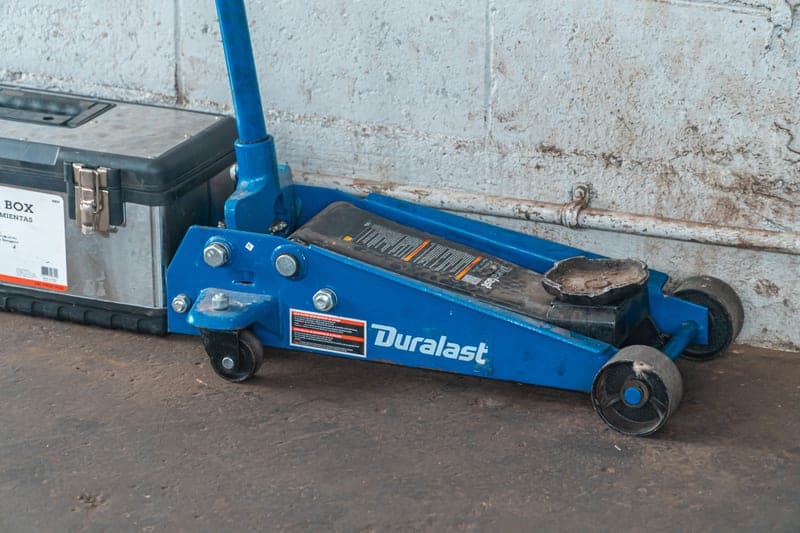
A blue hydraulic floor jack standing beside an open toolbox on a garage floor
Arcan 3-Ton Aluminum Floor Jack (A20018)The aluminum case
3 ton9.0
2
Hand tools and automotive parts laid out on a stool in a repair shop
BIG RED T83006 3-Ton Hydraulic Trolley JackThe steel case
3 ton (6,000 lb)8.5
3
A mechanic examining the underside of a car in a garage
Sunex 6603ASJ 3-Ton Aluminum Service JackAluminum without the weight saving
3 ton8.7

Photographs on this page are licensed stock images that show the category, not the exact model, and not anything we own. We have no test rig and claim none.

Hand tools and automotive parts laid out on a stool in a repair shop

Short answer: aluminum and steel jacks of the same rating lift the same load. Aluminum costs more and weighs less. If you will be carrying the jack — into a trunk, over a step, to someone else's driveway — the premium is worth it. If it lives on a garage floor and rolls the four feet to the car, it buys you nothing and steel is the better value.

Aluminum is not stronger, and steel is not safer

Both claims circulate and both are wrong. A jack's rated capacity is a published figure determined by its design, and a 3-ton aluminum jack and a 3-ton steel jack are both 3-ton jacks. Aluminum has a lower density and a lower stiffness than steel, so an aluminum component has to be physically bigger to do the same job — which is why aluminum jacks look chunky. The engineering absorbs the material difference.

What material does change is corrosion behavior and repairability. Aluminum does not rust, which matters if the jack lives somewhere damp. Steel can be welded if something cracks; aluminum realistically cannot, outside a specialist shop.

The real differences

Aluminum versus steel floor jacks
AluminumSteel
Weight, 3-ton service jackAbout 50-58 lbTypically heavier for the same rating
PriceHigherLower
Load rating at the same sizeSameSame
CorrosionDoes not rustRusts if the finish is damaged
Chassis size for the same liftLargerSmaller
Repairable by weldingRealistically noYes
Best suited toA jack that travelsA jack that stays put
Aluminum versus steel floor jacks

How much weight are we actually talking about

Less than the marketing implies. The aluminum jacks we list sit at 52.91 lb and 58 lb. That is light for the class, and it is not light in absolute terms — you are still lifting most of a bag of cement into a trunk. If the reason you want aluminum is that you cannot comfortably lift 50 lb, check the published weight rather than trusting the material, because some aluminum jacks weigh more than some steel ones.

Who should buy which

Buy aluminum if

  • The jack will live in a car, or be carried regularly
  • You are storing it somewhere damp or unheated
  • You want the lowest minimum height available — the genuinely low jacks are mostly aluminum

Buy steel if

  • It lives on a garage floor and rolls to the car
  • You want the most lift height per dollar
  • You expect it to be knocked about for a decade

The picks in full

Every pick, in detail

A blue hydraulic floor jack standing beside an open toolbox on a garage floor

1. The aluminum case

Arcan 3-Ton Aluminum Floor Jack (A20018)

Arcan · score 9.0/10

A 3-ton aluminum service jack that slides under a stock sedan at 3.78 in and still reaches 18.9 in — the widest useful range a beginner can buy at one weight they can actually move.

52.91 lb for a 3-ton jack with a 3.78 in to 18.9 in range. Arcan calls the material aircraft-grade aluminum; what it buys you is a jack one person can lift into a trunk, at the same rating as a heavier steel equivalent.

Published specifications

Min saddle height
3.78 in Arcan Professional Tools
Max lift height
18.9 in Arcan Professional Tools
Material
Aluminum Arcan Professional Tools

What works

  • Fits under most unmodified sedans without ramps or boards
  • 18.9 in of lift clears a wheel on a crossover, not just a car
  • Aluminum keeps it at a weight one person can lift into a trunk

What you give up

  • Costs noticeably more than a steel jack of the same capacity
  • Arcan does not publish an ASME PASE compliance statement for this model
  • 52.91 lb is light for the class, not light in absolute terms

Our scoring

  • Fit & reach9.4
  • Safety margin8.8
  • Beginner ease9.0
  • Build quality8.8
  • Value8.0
Check price on Amazon

#ad No price shown — we have no live feed. How this is funded

Specifications published by Arcan — we earn nothing from that link.

Hand tools and automotive parts laid out on a stool in a repair shop

2. The steel case

BIG RED T83006 3-Ton Hydraulic Trolley Jack

Torin (BIG RED) · score 8.5/10

Reaches 20-7/8 in, which is the number that matters if your vehicle sits high — but its 5-7/8 in minimum means it will not slide under a low car.

Steel, 3 ton, 5-7/8 in to 20-7/8 in, at a price the aluminum jacks cannot approach. If it lives on a garage floor and you never lift it, the extra mass costs you nothing and the extra lift height is a real gain.

Published specifications

Capacity
3 ton (6,000 lb) Torin
Lift range
5-7/8 in – 20-7/8 in Torin
Material
Steel Torin
Handle length
24.5 in Torin
Overload protection
Safety bypass system Torin

What works

  • 20-7/8 in of lift handles pickup and SUV ride heights
  • Extra-long saddle neck saves pumping on tall vehicles
  • Steel construction at a price most first-time buyers will accept

What you give up

  • 5-7/8 in minimum height rules out most low cars
  • Heavier to move around than an aluminum jack of the same capacity
  • Single-piston pump means more strokes than a dual-piston jack

Our scoring

  • Fit & reach8.2
  • Safety margin8.6
  • Beginner ease8.4
  • Build quality8.2
  • Value9.0
Check price on Amazon

#ad No price shown — we have no live feed. How this is funded

Specifications published by Torin (BIG RED) — we earn nothing from that link.

A mechanic examining the underside of a car in a garage

3. Aluminum without the weight saving

Sunex 6603ASJ 3-Ton Aluminum Service Jack

Sunex Tools · score 8.7/10

3.8 in to 20 in on a dual-piston pump that reaches full height in under six strokes — the least tiring jack here to use repeatedly.

At 58 lb it is the heaviest aluminum jack we list, which is a useful reminder that the material is not the whole story: a bigger, longer aluminum chassis with a dual-piston pump can weigh as much as a smaller steel jack. Buy it for the 3.8 in to 20 in range and the pump, not for the material.

Published specifications

Capacity
3 ton Summit Racing listing
Min lift height
3.8 in Summit Racing listing
Max lift height
20 in Summit Racing listing
Base length
26-1/2 in Summit Racing listing

What works

  • Dual-piston rapid rise reaches maximum height in under six pumps
  • 3.8 in minimum and 20 in maximum covers cars and crossovers on one jack
  • Side handles make repositioning it in a tight garage manageable

What you give up

  • 58 lb — the heaviest aluminum jack in this set
  • 26-1/2 in chassis needs real floor space to swing the handle
  • Priced as a professional tool, not a first purchase

Our scoring

  • Fit & reach9.2
  • Safety margin8.8
  • Beginner ease8.6
  • Build quality9.0
  • Value7.6
Check price on Amazon

#ad No price shown — we have no live feed. How this is funded

Specifications published by Sunex Tools — we earn nothing from that link.

Method

How these picks were chosen

We did not test these tools. We do not run a laboratory, we have not loaded a jack to failure or checked a wrench on a calibration bench, and we will not tell you otherwise. What we did instead is read the published manufacturer specifications, check the figures that matter against the safety standard that applies to portable automotive lifting equipment, and work out which tool suits which job. Every number on this page links to where it came from, so you can check us.

The five things we score are the five that decide a first purchase: will it fit under and lift your car, how much safety margin the rating and the locking mechanism leave you, how hard it is to get right alone in a driveway, what the materials and published standards say about how long it lasts, and what the money buys against the rest of the field.

Read the full method — including how we pick a top pick, and why we publish no prices.

Questions

Frequently asked questions

+Is an aluminum floor jack strong enough for a truck?

Rated capacity is what determines that, not material. A 3-ton aluminum jack handles a truck corner. The more likely limitation is maximum lift height — check it reaches your vehicle's lift point with room for a stand underneath.

+Why are aluminum jacks so much more expensive?

Aluminum costs more per pound than steel and needs more material to reach the same stiffness, so the part is both pricier and bigger. You are paying for a weight saving, not for extra capacity.

+Do steel floor jacks rust?

They can, once the paint or plating is chipped, and a garage floor chips finishes. It is a cosmetic problem long before it is a structural one, but inspect the ram and the arm — rust on a ram will damage the seal.

+Which lasts longer?

We have no test data to answer that honestly. What we can say is that the failure modes differ: steel corrodes and can be welded, aluminum does not corrode and cannot practically be repaired. Seals wear out on both, and on both that is the usual first problem.

Sources

Where these figures come from

Read next

Related reading