
Skip to content
JACK & TORQUE

Comparison

Floor Jack vs Scissor Jack

The scissor jack in your trunk is designed for one roadside tire change. It is not a garage tool, and that is by design.

By Ryder M. · Published September 26, 2026 · Last reviewed September 26, 2026

We earn a commission when you buy through the Amazon links on this page, at no extra cost to you. It never changes which tool we put first, and we publish no price we have not verified. How this site is funded.

Floor Jack vs Scissor Jack — ranked picks with scores and a price check for each
#PickCapacityScorePrice
1
Automotive hand tools and equipment arranged on a workshop surface
Pro-Lift F-767 2-Ton Low-Profile Floor JackThe cheapest real upgrade
2 ton7.8
2
A blue hydraulic floor jack standing beside an open toolbox on a garage floor
Arcan 3-Ton Aluminum Floor Jack (A20018)The upgrade worth saving for
3 ton9.0
3
A car tire resting on a cobblestone road
Camco 44472 Wheel Chock with RopeThe thing to buy alongside either
8-1/8 in x 4-5/8 in x 5-3/8 in9.0

Photographs on this page are licensed stock images that show the category, not the exact model, and not anything we own. We have no test rig and claim none.

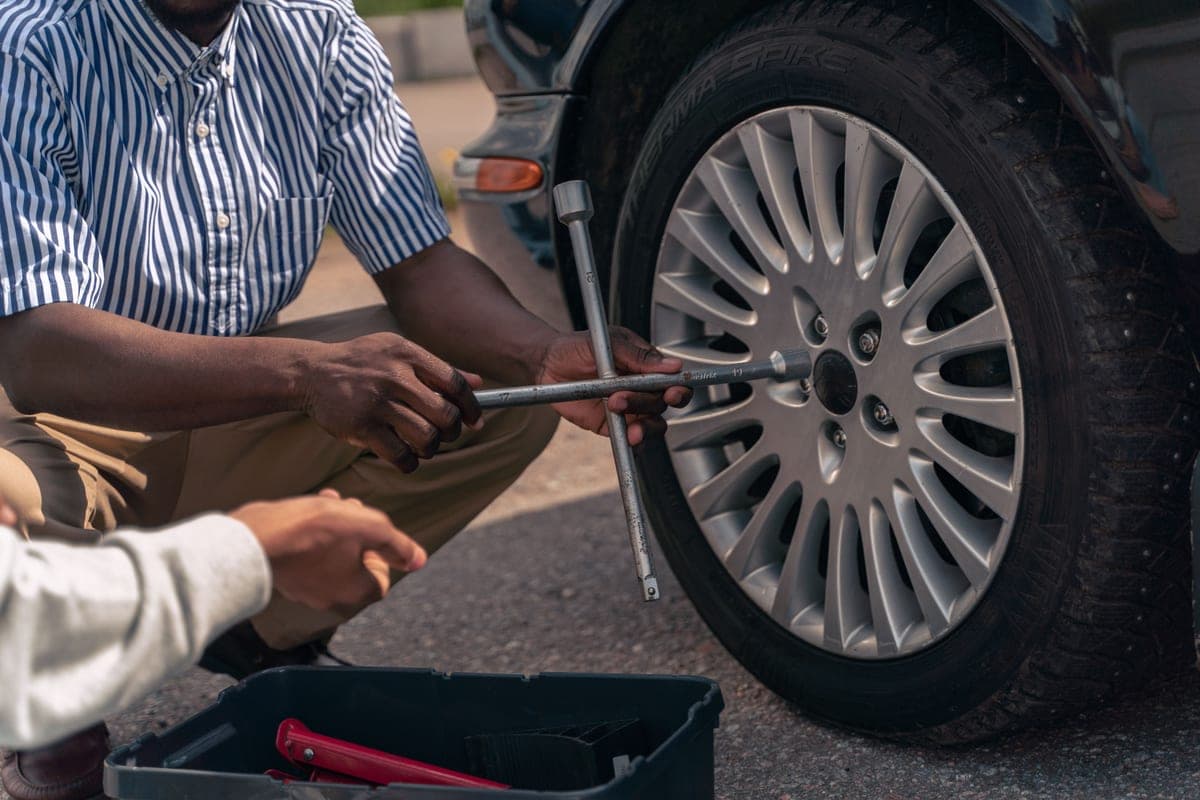
An adult showing a teenager how to change a tire at the roadside

Short answer: the scissor jack that came with your car is an emergency tool designed to lift one corner, once, long enough to swap a wheel at the roadside. It is small, light and slow because those were the design goals. A floor jack is a maintenance tool: it lifts faster, higher, more stably, and it rolls. Neither replaces the other, and a scissor jack is not a budget floor jack.

Side by side

Scissor jack versus floor jack for different uses
Scissor jackFloor jack
Designed forOne roadside wheel changeRepeated garage lifting
MechanismThreaded screw, hand crankHydraulic ram, pumped handle
SpeedSlow — dozens of turnsFast — a handful of pump strokes
BaseNarrow, small footprintWide, wheeled
Rolls as it liftsNoYes
Stows in a carYes, in the spare wellOnly the lighter aluminum jacks
Suitable for extended workNoYes, with stands
Scissor jack versus floor jack for different uses

What the scissor jack is genuinely good at

Fitting in the spare wheel well and weighing nothing. That is not faint praise — a jack that is in the car when you need it beats a better jack that is at home. It is also matched by the manufacturer to your specific vehicle's lift point, which is more than you can say for a generic jack, and it holds position mechanically through a screw thread rather than on hydraulic pressure.

That last point is interesting: a screw jack does not creep down when a seal passes, because there is no seal. It is still not a support — the narrow base is the problem, not the mechanism — but it fails differently from a hydraulic jack.

Where it stops

Three places. First, stability: the footprint is tiny, and on anything less than flat firm ground a scissor jack is easy to tip. Second, speed: dozens of crank turns per corner makes any job involving repeated lifting genuinely unpleasant. Third, height and range: it lifts enough to get a wheel off, not enough to give you working room underneath with a stand in place.

Add them up and you get a tool that is correct for its design job and wrong for maintenance. Using one for a brake job is the kind of decision that looks fine right up until it does not.

Keep the scissor jack anyway

Buying a floor jack is not a reason to throw out the one in your trunk. Keep it where it is, with the wheel brace, and check occasionally that the crank handle is still in the car. Roadside and garage are different problems and the tools are not interchangeable in either direction — you are not going to put a 52 lb floor jack and two stands in the trunk for a motorway shoulder.

The picks in full

Every pick, in detail

Automotive hand tools and equipment arranged on a workshop surface

1. The cheapest real upgrade

Pro-Lift F-767 2-Ton Low-Profile Floor Jack

Pro-Lift · score 7.8/10

The cheapest jack here that still starts at 3-1/2 in — but 14 in of maximum lift is the ceiling you have to plan around.

If the scissor jack is what you have and you want one purchase that makes maintenance possible, this is the least you can spend and still get a proper wheeled hydraulic jack: 3-1/2 in to 14 in, 2 ton, with a safety valve and bypass.

Published specifications

Capacity
2 ton Pro-Lift
Lift range
3-1/2 in – 14 in Pro-Lift
Material
Steel Pro-Lift
Overload protection
Built-in safety valve and bypass Pro-Lift

What works

  • 3-1/2 in minimum height fits under most sedans
  • Cheapest route into a real hydraulic floor jack
  • Small enough to keep in a car trunk

What you give up

  • 14 in maximum lift is not enough for many SUVs or trucks
  • 2 ton leaves less capacity headroom than a 3-ton jack
  • Steel at this price means more flex under load than the aluminum jacks

Our scoring

  • Fit & reach7.0
  • Safety margin7.6
  • Beginner ease8.4
  • Build quality7.2
  • Value9.2
Check price on Amazon

#ad No price shown — we have no live feed. How this is funded

Specifications published by Pro-Lift — we earn nothing from that link.

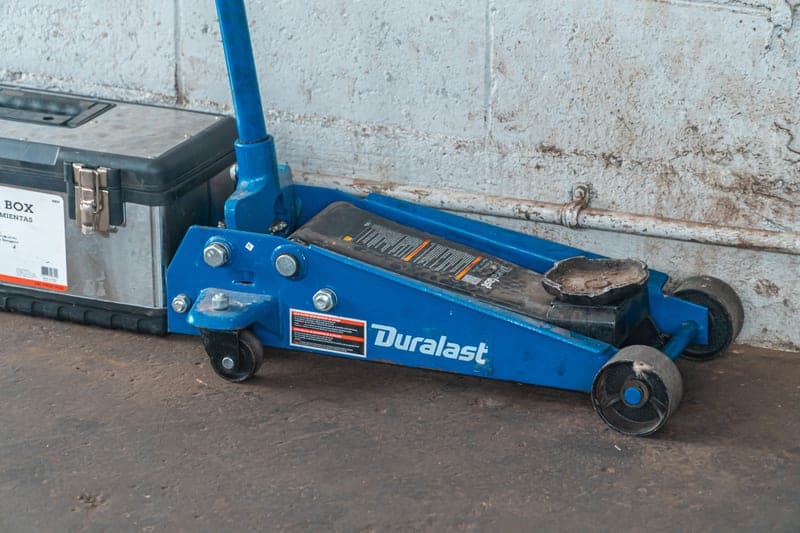
A blue hydraulic floor jack standing beside an open toolbox on a garage floor

2. The upgrade worth saving for

Arcan 3-Ton Aluminum Floor Jack (A20018)

Arcan · score 9.0/10

A 3-ton aluminum service jack that slides under a stock sedan at 3.78 in and still reaches 18.9 in — the widest useful range a beginner can buy at one weight they can actually move.

3.78 in to 18.9 in gives you the range to do actual work rather than just get a wheel off the ground, and 52.91 lb of aluminum is portable enough to keep in a trunk if you want a serious roadside tool too.

Published specifications

Min saddle height
3.78 in Arcan Professional Tools
Max lift height
18.9 in Arcan Professional Tools
Material
Aluminum Arcan Professional Tools

What works

  • Fits under most unmodified sedans without ramps or boards
  • 18.9 in of lift clears a wheel on a crossover, not just a car
  • Aluminum keeps it at a weight one person can lift into a trunk

What you give up

  • Costs noticeably more than a steel jack of the same capacity
  • Arcan does not publish an ASME PASE compliance statement for this model
  • 52.91 lb is light for the class, not light in absolute terms

Our scoring

  • Fit & reach9.4
  • Safety margin8.8
  • Beginner ease9.0
  • Build quality8.8
  • Value8.0
Check price on Amazon

#ad No price shown — we have no live feed. How this is funded

Specifications published by Arcan — we earn nothing from that link.

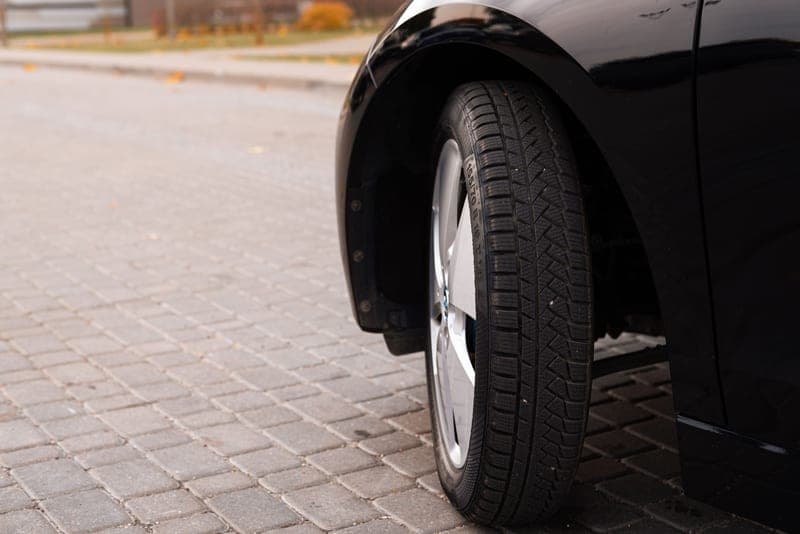
A car tire resting on a cobblestone road

3. The thing to buy alongside either

Camco 44472 Wheel Chock with Rope

Camco · score 9.0/10

A UV-stable plastic chock with a pull rope, sized for tires up to 26 in — the cheapest part of a safe lift and the one people skip.

Roadside or driveway, a chock is what stops the car rolling while one wheel is off the ground. Camco's is UV-stable plastic sized for tires up to 26 in, with a 23 in rope so you can pull it out without reaching under the car. Buy two.

Published specifications

Dimensions
8-1/8 in x 4-5/8 in x 5-3/8 in Camco
Fits tires
Up to 26 in Camco
Rope
23 in Camco
Material
Hard plastic with UV inhibitors Camco

What works

  • The rope means you can pull it out without reaching under the car
  • Costs less than a single lug nut and stops the car rolling
  • UV inhibitors mean it survives being left outside

What you give up

  • Camco states it is not for commercial trucks or trailers
  • Plastic can slide on a dusty or oily floor
  • Sold singly — buy two

Our scoring

  • Fit & reach8.8
  • Safety margin8.8
  • Beginner ease9.6
  • Build quality8.2
  • Value9.6
Check price on Amazon

#ad No price shown — we have no live feed. How this is funded

Specifications published by Camco — we earn nothing from that link.

Method

How these picks were chosen

We did not test these tools. We do not run a laboratory, we have not loaded a jack to failure or checked a wrench on a calibration bench, and we will not tell you otherwise. What we did instead is read the published manufacturer specifications, check the figures that matter against the safety standard that applies to portable automotive lifting equipment, and work out which tool suits which job. Every number on this page links to where it came from, so you can check us.

The five things we score are the five that decide a first purchase: will it fit under and lift your car, how much safety margin the rating and the locking mechanism leave you, how hard it is to get right alone in a driveway, what the materials and published standards say about how long it lasts, and what the money buys against the rest of the field.

Read the full method — including how we pick a top pick, and why we publish no prices.

Questions

Frequently asked questions

+Can I use a scissor jack for an oil change?

You should not. It lifts one corner, it is unstable, and an oil change means being under the car. Use ramps — faster and simpler — or a floor jack with stands.

+Are scissor jacks safe?

For their design purpose — a roadside wheel change on flat ground, with nobody under the car — yes. As a support for working underneath, no. The limiting factor is the narrow base, not the screw mechanism.

+Why is my scissor jack so slow?

Because it is a screw thread, and the mechanical advantage that lets a small crank lift a car is paid for in turns. That is a design choice for compactness, not a fault.

+Should I upgrade the jack in my trunk?

If you want a better roadside tool, a compact bottle jack or a light aluminum floor jack both work, provided you also carry a chock. The stock scissor jack is matched to your car's lift points, so keep it as the backup.

Sources

Where these figures come from

Read next

Related reading