The short version: a jack stand's capacity may be quoted per stand or per pair, the listing frequently does not say which, and the two differ by a factor of two. Torin quotes its T43002A as 3 ton (6,000 lb) per pair. ESCO quotes its 10498 as 3 ton per stand. Same headline number, half the per-stand capacity. Read the figure on the stand itself, and if it is ambiguous, assume the lower interpretation.
When the difference actually matters
Under one corner of a normal car, it does not. A 3,500 lb sedan puts roughly 1,000 lb on a stand, and even the conservative reading of a 3-ton pair gives you 3,000 lb per stand. You have triple margin either way.
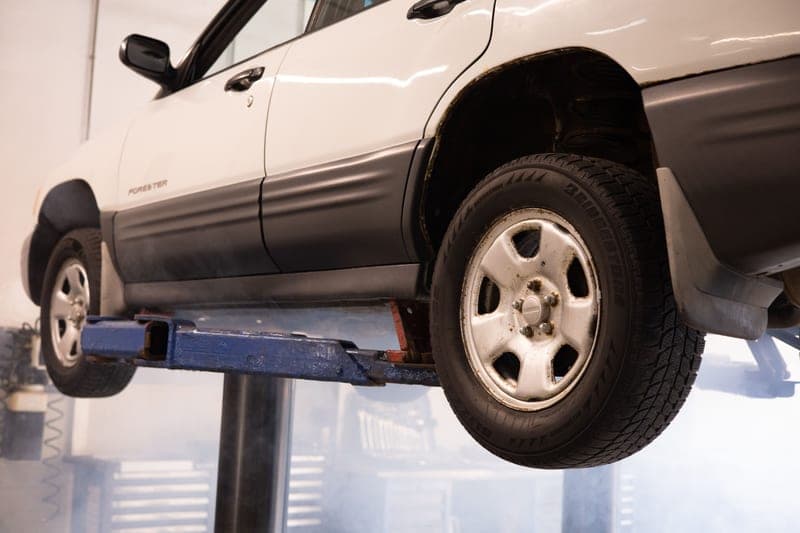
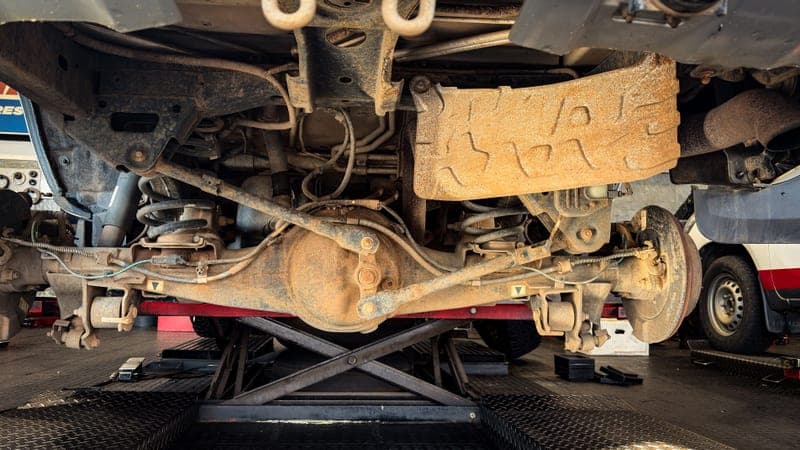
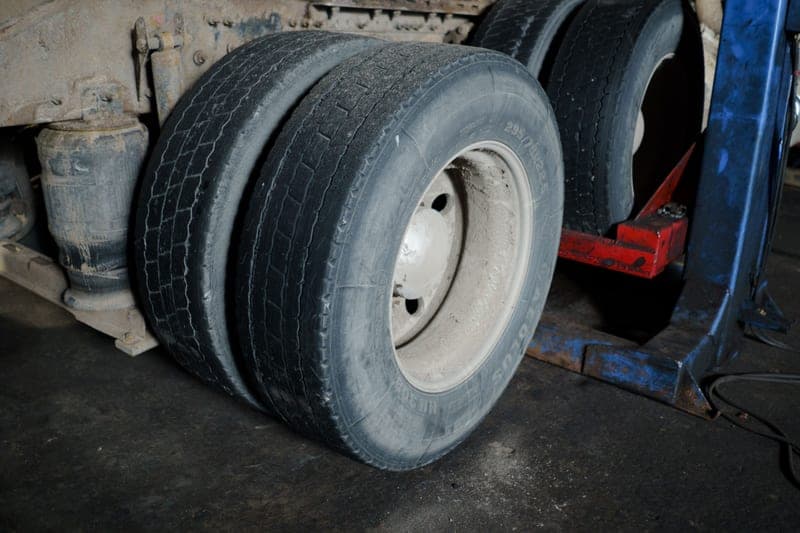
It matters in three situations: heavy vehicles, lifting a whole end of the car onto a pair of stands placed at a single central point each, and loaded vehicles — a van with tools in it, a truck with a full bed.
Working out what your vehicle needs
1.Read the door-jamb sticker
It lists gross vehicle weight rating (GVWR) and usually the front and rear axle ratings (GAWR). These are maximums including load, so they are conservative — exactly what you want for sizing.
2.Take the axle rating for the end you are lifting
Lifting the front? Use the front GAWR. That is the most weight that axle is rated to carry.
3.Halve it for a per-stand figure
Two stands share the axle load. Divide by two, and that is what each stand has to carry in the worst case.
4.Compare against the per-stand capacity, not the headline
If the stand is rated per pair, halve the headline number before comparing. Aim for the stand's capacity to be at least double the load you calculated.
| Vehicle type | Front GAWR (typical) | Per stand | 3-ton pair (3,000 lb each)? |
|---|---|---|---|
| Compact car | 2,200 lb | 1,100 lb | Yes, ample |
| Mid-size sedan | 2,700 lb | 1,350 lb | Yes, ample |
| Mid-size SUV | 3,300 lb | 1,650 lb | Yes, but check the height |
| Half-ton pickup | 4,000 lb | 2,000 lb | Marginal — go to 6 ton |
Those GAWR figures are typical ranges for illustration; your door sticker is the authority for your vehicle. The pattern is the useful part: cars have enormous margin, trucks do not.
What a rating does not tell you
Capacity is a static vertical load figure. It says nothing about:
- Side loading. A stand on a slope, or a car pushed sideways, loads the column in a direction the rating does not cover.
- Base behavior. A stand rated for 6,000 lb still sinks into hot asphalt if the base is small. That is a ground problem, not a capacity problem.
- Placement. The rating assumes the load is on the saddle. Under a non-structural part of the car, the car fails before the stand does.
The habit worth forming
Before the first use of any pair of stands, find the rating stamped or cast into the stand itself and note whether it says per pair. Write it somewhere if you need to. It takes a minute once, and it removes the single most common misunderstanding in the category permanently.
Best 3-ton jack stands lists the rating basis alongside each pick, and the floor jack capacity guide does the same arithmetic for the lifting half.