Short answer: the TEKTON TRQ50402 is the best calibrated torque wrench we cover, because it is the only one that names the standards - ISO 6789-1:2017 and ASME B107.300-2021 - behind its ±3% figure, and ships a certificate of calibration in the case. If you want the tightest number, the GEARWRENCH 85077 publishes ±2% clockwise, though its calibration is warranted for only 90 days. If you want a wrench that holds its calibration through years of careless storage, the Precision Instruments C3FR250F is a split-beam with a dated certificate and nothing to wind down. The budget pick is the EPAuto 1/2 in click wrench: a published 4% figure, no certificate. Every price cell in the table above is live and stamped with the date it was read.
What we judged these on
1. Whether a standard is named
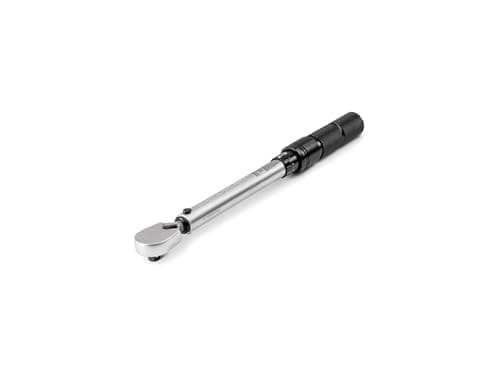
Only TEKTON does it, on the TRQ50402, and the difference is not marketing. A percentage on its own leaves open which direction it applies in, over what portion of the range, and at how many test points. ISO 6789-1:2017 and ASME B107.300-2021 answer those questions, so a claim referencing them is a claim with a method attached. Everything else on this page publishes a number without a document. That is not dishonest - it is just less checkable, and we rank it accordingly.
2. Whether the figure says where in the range it applies
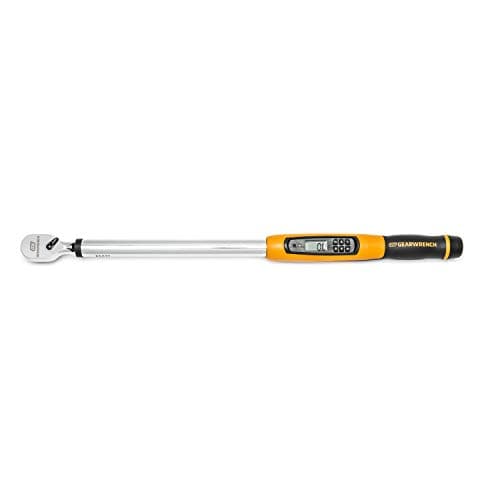
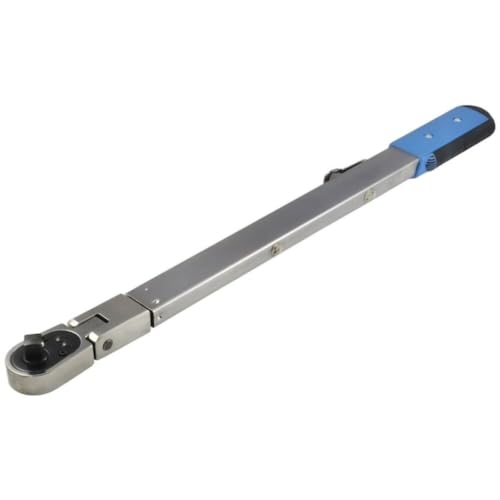
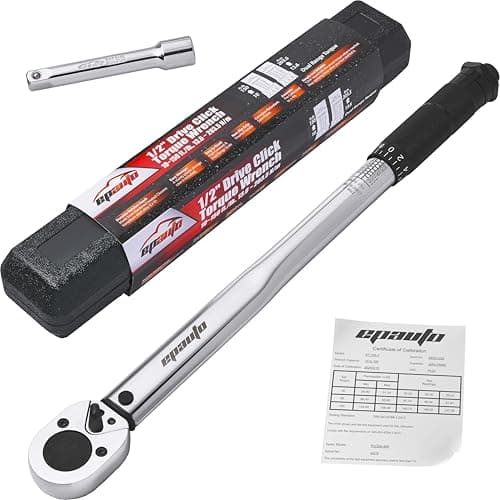
A torque wrench is least accurate at the bottom of its scale, which is why the scope statement matters as much as the percentage. GEARWRENCH publishes ±2% CW and ±3% CCW specifically "from 20% to 100% of scale" - that is the honest shape of the claim, and it also tells you not to use the bottom fifth of the range. TEKTON publishes ±3% clockwise and counter-clockwise. Precision Instruments publishes ±4%. EPAuto publishes 4% with no direction or scope. Whenever a scope is published, read it as advice about which wrench to reach for. What size torque wrench do I need is the sizing consequence.
3. Whether a certificate actually comes in the box
TEKTON publishes a certificate of calibration with the TRQ50402. Precision Instruments publishes a dated calibration certificate with the C3FR250F. GEARWRENCH publishes a 90-day calibration warranty rather than a certificate. EPAuto publishes neither. A dated certificate is the most useful of the four, because recalibration intervals are counted from a date - and without one you are guessing when the clock started.
4. How easily the calibration survives you
The least discussed axis and arguably the most practical. A click wrench holds its setting with a compressed spring; leaving it dialed up in a drawer for a year is how a good wrench goes out of spec, and both TEKTON wrenches and the EPAuto need winding back to their lowest setting after every use. The Precision Instruments split-beam has no spring to leave loaded, so the storage mistake stops existing. The GEARWRENCH is electronic, with no spring but with batteries. Split beam vs click torque wrench is the mechanism comparison in full.
The four on published accuracy
| Wrench | Published accuracy | Standard named | Certificate |
|---|---|---|---|
| TEKTON TRQ50402 (1/4 in) | ±3% CW and CCW | ISO 6789-1:2017, ASME B107.300-2021 | Certificate of calibration in the case |
| GEARWRENCH 85077 (1/2 in) | ±2% CW, ±3% CCW, 20-100% of scale | None published | Calibration warranted 90 days |
| Precision Instruments C3FR250F (1/2 in) | ±4% | None published | Dated calibration certificate |
| EPAuto (1/2 in) | Pre-calibrated to 4% | None published | None |
The first row is the only one with an entry in every column, which is the whole ranking. Notice also that the tightest percentage and the named standard are on different rows - accuracy and auditability are not the same property.
When a calibrated wrench stops being one
Sooner than most people assume, and not because the tool is bad. A certificate describes a wrench on the day it was tested. After that, use, drops, and storage under spring load all move it. Professional practice is a periodic check against a known reference, and makers who offer that service publish it - Park Tool, for example, runs a torque device repair and calibration service for its own wrenches, which is the model to look for. For a home mechanic, three habits matter more than a certificate: wind a click wrench down to its lowest setting before it goes in the drawer, do not use it as a breaker bar, and stay out of the bottom 20% of its range. Do those and a ±4% wrench will outperform a ±2% wrench that has been abused. How to use a torque wrench covers the technique side.
What we would buy
The TEKTON TRQ50402 if you want a wrench whose accuracy claim you can actually trace to a standard, and you need the low-torque end - spark plugs, valve covers, bike and small engine work. The GEARWRENCH 85077 if the tightest published figure and an audible target alert are what you are paying for, and you can live with a 90-day calibration warranty. The Precision Instruments C3FR250F if you want a dated certificate on a wrench that cannot be ruined by being put away wrong. And the EPAuto if the budget is the budget: a 4% claim with 1 ft-lb increments is far better than tightening by feel, which is the real alternative.