Skip to content
JACK & TORQUE

Comparison

Split Beam vs Click Torque Wrench

Same accuracy class, same job. The difference is what happens between uses, and how finely you can set it.

By Ryder M. · Published October 17, 2026 · Last reviewed October 17, 2026

We earn a commission when you buy through the Amazon links on this page, at no extra cost to you. It never changes which tool we put first, and we publish no price we have not verified. How this site is funded.

Split Beam vs Click Torque Wrench — ranked picks with scores and a price check for each
#PickDriveScorePrice
1
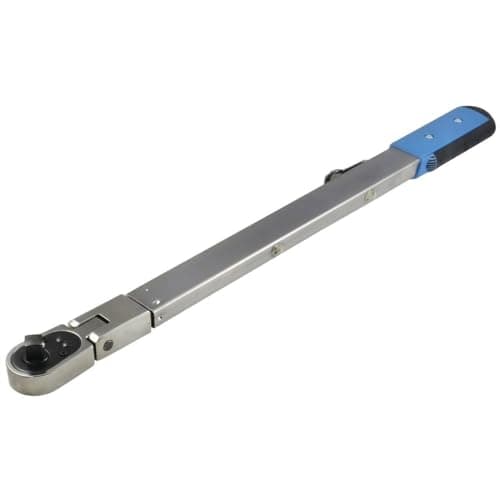
Precision Instruments C3FR250F 1/2 in Split-Beam Torque Wrench, Amazon product photo
Precision Instruments C3FR250F 1/2 in Split-Beam Torque WrenchBest split beam
1/2 in8.8
2
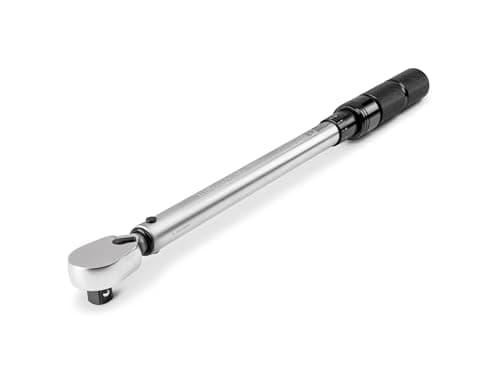
TEKTON 1/2 in Drive Micrometer Torque Wrench (TRQ52402), Amazon product photo
TEKTON 1/2 in Drive Micrometer Torque Wrench (TRQ52402)Best click wrench for lug nuts
1/2 in8.9
3
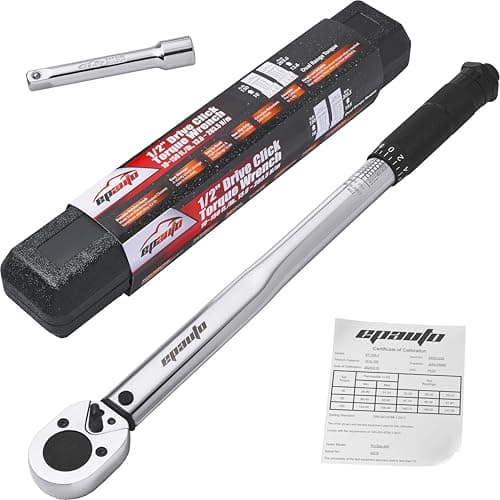
EPAuto 1/2 in Drive Click Torque Wrench (10-150 ft-lb), Amazon product photo
EPAuto 1/2 in Drive Click Torque Wrench (10-150 ft-lb)Cheapest click wrench with a published accuracy claim
1/2 in8.4

Product photographs come from each product's own Amazon listing via the Associates program. They are the seller's images, not photographs of anything we own — we have no test rig and claim none.

Precision Instruments C3FR250F 1/2 in Split-Beam Torque Wrench, Amazon product photo

Short answer: buy a split beam if you know yourself well enough to admit you will not wind a click wrench down after every use — a split beam has no spring to hold compressed, so storage cannot drift it. Buy a click wrench if you want finer adjustment, a lower starting figure or a much lower price: EPAuto publishes 1 ft-lb increments from 10 ft-lb against the Precision Instruments split beam's 5 ft-lb steps from 40 ft-lb. Both tools are in the same published accuracy class — ±4% — so accuracy is not what you are choosing between.

How each mechanism works

The click, or micrometer, wrench

Turning the handle compresses a coil spring against a pivoting lever. When the applied torque overcomes the spring preload, the lever breaks over with a sharp click you both hear and feel. It is a mature, cheap, accurate mechanism, and almost every wrench sold at a consumer price is one. Its weakness is the spring: left set at a high figure for months, the preload the scale depends on can change. That is why makers publish a storage instruction, and why Park Tool's published care guidance is to return the setting to the low end of the scale after use.

The split beam

A split beam uses a deflecting beam and a cam follower. You set the figure by moving the cam, and at the set torque the beam deflects far enough to release with a similar audible break. Nothing is held under compression while it sits in the drawer, so there is no storage ritual, no spring to relax, and nothing to forget. Precision Instruments publishes ±4% for the C3FR250F and ships it with a dated calibration certificate.

The two mechanisms on published specification

Published mechanism, range, accuracy and adjustment for the wrenches compared here
WrenchMechanismRangeAdjustment stepsPublished accuracyWind down to store
Precision Instruments C3FR250FSplit beam40 – 250 ft-lb5 ft-lb±4%Not needed
TEKTON TRQ52402Click (micrometer)40 – 200 ft-lbNot publishedNot publishedYes
EPAuto 1/2 in clickClick (micrometer)10 – 150 ft-lb1 ft-lbPre-calibrated to 4%Yes
GEARWRENCH 85077Electronic25 – 250 ft-lbDigital readout±2% CW, 20-100% of scaleNo spring
Published mechanism, range, accuracy and adjustment for the wrenches compared here

The accuracy column is the one that settles the argument people expect this page to be about: the split beam and the cheap click wrench publish the same ±4% class. If accuracy on paper is what you are buying, the electronic wrench's ±2% is the better number — read with its own caveat, because GEARWRENCH states that figure over 20 to 100% of scale rather than across the whole range.

What actually separates them

1. Storage discipline, which is a real variable

In a professional shop, winding a click wrench down is a habit nobody thinks about. In a home garage where the wrench comes out four times a year, it is the step that gets skipped, and the tool that was accurate when you bought it slowly stops being the tool you think you own. A split beam removes the failure mode rather than asking you to manage it. If you are honest about how your tools get put away, this one consideration can decide the purchase on its own.

2. How finely you can set a figure

Here the click wrench wins and it is not close. Precision Instruments publishes 5 ft-lb increments on the C3FR250F; EPAuto publishes 1 ft-lb. If your manufacturer specifies a figure that falls between a split beam's steps, you are rounding — which is usually inside the ±4% tolerance anyway, but it is still a real constraint and it is worse at the low end of a range, where a 5 ft-lb step is a bigger fraction of the target.

3. Where the range starts

A 1/2 in split beam at 40 to 250 ft-lb is a wheel, suspension and driveline tool. It cannot be set to a drain plug figure, a brake caliper bracket on a small car or anything in the low range. The EPAuto's 10 ft-lb floor is genuinely more versatile, and a 3/8 in click wrench more versatile still. What size torque wrench do I need lays out which ranges cover which jobs.

4. How clear the signal is to a beginner

Both mechanisms release audibly, and in both cases the right technique is to stop at the first break rather than pull through it. A click wrench's break is generally the sharper, more unmistakable one, which is a small but genuine advantage if this is your first torque wrench and you are still learning what you are feeling for. Does a torque wrench click once or twice? is the page on reading it correctly.

5. What arrives in the box

Precision Instruments supplies a dated calibration certificate. TEKTON supplies a case. EPAuto states the wrench is pre-calibrated to 4% in its manual. A dated certificate is the only one of those three that tells you when the tool was verified and by implication when it is due again, which matters more on a tool you intend to keep for a decade than on one you will replace.

Which one should you buy?

Buy the split beam if you are keeping the tool for years, you want a documented starting accuracy, and you would rather not depend on remembering a storage step. Buy a click wrench if you need a figure below 40 ft-lb, you want 1 ft-lb resolution, or the price difference is the difference between owning a torque wrench and not — which is the most important consideration of the lot, because a cheap wrench used correctly beats an expensive one you did not buy.

And if you own a click wrench already, the practical upgrade is usually not a split beam at all. It is a second wrench in a range your first one does not cover, so you stop using a plain ratchet and judgment on everything small. Best torque wrench sets covers buying ranges together.

The verdict

On accuracy, there is nothing to choose: both publish ±4%. On everything else they diverge usefully. The split beam is the better long-term instrument and the better fit for somebody who will not manage a storage routine; the click wrench is finer to set, reaches lower figures, and costs a fraction as much. For a first torque wrench on a car, we would buy the click wrench and wind it down. For a tool you expect to still be trusting in ten years, the split beam and its dated certificate.

The picks in full

Every pick, in detail

Precision Instruments C3FR250F 1/2 in Split-Beam Torque Wrench, Amazon product photo

1. Best split beam

Precision Instruments C3FR250F 1/2 in Split-Beam Torque Wrench

Precision Instruments · score 8.8/10

±4% accuracy, a flex head, and a split-beam mechanism that does not have to be dialed back to zero after use — the storage mistake stops mattering.

1/2 in drive, 40 to 250 ft-lb, ±4%, 22-1/8 in long, adjusted in 5 ft-lb increments, supplied with a dated calibration certificate and made in the USA. The dated certificate is the part worth paying attention to: it means the tool arrived with a documented starting point rather than an assurance. And because a split beam holds its setting with a deflecting beam rather than a compressed spring, there is no winding-down routine to remember — which is the single most common reason a click wrench drifts in a home garage. Against it: 5 ft-lb steps are coarse next to a 1 ft-lb click wrench, it cannot be set below 40 ft-lb, and it costs several times an entry click wrench.

Published specifications

Range
40 – 250 ft-lb Precision Instruments
Length
22-1/8 in Precision Instruments
Increments
5 ft-lb Precision Instruments
Supplied with
Dated calibration certificate; made in USA Precision Instruments

What works

  • No need to wind it down after use — removes the most common storage error
  • Flex head reaches fasteners a fixed head cannot
  • Ships with a dated calibration certificate

What you give up

  • ±4% is looser than the electronic wrench's ±2%
  • 5 ft-lb increments are coarse for precise low-torque work
  • Professional pricing

Our scoring

  • Fit & reach9.2
  • Safety margin8.8
  • Beginner ease9.4
  • Build quality9.4
  • Value7.2
$251.47 · View on Amazon

#ad Price as of October 17, 2026. How this is funded

Specifications published by Precision Instruments — we earn nothing from that link.

TEKTON 1/2 in Drive Micrometer Torque Wrench (TRQ52402), Amazon product photo

2. Best click wrench for lug nuts

TEKTON 1/2 in Drive Micrometer Torque Wrench (TRQ52402)

TEKTON · score 8.9/10

40-200 ft-lb on a 90-tooth head covers every lug-nut spec a normal car will ask for, and it clicks loudly enough that a beginner can hear it.

1/2 in drive, 40 to 200 ft-lb, 90-tooth dual-direction head, storage case included. The 90-tooth head is the practical advantage over a coarser ratchet: a small swing arc picks up the next tooth, which is what lets you finish a pull in a confined wheel well. The audible and tactile click is also easier for a beginner to read correctly than a beam deflection, which is a genuine point in the click mechanism's favor. TEKTON does not publish an accuracy figure for this model, which we count against it, and it has to be wound back down after use.

Published specifications

Drive
1/2 in TEKTON
Range
40 – 200 ft-lb TEKTON
Head
90-tooth, dual direction TEKTON
Included
Storage case TEKTON

What works

  • 40-200 ft-lb brackets the 80-100 ft-lb most cars want at the wheel
  • 90-tooth ratchet needs only a small swing in a wheel well
  • Loud, unambiguous click — the thing beginners most need

What you give up

  • TEKTON does not publish an accuracy percentage for this model
  • Cannot do low-torque work — the range starts at 40 ft-lb
  • Must be wound back to its lowest setting after every use

Our scoring

  • Fit & reach9.0
  • Safety margin8.4
  • Beginner ease9.2
  • Build quality8.4
  • Value9.2
$125.00 · View on Amazon

#ad Price as of October 17, 2026. How this is funded

Specifications published by TEKTON — we earn nothing from that link.

EPAuto 1/2 in Drive Click Torque Wrench (10-150 ft-lb), Amazon product photo

3. Cheapest click wrench with a published accuracy claim

EPAuto 1/2 in Drive Click Torque Wrench (10-150 ft-lb)

EPAuto · score 8.4/10

Pre-calibrated to 4% with 1 ft-lb increments and a 10 ft-lb floor — the cheapest wrench here that can still do a brake caliper and a lug nut.

1/2 in drive, 10 to 150 ft-lb, 1 ft-lb increments, chrome vanadium, and pre-calibrated to 4% per EPAuto's manual — the same accuracy class as the split beam, at a small fraction of the price. The 1 ft-lb increments are the real advantage over the Precision Instruments wrench: five times finer adjustment, and a range that starts at 10 ft-lb so it can also be set for a drain plug. What you give up is the build, the dated certificate, and the split beam's indifference to storage.

Published specifications

Range
10 – 150 ft-lb (13.6 – 203.5 Nm) EPAuto instruction manual
Accuracy
Pre-calibrated to 4% EPAuto instruction manual
Increments
1 ft-lb EPAuto instruction manual
Material
Chrome vanadium steel EPAuto instruction manual

What works

  • 10 ft-lb floor means one wrench covers brakes and wheels
  • 1 ft-lb increments are finer than several wrenches costing more
  • Extension bar included

What you give up

  • 4% accuracy claim comes with no third-party certificate
  • Must be wound back to its lowest setting after every use
  • Case latches are the first thing to wear out

Our scoring

  • Fit & reach8.8
  • Safety margin7.8
  • Beginner ease8.8
  • Build quality7.4
  • Value9.6
$36.87 · View on Amazon

#ad Price as of October 17, 2026. How this is funded

Specifications published by EPAuto — we earn nothing from that link.

Method

How these picks were chosen

We did not test these tools. We do not run a laboratory, we have not loaded a jack to failure or checked a wrench on a calibration bench, and we will not tell you otherwise. What we did instead is read the published manufacturer specifications, check the figures that matter against the safety standard that applies to portable automotive lifting equipment, and work out which tool suits which job. Every number on this page links to where it came from, so you can check us.

The five things we score are the five that decide a first purchase: will it fit under and lift your car, how much safety margin the rating and the locking mechanism leave you, how hard it is to get right alone in a driveway, what the materials and published standards say about how long it lasts, and what the money buys against the rest of the field.

Read the full method — including how we pick a top pick, and how prices get on the page.

Questions

Frequently asked questions

+Is a split beam torque wrench more accurate than a click wrench?

Not inherently. Precision Instruments publishes ±4% for its split beam and EPAuto states its click wrench is pre-calibrated to 4% — the same class. What a split beam avoids is drifting because it was stored at a high setting.

+Do you have to wind down a split beam torque wrench?

No. A split beam holds its setting with a cam and a deflecting beam rather than a compressed coil spring, so nothing is under load between uses. A click wrench should be returned to the low end of its scale.

+What is the difference between a split beam and a beam torque wrench?

A plain beam wrench has a pointer and a scale you read by eye as you pull. A split beam is set to a figure in advance and releases audibly at it, like a click wrench — the beam is part of the holding mechanism, not the display.

+Can a split beam torque wrench do low torque figures?

Only within its range, and 1/2 in drive split beams commonly start around 40 ft-lb — too high for a drain plug or small fasteners. For low figures you want a 3/8 in or 1/4 in wrench.

+Which is better for lug nuts?

Either. Lug nut figures sit in the comfortable middle of both wrenches' ranges, which is the one job where the choice genuinely does not matter much. Best torque wrench for lug nuts ranks the field for that job specifically.

Sources

Where these figures come from

Read next

Related reading