Skip to content
JACK & TORQUE

Comparison

Floor Jack vs Ramps

They are not competing products. One of them can take a wheel off and the other cannot, and that single fact decides it.

By Ryder M. · Published October 4, 2026 · Last reviewed October 4, 2026

We earn a commission when you buy through the Amazon links on this page, at no extra cost to you. It never changes which tool we put first, and we publish no price we have not verified. How this site is funded.

Floor Jack vs Ramps — ranked picks with scores and a price check for each
#PickCapacityScorePrice
1
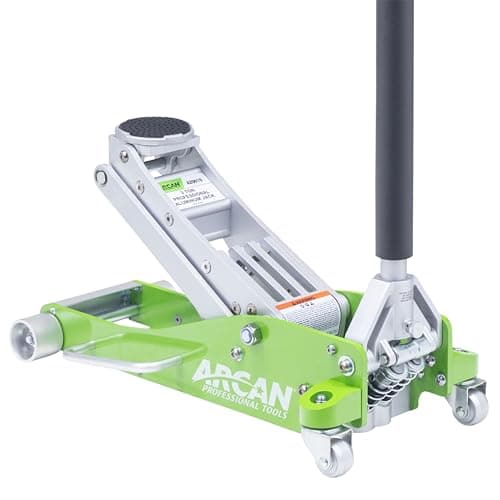
Arcan A20019 3-Ton Aluminum Low-Profile Floor Jack, Amazon product photo
Arcan A20019 3-Ton Aluminum Low-Profile Floor JackBuy this if you only buy one
3 ton (6,000 lb)9.0
2
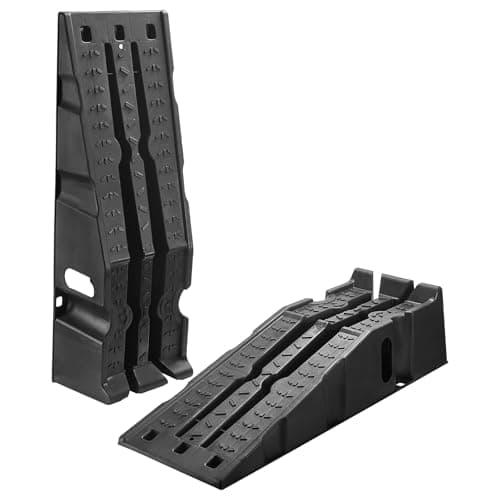
VEVOR Car Service Ramps (16,000 lb GVW, 6.7 in Lift), Amazon product photo
VEVOR Car Service Ramps (16,000 lb GVW, 6.7 in Lift)Buy this if the job is only oil changes
16,000 lb GVW per pair8.9
3
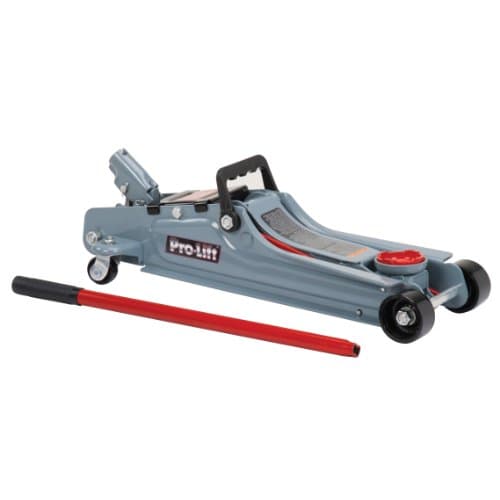
Pro-Lift F-767 2-Ton Low-Profile Floor Jack, Amazon product photo
Pro-Lift F-767 2-Ton Low-Profile Floor JackThe cheapest way into a real jack
2 ton7.8
4
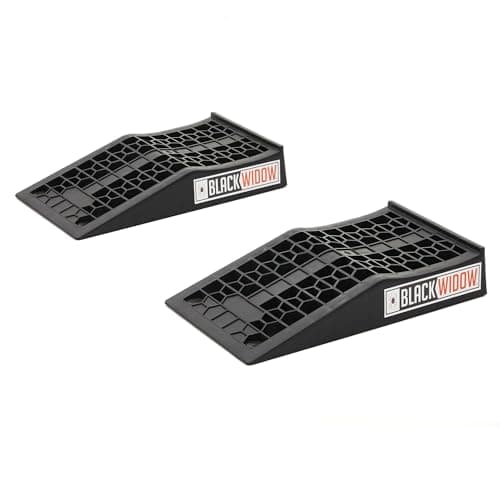
Black Widow Plastic Low-Profile Car Ramps (3 in Lift), Amazon product photo
Black Widow Plastic Low-Profile Car Ramps (3 in Lift)When the answer is both
5,000 lb per axle8.2

Product photographs come from each product's own Amazon listing via the Associates program. They are the seller's images, not photographs of anything we own — we have no test rig and claim none.

Arcan A20019 3-Ton Aluminum Low-Profile Floor Jack, Amazon product photo

Short answer: buy a floor jack first. Ramps are faster, cheaper and in some ways safer, but they support the car on its own wheels, so a wheel can never come off. A jack plus stands does every job ramps do and also brakes, tires, rotations and suspension. If you already own a jack and you change your own oil, add ramps as the second purchase — that is the one job where they are clearly better.

The comparison, job by job

Floor jack versus car ramps across the jobs a beginner actually does
JobFloor jack + standsRamps
Oil and filter changeWorks, slower to set upBest tool for it
Brake pads or rotorsThe only optionCannot — wheel stays on
Tire rotation or a flatThe only optionCannot — wheel stays on
Exhaust or underbody inspectionWorks, full accessWorks at the front only
Setup time once you have done it5-10 minutesUnder a minute
Needs a second tool to be safeYes — standsNo, but chock the rear wheels
Works on a sloped driveNoNo
Floor jack versus car ramps across the jobs a beginner actually does

Two rows in that table decide the purchase for almost everyone. Ramps cannot do brakes and cannot do tires, because both jobs begin with taking a wheel off and ramps are holding the car up by that wheel. Everything else is a preference about speed.

What the published numbers say

Published specifications for the jacks and ramps on this page
ToolCapacityHeight gainedWheels off?
Arcan A20019 floor jack3 ton3.75 in to 18 in saddleYes
Pro-Lift F-767 floor jack2 ton3-1/2 in to 14 in saddleYes
VEVOR car ramps16,000 lb GVW per pairDrive-on, 17-degree inclineNo
Black Widow low-profile5,000 lb per axle3 inNo
Published specifications for the jacks and ramps on this page

Notice that the ramp capacities look enormous next to the jacks. They are measuring different things. A ramp pair carries the gross weight of the vehicle across two tires; a jack carries one corner. A 3-ton jack is already well clear of one corner of almost any car, which is why the capacity guide argues that tonnage is the least interesting number on a jack's box.

Why ramps feel so much better for an oil change

With ramps, the sequence is: position, drive on, chock, parking brake, done. There are no jack points to identify, nothing to balance, and the car is sitting on its suspension exactly as it does in a parking space. With a jack, the sequence is: find the lift point, lift, place a stand, lower onto the stand, repeat on the other side, then check both stands are at the same height. That is a real difference in effort when the job itself takes fifteen minutes.

The catch is clearance at the front. A 17-degree incline is steep enough that a low bumper contacts the ramp before the tire does, and the usual reaction — more throttle — is how ramps get pushed across a garage floor. If your car is low, the fix is a shallower ramp, not a braver right foot.

The case for buying the jack first

The short version

  • A jack and stands cover every beginner job; ramps cover one and a half.
  • A jack is also your roadside tool when the car has a flat in a parking lot.
  • Ramps only reach the front of the car unless you buy a second pair.
  • A low car may need a set of 3 in ramps just so the jack fits underneath — so ramps can end up being an accessory to the jack rather than a replacement for it.

The one argument that runs the other way is confidence. A first-time owner who is nervous about jack points, pinch welds and stand placement will actually do the oil change if ramps are the tool, and may keep putting it off if a jack is. A job you do is worth more than a job you plan. If that is you, buy ramps for the oil change now and the jack before the first brake job.

What owning both actually looks like

The common end state in a home garage is a 3-ton jack, a pair of stands and a pair of plastic ramps, bought in that order over a year or two. The ramps end up being used more often than expected, because the oil change is the job that repeats. The jack comes out for brakes, tires and anything that needs a wheel removed. Neither one makes the other redundant, and the total is still less than a single visit to a shop for a brake job on both front corners.

If you want the fuller version of the ramp side of this argument, including the three ways ramps actually fail, read are car ramps safe. If you want the other half of the jack side, the jack stands roundup is the purchase that makes a jack usable.

The picks in full

Every pick, in detail

Arcan A20019 3-Ton Aluminum Low-Profile Floor Jack, Amazon product photo

1. Buy this if you only buy one

Arcan A20019 3-Ton Aluminum Low-Profile Floor Jack

Arcan · score 9.0/10

A 3-ton aluminum service jack that slides under a stock sedan at 3.75 in and still reaches 18 in — the widest useful range a beginner can buy at one weight they can actually move.

A jack does every job a ramp does plus every job a ramp cannot, which is why it is the one to own if you are only buying one tool. 3 ton, 3.75 in minimum so it slides under a stock sedan, 18 in of lift so it clears a wheel on a crossover. At 56 lb it is light enough to move around a one-car garage without a second person. It is slower than driving onto ramps, and it is useless on its own — the load goes onto stands before you go under the car.

Published specifications

Capacity
3 ton (6,000 lb) Arcan Professional Tools
Min saddle height
3.75 in Arcan Professional Tools
Max lift height
18 in Arcan Professional Tools
Material
Aircraft-grade aluminum Arcan Professional Tools

What works

  • Fits under most unmodified sedans without ramps or boards
  • 18 in of lift clears a wheel on a crossover, not just a car
  • Aluminum keeps it at a weight one person can lift into a trunk

What you give up

  • Costs noticeably more than a steel jack of the same capacity
  • Arcan does not publish an ASME PASE compliance statement for this model
  • 56 lb is light for the class, not light in absolute terms

Our scoring

  • Fit & reach9.4
  • Safety margin8.8
  • Beginner ease9.0
  • Build quality8.8
  • Value8.0
$326.65 · View on Amazon

#ad Price as of October 17, 2026. How this is funded

Specifications published by Arcan — we earn nothing from that link.

VEVOR Car Service Ramps (16,000 lb GVW, 6.7 in Lift), Amazon product photo

2. Buy this if the job is only oil changes

VEVOR Car Service Ramps (16,000 lb GVW, 6.7 in Lift)

VEVOR · score 8.9/10

16,000 lb GVW rating, a 17-degree incline and a deep-grooved honeycombed surface — the default answer for oil changes on anything that is not slammed.

16,000 lb GVW per pair, a 17-degree incline and a deep-grooved surface. If the entire reason you want the car in the air is to reach a drain plug and a filter, ramps get you there in under a minute with no jack points to find and no stands to place. The wheels never leave the ground, so the car is supported the way it was designed to be supported. The 17-degree incline is the limit: a low front bumper will touch before the tire climbs.

Published specifications

Capacity
16,000 lb GVW per pair VEVOR
Per ramp
4,000 lb VEVOR
Incline
17 degrees VEVOR
Lift height
6.7 in VEVOR
Dimensions
35.8 in x 12 in x 8.5 in VEVOR
Material
Impact-resistant PP VEVOR

What works

  • GVW rating covers almost any car, crossover or half-ton pickup
  • Deep-grooved honeycombed surface holds the tire instead of letting it creep
  • Stackable shape stores against a garage wall or in a trunk

What you give up

  • A 17-degree incline is too steep for low front bumpers
  • Ramps only ever support the front axle — wheels stay on
  • VEVOR publishes no non-skid base, so these need flat, clean ground

Our scoring

  • Fit & reach8.4
  • Safety margin8.8
  • Beginner ease9.4
  • Build quality8.4
  • Value9.2
$71.50 · View on Amazon

#ad Price as of October 17, 2026. How this is funded

Specifications published by VEVOR — we earn nothing from that link.

Pro-Lift F-767 2-Ton Low-Profile Floor Jack, Amazon product photo

3. The cheapest way into a real jack

Pro-Lift F-767 2-Ton Low-Profile Floor Jack

Pro-Lift · score 7.8/10

The cheapest jack here that still starts at 3-1/2 in — but 14 in of maximum lift is the ceiling you have to plan around.

2 ton, 3-1/2 in to 14 in, and the lowest price here for something that is genuinely a hydraulic floor jack rather than the scissor jack in your trunk. The 14 in ceiling is the catch — it is enough to get a wheel off a sedan and not enough for an SUV. If the price gap is what is pushing you toward ramps, this is the jack that closes it.

Published specifications

Capacity
2 ton Pro-Lift
Lift range
3-1/2 in – 14 in Pro-Lift
Material
Steel Pro-Lift
Overload protection
Built-in safety valve and bypass Pro-Lift

What works

  • 3-1/2 in minimum height fits under most sedans
  • Cheapest route into a real hydraulic floor jack
  • Small enough to keep in a car trunk

What you give up

  • 14 in maximum lift is not enough for many SUVs or trucks
  • 2 ton leaves less capacity headroom than a 3-ton jack
  • Steel at this price means more flex under load than the aluminum jacks

Our scoring

  • Fit & reach7.0
  • Safety margin7.6
  • Beginner ease8.4
  • Build quality7.2
  • Value9.2
$107.99 · View on Amazon

#ad Price as of October 17, 2026. How this is funded

Specifications published by Pro-Lift — we earn nothing from that link.

Black Widow Plastic Low-Profile Car Ramps (3 in Lift), Amazon product photo

4. When the answer is both

Black Widow Plastic Low-Profile Car Ramps (3 in Lift)

Black Widow · score 8.2/10

3 in of lift from a low-profile plastic ramp — not a service ramp, a way to get a low car high enough that a floor jack finally fits underneath.

3 in of lift from a 17.5 in plastic ramp, 10,000 lb per pair, 5 lb each. This is the pair of ramps you buy because of your jack, not instead of it: drive the front wheels up 3 in and a jack with a 3.5 in minimum saddle finally fits under a car it could not reach before. It is a clearance aid, not a service ramp — you cannot work under a car on these.

Published specifications

Capacity
5,000 lb per axle
Lift height
3 in
Profile
Low profile
Use
Underbody access, garage and shop use

What works

  • Solves the low-car problem for jacks that need 3.5 in of clearance
  • Light enough to live in a trunk, not a garage
  • Cheapest useful lifting aid on the site

What you give up

  • 3 in of lift is not enough to work under the car
  • Black Widow publishes no loading angle for this ramp
  • Small footprint needs flat, clean ground

Our scoring

  • Fit & reach7.6
  • Safety margin8.0
  • Beginner ease9.2
  • Build quality7.8
  • Value9.4
$47.99 · View on Amazon

#ad Price as of October 17, 2026. How this is funded

Method

How these picks were chosen

We did not test these tools. We do not run a laboratory, we have not loaded a jack to failure or checked a wrench on a calibration bench, and we will not tell you otherwise. What we did instead is read the published manufacturer specifications, check the figures that matter against the safety standard that applies to portable automotive lifting equipment, and work out which tool suits which job. Every number on this page links to where it came from, so you can check us.

The five things we score are the five that decide a first purchase: will it fit under and lift your car, how much safety margin the rating and the locking mechanism leave you, how hard it is to get right alone in a driveway, what the materials and published standards say about how long it lasts, and what the money buys against the rest of the field.

Read the full method — including how we pick a top pick, and how prices get on the page.

Questions

Frequently asked questions

+Are ramps safer than a floor jack?

In one specific sense, yes: the car stays on its wheels and there is no moment where its weight is on hydraulics. But a jack used correctly — car lowered onto stands before anyone goes underneath — is not unsafe, and ramps have failure modes of their own, mostly sliding on the approach. The honest comparison is car ramps vs jack stands, because that is the pair that actually competes.

+Can you change brake pads using ramps?

No. Ramps hold the car up by its tires, so the wheel cannot come off, and the brakes are behind the wheel. Brakes need a jack and a pair of stands. The brake job tool list sets out everything else the job needs.

+Do I still need jack stands if I buy ramps?

Not for the ramp jobs themselves — the ramps are the support. You need stands the moment you own a jack, and you need wheel chocks either way. Most home garages end up with ramps, a jack and a pair of stands.

+Can a floor jack fit under my car if ramps cannot?

Usually the opposite. Low-profile ramps like the 3 in Black Widow exist precisely because a jack with a 3.5 in minimum saddle will not fit under many modern cars. Driving the front wheels up 3 in gives the jack the clearance it needs. See low-profile floor jacks for the minimum-height figures.

Sources

Where these figures come from

Read next

Related reading