
Skip to content
JACK & TORQUE

Buying guide

Used Car Inspection Tool List

The readiness monitors are the part a seller cannot tidy up. A code reader shows them in about ten seconds.

By Ryder M. · Published November 5, 2026 · Last reviewed November 5, 2026

We earn a commission when you buy through the Amazon links on this page, at no extra cost to you. It never changes which tool we put first, and we publish no price we have not verified. How this site is funded.

Used Car Inspection Tool List — ranked picks with scores and a price check for each
#PickCapacityScorePrice
1
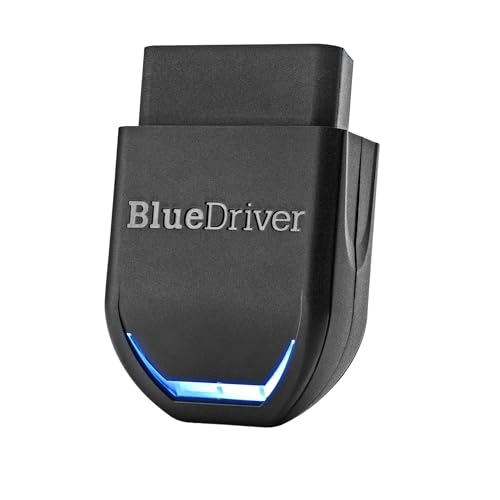
BlueDriver Pro, Amazon product photo
BlueDriver ProThe one tool to take to the seller
Bluetooth to iOS and Android8.8
2
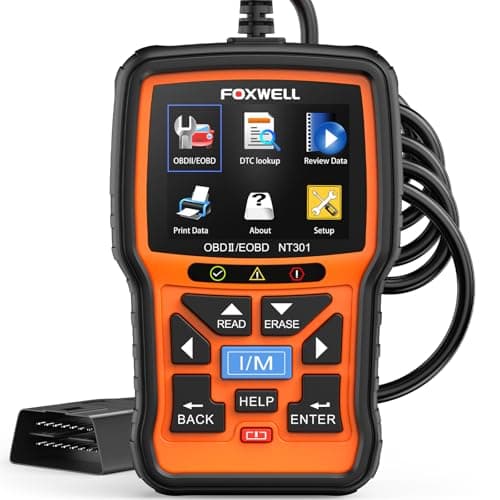
FOXWELL NT301, Amazon product photo
FOXWELL NT301Cheapest self-contained option
2.8 in TFT color8.4
3
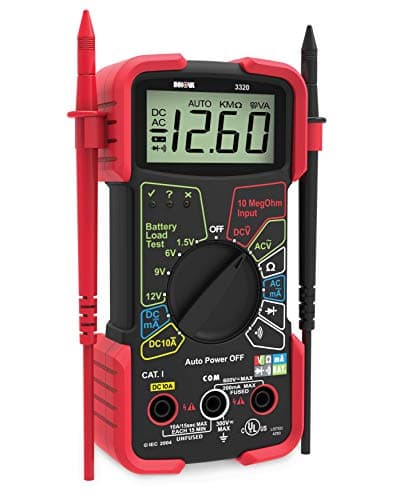
INNOVA 3320 Auto-Ranging Digital Multimeter, Amazon product photo
INNOVA 3320 Auto-Ranging Digital MultimeterThe battery and charging check
10 MΩ8.4
4
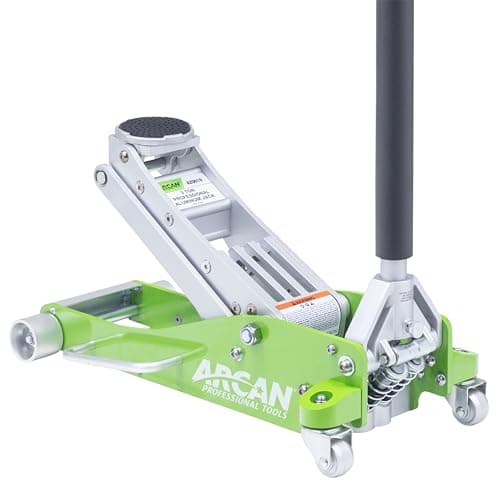
Arcan A20019 3-Ton Aluminum Low-Profile Floor Jack, Amazon product photo
Arcan A20019 3-Ton Aluminum Low-Profile Floor JackWeek one, in your own garage
3 ton (6,000 lb)9.0
5
BIG RED T43002A 3-Ton Double-Locking Jack Stands, Amazon product photo
BIG RED T43002A 3-Ton Double-Locking Jack StandsWhat actually holds the car up
3 ton (6,000 lb) per pair9.1

Product photographs come from each product's own Amazon listing via the Associates program. They are the seller's images, not photographs of anything we own — we have no test rig and claim none.

BlueDriver Pro, Amazon product photo

Short answer: take a code reader, a multimeter and a torch. The code reader is the one that earns its keep, and not for the reason most people think — the valuable reading is not the stored fault code, which a seller can erase in thirty seconds, but the readiness monitors, which they cannot. Those take real driving to come back, so a car whose monitors are incomplete is a car whose codes were cleared recently. Everything else on this list is for week one, after the money has changed hands.

The short version

  • Take to the viewing: an OBD2 reader that shows I/M readiness, a multimeter, a bright torch, a tread gauge and a paper towel for checking fluids.
  • Own by week one: a floor jack, a pair of double-locking jack stands and a torque wrench, so you can look underneath and re-check the wheels yourself.
  • New York's DMV publishes the causes of a "not ready" result, and the first one on the list is that "diagnostic trouble codes have been cleared with a OBD II scan tool".
  • The same page states that for 2001-and-newer vehicles, EPA guidelines allow only one monitor to be "not ready" and still pass inspection.
  • None of this replaces a pre-purchase inspection by a shop with a lift. It replaces walking in with nothing.

The complete list

Five of these are tools we rank and link; the rest are household items worth putting in the same bag so you are not improvising in a stranger's driveway.

What to take to a viewing, and what it tells you
ItemWhenWhat it is actually for
OBD2 code readerAt the viewingReadiness monitors, stored and pending codes, freeze frame
MultimeterAt the viewingResting and charging voltage at the battery
Bright torchAt the viewingWheel wells, sills, boot floor, under the engine
Tread depth gaugeAt the viewingWhether all four tires wear evenly across their width
Paper towelAt the viewingOil and coolant color and level, gearbox fluid where there is a dipstick
Floor jackWeek one, at homeGetting a corner off the ground
Jack stands (pair)Week one, at homeHolding the car while you look
Torque wrenchWeek one, at homeRe-checking wheels somebody else fitted
What to take to a viewing, and what it tells you

Nothing on that list needs to be expensive and nothing on it is specialist. What makes the difference is the order you use it in: read the car's own data first, because it decides whether the rest of the visit is worth your afternoon.

The readiness monitors are the part nobody can tidy up

Every 1996-and-newer car sold in the US runs a set of emissions self-tests called readiness monitors. As New York's DMV explains it, "when the monitor is not completed, it renders your vehicle 'not ready'" — and the first cause it lists is that "diagnostic trouble codes have been cleared with a OBD II scan tool". The second is a recently disconnected or replaced battery. Monitors only return to ready after a drive cycle: a specific pattern of cold start, idling and timed runs at road speed, usually twice, with a cool-down in between.

Put those two facts next to each other and you have the most useful five seconds of any used-car viewing. If a seller tells you the car has no faults and has had no recent work, and the reader shows several monitors incomplete, one of those statements is wrong. It is not proof of anything dishonest — a flat battery, a new battery or a genuine repair produces the same reading — but it is a question you can now ask with a specific answer in mind.

There is a practical consequence too, and it is worth saying out loud to the seller: the same DMV page states that EPA guidelines allow only one monitor to be "not ready" for a 2001-and-newer vehicle to pass inspection. A car with incomplete monitors cannot be inspected until it has been driven enough to finish them, which means you may be buying a car you cannot immediately register in a state that tests. That is a legitimate thing to raise before you agree a price.

What a scanner sees that a test drive does not

The engine light is the obvious part. Three less obvious ones are worth the extra minute:

  1. 1.Pending codes

    A fault the car has seen once but has not yet confirmed, so no light is on and the seller may genuinely not know about it. On a car you are about to buy, a pending code is the most valuable thing in the port.

  2. 2.The airbag and ABS modules

    Reachable only by a tool whose maker publishes enhanced coverage — BlueDriver lists ABS, airbag (SRS) and TPMS by manufacturer group, while FOXWELL publishes engine systems only. An SRS code on a car described as accident-free is a reason to walk, or at minimum to pay for a proper inspection before you commit.

  3. 3.Freeze frame

    The snapshot of engine conditions recorded when a fault occurred: load, coolant temperature, speed. It tells you whether the fault happened cold on a driveway or hot at 70 mph, which is the difference between a sensor and a problem.

If you want the longer version of which tools reach which modules, our main scanner roundup ranks the whole field on exactly that, and best OBD2 code readers covers the self-contained handhelds specifically.

The battery check, which almost nobody does

A tired battery and a weak alternator both present as "it starts fine when it is warm", and both are invisible on a sunny afternoon test drive. A multimeter across the terminals before the car is started, and again with it running, separates the two in under a minute.

We are deliberately not publishing pass-fail voltages here. The useful figures vary by battery chemistry, state of charge and ambient temperature, and the number that matters is the one in the service information for that specific car. What the meter gives you is the comparison: whether resting voltage is lower than it should be, and whether it climbs once the engine runs. If it does not climb, the charging system is a conversation to have before you agree a price — not after.

One safety note on meters: input impedance is the spec to read, not the feature list. Innova publishes 10 MΩ for the 3320, which is the figure that keeps a meter from loading a sensitive circuit when you probe it. Our multimeter roundup ranks the field on that and on safety category.

Week one, in your own garage

Everything above happens standing up. The rest of the inspection — the part that finds the corroded brake line, the weeping shock, the exhaust hanger about to let go — happens with the car off the ground, which is why it waits until the car is yours. If you are buying the jack for this and have not settled on one, Arcan vs Daytona compares the two 3-ton jacks most first-time buyers end up choosing between.

  1. 1.Lift one corner, support it properly

    Jack at the point your new car's manual names, then transfer the load onto stands before any part of you goes underneath. Car jack points and where to put jack stands cover both halves, and floor jack vs jack stands explains why the jack is never the thing holding the car.

  2. 2.Look for the three things that are expensive later

    Fluid on the ground under the engine or gearbox; rust on brake and fuel lines where they run along the sills; torn rubber boots at the inner and outer ends of the driveshafts and on the steering rack. All three are visible with a torch and none of them need a lift.

  3. 3.Re-check the wheels to the car's figure

    You have no idea who last fitted those wheels or with what. A torque wrench set to the figure in the manual, in a star pattern, is twenty minutes that removes an entire category of risk. How to torque lug nuts covers the sequence and our lug nut torque chart covers where to find your number.

What this list does not replace

A pre-purchase inspection by an independent shop. A scanner reads what the car's computers choose to report; it does not see a bent subframe, a repainted quarter panel, a worn synchromesh or a clutch at the end of its life. If the car is expensive, or the seller is reluctant, or anything you read above came back odd, that inspection is the cheapest money in the whole transaction.

What these tools do is tell you whether to spend it. A ten-minute read in a driveway is the difference between paying for an inspection on a car worth inspecting and paying for one on a car you could have ruled out for free. Car maintenance for beginners is where to go next if this is the first car you will be looking after yourself, and the beginner mechanic tool kit is the full first-garage list this page borrows from.

The picks in full

Every pick, in detail

BlueDriver Pro, Amazon product photo

1. The one tool to take to the seller

BlueDriver Pro

BlueDriver · score 8.8/10

A Bluetooth dongle that reads enhanced ABS, airbag and transmission codes with no subscription, and hands you a repair report instead of a raw code.

Two published capabilities make this the best thing to have in your pocket at a stranger's driveway. First, it reads smog-check readiness and Mode 6 on-board test results, which is how you find out whether this car's emissions self-tests have actually completed or were wiped recently. Second, BlueDriver publishes advanced diagnostics across ABS, airbag (SRS) and TPMS by manufacturer group — and an airbag code on a car the seller says has never been hit is the single most useful thing you can learn in five minutes. It generates a report per code with possible causes and recorded fixes rather than a bare five-character number, and it states "No subscriptions. No add-ons. Ever." Against it: your phone is the screen and the app has to be installed before you leave the house, the published coverage is for vehicles sold in North America, and it cannot command a component.

Published specifications

Connection
Bluetooth to iOS and Android BlueDriver
Coverage
1996 and newer cars, SUVs and light trucks sold in North America BlueDriver
Enhanced systems
ABS, airbag (SRS), transmission BlueDriver
Subscription
None BlueDriver
Reports
Repair Reports built from verified fixes BlueDriver

What works

  • Reads the enhanced ABS and airbag codes most cheap readers cannot
  • Repair reports translate a code into a likely cause
  • No subscription — the price is the price

What you give up

  • Useless if your phone is dead
  • Enhanced coverage depends on the make
  • No bi-directional actuator control

Our scoring

  • Fit & reach8.8
  • Safety margin8.4
  • Beginner ease9.4
  • Build quality8.6
  • Value8.8
$99.95 · View on Amazon

#ad Price as of November 16, 2026. How this is funded

Specifications published by BlueDriver — we earn nothing from that link.

FOXWELL NT301, Amazon product photo

2. Cheapest self-contained option

FOXWELL NT301

FOXWELL · score 8.4/10

A 2.8 in color screen that graphs live sensor data and flags emissions readiness with colored LEDs — a diagnostic step up from a bare code reader.

A 2.8 in handheld with a dedicated hot key for the I/M readiness test and red / yellow / green LEDs, so the one reading this page is built around is a glance rather than a menu dive. It also graphs live data and stores freeze frames, which is more than most cheap readers do. The reason to prefer it over the BlueDriver in this specific situation is independence: no phone to pair, no app, no account, nothing to explain to the person watching you. Against it: FOXWELL publishes CAN OBDII / EOBD engine systems only, so it will not see the ABS or airbag modules, it is corded so you work at the dash, and updates need a computer.

Published specifications

Display
2.8 in TFT color FOXWELL
Standards
CAN OBDII / EOBD FOXWELL
Live data
Text and graph FOXWELL
Freeze frame
Yes FOXWELL
Indicators
Red / yellow / green LEDs plus speaker FOXWELL

What works

  • Graphs live sensor data, which is how you catch an intermittent fault
  • I/M readiness hot key and LED status — glanceable
  • Saves test results for review away from the car

What you give up

  • FOXWELL does not publish ABS or SRS coverage for this model — treat it as engine and emissions only
  • Corded, so you work at the dash
  • Updates require a computer

Our scoring

  • Fit & reach7.6
  • Safety margin8.0
  • Beginner ease9.0
  • Build quality8.2
  • Value9.2
$55.95 · View on Amazon

$69.99 20% off

#ad Price as of November 16, 2026. How this is funded

Specifications published by FOXWELL — we earn nothing from that link.

INNOVA 3320 Auto-Ranging Digital Multimeter, Amazon product photo

3. The battery and charging check

INNOVA 3320 Auto-Ranging Digital Multimeter

Innova · score 8.4/10

A UL-listed auto-ranging meter with the 10 MΩ input impedance that matters around vehicle electronics, for about as little as an automotive-specific meter costs.

A failing battery or alternator is the most common thing a used car is sold with, and a meter is the only way to see it from the driver's seat. Innova publishes the spec that matters for working near vehicle electronics — 10 MΩ input impedance — along with auto-ranging, 10 A DC, a UL listing and a color-coded LED load test. Auto-ranging matters more than it sounds on a first use: one fewer dial to set wrong. Check resting voltage before the car starts, then again with the engine running to see whether the alternator is charging, and compare both against the figures in the service information for that model rather than a number off a forum. Against it: no inductive RPM clamp, and the leads are the budget part of the package.

Published specifications

Input impedance
10 MΩ Innova
Current range
10 A DC Innova
Ranging
Auto-ranging, auto shut-off after 15 minutes Innova
Battery test
Color-coded LED load test for small batteries Innova
Safety
UL listed Innova
Protection
0.315 A / 250 V Bussmann GMA fuse, rubber corner guards, built-in stand Innova

What works

  • 10 MΩ input impedance at the bottom of the market — the one spec not to compromise
  • Auto-ranging, so there is one fewer thing to get wrong on a first use
  • Built-in stand and wrist strap, which matter when both hands are in an engine bay

What you give up

  • No inductive RPM clamp and no pulse width — those are the 3340's features
  • Innova publishes no display-count figure, so resolution is unstated
  • Innova publishes no CAT rating for it, so keep it on 12 V systems

Our scoring

  • Fit & reach8.2
  • Safety margin8.2
  • Beginner ease9.2
  • Build quality7.8
  • Value9.4
$25.99 · View on Amazon

$35.38 27% off

#ad Price as of November 16, 2026. How this is funded

Specifications published by Innova — we earn nothing from that link.

Arcan A20019 3-Ton Aluminum Low-Profile Floor Jack, Amazon product photo

4. Week one, in your own garage

Arcan A20019 3-Ton Aluminum Low-Profile Floor Jack

Arcan · score 9.0/10

A 3-ton aluminum service jack that slides under a stock sedan at 3.75 in and still reaches 18 in — the widest useful range a beginner can buy at one weight they can actually move.

You do not jack up somebody else's car in their driveway. You do want to look underneath your own in the first week, because that is when a leak, a torn boot or a corroded brake line is still a negotiation with a mechanic rather than a surprise on a motorway. Arcan publishes 3.75 in to 18 in of lift at 56 lb of aircraft-grade aluminum, with bypass and overload valves stated on the specification page. The low start gets it under a stock sedan and the 18 in top end clears a wheel on a crossover. Against it: it costs noticeably more than a steel jack of the same capacity, Arcan publishes no ASME PASE compliance statement for this model, and 56 lb is light for the class rather than light.

Published specifications

Capacity
3 ton (6,000 lb) Arcan Professional Tools
Min saddle height
3.75 in Arcan Professional Tools
Max lift height
18 in Arcan Professional Tools
Material
Aircraft-grade aluminum Arcan Professional Tools

What works

  • Fits under most unmodified sedans without ramps or boards
  • 18 in of lift clears a wheel on a crossover, not just a car
  • Aluminum keeps it at a weight one person can lift into a trunk

What you give up

  • Costs noticeably more than a steel jack of the same capacity
  • Arcan does not publish an ASME PASE compliance statement for this model
  • 56 lb is light for the class, not light in absolute terms

Our scoring

  • Fit & reach9.4
  • Safety margin8.8
  • Beginner ease9.0
  • Build quality8.8
  • Value8.0
$256.00 · View on Amazon

$326.00 21% off

#ad Price as of November 16, 2026. How this is funded

Specifications published by Arcan — we earn nothing from that link.

BIG RED T43002A 3-Ton Double-Locking Jack Stands, Amazon product photo

5. What actually holds the car up

BIG RED T43002A 3-Ton Double-Locking Jack Stands

Torin (BIG RED) · score 9.1/10

A ratchet bar plus a separate safety pin — two independent locks instead of one — at the height range a car actually needs, and Torin states they meet ASME safety standards.

A jack lifts; stands hold. Nothing on the underside inspection above happens until the car is on these, and this pair is the cheapest honest way to buy a genuinely double-locked stand: a ratchet bar plus a separate safety pin, two independent locks instead of one, 11-1/4 in to 16-3/4 in, and Torin states they meet ASME safety standards. Against it: the 3-ton figure is per pair and not per stand, the 11-1/4 in minimum is taller than some low cars want, and Torin's own listing says this size is not intended for SUVs or trucks.

Published specifications

Capacity
3 ton (6,000 lb) per pair Torin
Min height
11-1/4 in Torin
Max height
16-3/4 in Torin
Base footprint
7-11/16 in x 6-7/8 in Torin
Standards
Meets ASME safety standards Torin

What works

  • Two independent locking mechanisms, not one
  • 11-1/4 in to 16-3/4 in matches what a 3-ton floor jack can reach
  • The cheapest way to buy a genuinely double-locked stand

What you give up

  • Rated per pair, not per stand — read the rating before loading two corners
  • 11-1/4 in minimum is taller than some low cars want
  • Torin's own listing says this size is not intended for SUVs or trucks

Our scoring

  • Fit & reach8.6
  • Safety margin9.2
  • Beginner ease9.0
  • Build quality8.2
  • Value9.4
$35.48 · View on Amazon

#ad Price as of November 16, 2026. How this is funded

Specifications published by Torin (BIG RED) — we earn nothing from that link.

Method

How these picks were chosen

We did not test these tools. We do not run a laboratory, we have not loaded a jack to failure or checked a wrench on a calibration bench, and we will not tell you otherwise. What we did instead is read the published manufacturer specifications, check the figures that matter against the safety standard that applies to portable automotive lifting equipment, and work out which tool suits which job. Every number on this page links to where it came from, so you can check us.

The five things we score are the five that decide a first purchase: will it fit under and lift your car, how much safety margin the rating and the locking mechanism leave you, how hard it is to get right alone in a driveway, what the materials and published standards say about how long it lasts, and what the money buys against the rest of the field.

Read the full method — including how we pick a top pick, and how prices get on the page.

Questions

Frequently asked questions

+What is the one tool to take to a used car viewing?

An OBD2 code reader that displays I/M readiness status. Stored codes can be erased in seconds; the readiness monitors cannot, because they only return to ready after a full drive cycle. A car with multiple incomplete monitors was very likely scanned and cleared recently.

+Can a seller hide a check engine light from a scanner?

They can clear the code and the light, and a scan immediately afterwards shows no stored fault. What they cannot do quickly is restore the readiness monitors — New York's DMV lists codes cleared with a scan tool as the first cause of a "not ready" result, and getting monitors back to ready takes a specific pattern of driving, usually two cycles with a cool-down.

+How many readiness monitors can be incomplete and still be fine?

For inspection purposes, New York's DMV states that EPA guidelines allow only one monitor to be "not ready" on a 2001-and-newer vehicle. For buying purposes, treat two or more incomplete monitors as a question rather than a verdict — a new or recently disconnected battery produces the same reading.

+Will a cheap code reader show airbag or ABS codes?

Usually not. FOXWELL publishes the NT301 as CAN OBDII / EOBD engine systems only. BlueDriver publishes advanced diagnostics across ABS, airbag (SRS) and TPMS by manufacturer group, which is why it is the pick at the top of this page — an airbag code on a car described as accident-free is the most valuable thing a scanner can find at a viewing.

+Should I jack the car up before I buy it?

No. Do not lift or get under a car that is not yours, on ground you have not chosen, with a jack you did not bring. If you need to see underneath before committing, pay an independent shop with a lift. The jack and stands on this list are for week one, in your own garage, on your own car.

+Is a multimeter really necessary for a viewing?

It is the cheapest way to catch the most common fault a used car is sold with. Battery and charging problems present as "it has been fine" and are invisible on a warm-engine test drive. Resting voltage, then voltage with the engine running, takes a minute and tells you which of the two you are looking at.

Sources

Where these figures come from

Read next

Related reading