Skip to content
JACK & TORQUE

Comparison

Floor Jack vs Jack Stands

The honest answer is that this is not a versus. One lifts, the other holds, and you need both.

By Ryder M. · Published October 16, 2026 · Last reviewed October 16, 2026

We earn a commission when you buy through the Amazon links on this page, at no extra cost to you. It never changes which tool we put first, and we publish no price we have not verified. How this site is funded.

Floor Jack vs Jack Stands — ranked picks with scores and a price check for each
#PickCapacityScorePrice
1
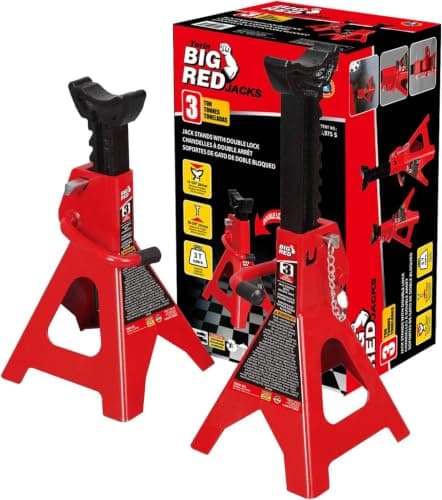
BIG RED T43002A 3-Ton Double-Locking Jack Stands, Amazon product photo
BIG RED T43002A 3-Ton Double-Locking Jack StandsThe holding half, for a car
3 ton (6,000 lb) per pair9.1
2
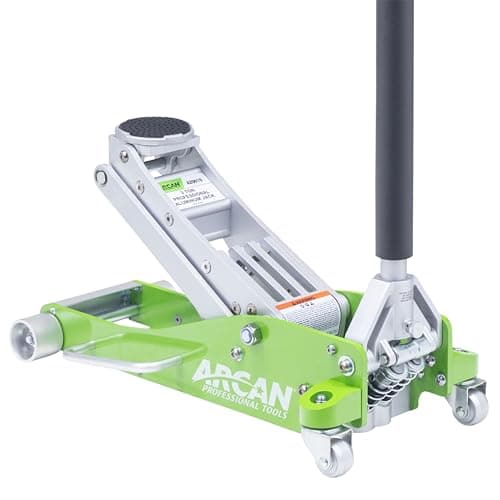
Arcan A20019 3-Ton Aluminum Low-Profile Floor Jack, Amazon product photo
Arcan A20019 3-Ton Aluminum Low-Profile Floor JackThe lifting half, for most cars
3 ton (6,000 lb)9.0
3
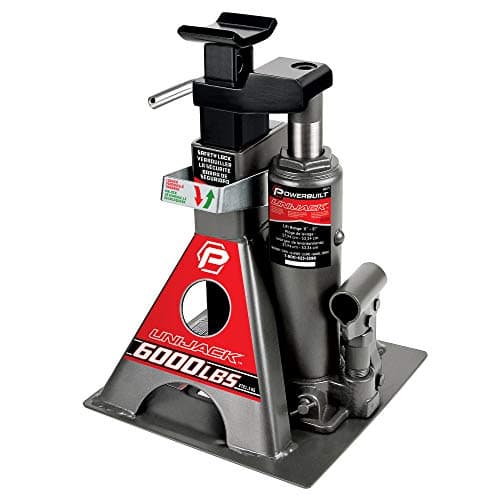
Powerbuilt 620471 Unijack (3-Ton Jack + Stand in One), Amazon product photo
Powerbuilt 620471 Unijack (3-Ton Jack + Stand in One)When one tool really does both
3 ton (6,000 lb)8.2
4
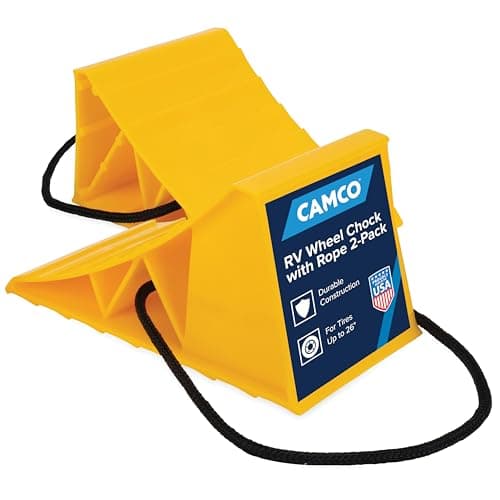
Camco 44471 Wheel Chock with Rope (2-Pack), Amazon product photo
Camco 44471 Wheel Chock with Rope (2-Pack)The part nobody buys
2 chocks9.0

Product photographs come from each product's own Amazon listing via the Associates program. They are the seller's images, not photographs of anything we own — we have no test rig and claim none.

BIG RED T43002A 3-Ton Double-Locking Jack Stands, Amazon product photo

Short answer: this is not a choice. A floor jack is a lifting device and a jack stand is a holding device, and the two are not substitutes in either direction. The jack raises the car; the stands take the load while you work; the jack comes back at the end to lift the car off the stands. Buying only the jack leaves you with no safe way to be under the car. Buying only the stands leaves you with no way to get the car onto them. If you are deciding where a fixed budget goes, buy a cheaper jack and good stands, not the other way round.

What each tool is actually built to do

The difference is mechanical, not a matter of degree. A floor jack converts your effort at the handle into hydraulic pressure, and that pressure is what holds the saddle up. Everything that keeps the car in the air is a fluid seal and a valve. That is a perfectly good way to raise something and a poor way to hold it for twenty minutes, because nothing in the system is mechanically locked — there is no pin, no pawl, no stop. Release the valve, or let a seal leak, and the load comes down.

A jack stand holds mechanically. A column sits inside a base, and a ratchet pawl or a pin bears the load through steel. There is no fluid, no pressure to lose and nothing to leak. That is why the stand is the thing you trust your body to and the jack is not, and it is also why the two tools have completely different specifications. A jack is sold on lift range; a stand is sold on height range, base footprint and locking type. Pin vs ratchet jack stands compares those locking mechanisms properly.

The two tools, side by side

How a floor jack and a jack stand differ as devices
Floor jackJack stand
What holds the loadHydraulic fluid pressure behind a sealSteel — a ratchet pawl or a pin
Designed forRaising and loweringHolding, static, for as long as the job takes
Safe to work under?No, neverYes, on a rated support point
Spec that decides fitMinimum saddle height and maximum liftMinimum and maximum height, base footprint
Fails howSeal passes, car settlesRare; overload or a lock not fully engaged
How many you needOneTwo per axle you lift
How a floor jack and a jack stand differ as devices

The last row is the one people get wrong at the till. One jack does the whole job, because you lift one corner at a time. Stands are a per-corner purchase, so lifting the front of a car needs two and lifting the whole car needs four. How many jack stands do I need works through the cases.

Why the two have to be bought as a pair

Not just for safety — for geometry. The jack has to be able to raise the lift point higher than the notch you intend to set the stand to, hold it there while you position the stand, and then lower onto it. If the jack tops out below the stand's useful range, you are stuck using the stand's lowest notches and working in whatever clearance that leaves.

Concretely: the Torin T43002A stands above adjust from 11-1/4 in to 16-3/4 in. The Arcan A20019 lifts to 18 in, so every notch on those stands is reachable. A cheap jack that tops out at 13-3/8 in reaches only the bottom of that range. Neither pairing is unsafe — a stand is just as strong on its lowest notch — but one of them lets you lie under the car comfortably and the other does not. Check the two numbers against each other before you buy, and if you are buying both at once, the floor jack and jack stand combo page pairs them up for you.

Reading the ratings, because they are not quoted the same way

A floor jack's rating is per jack and straightforward. A jack stand's rating is the single most misread number in this category, because some makers quote it per pair and some per stand. Torin quotes the T43002A as 3 ton per pair. ESCO quotes its 10498 as 3 ton per stand. Those are the same headline number describing twice the capacity. Always find the basis before you load two corners of anything heavy. Jack stand weight ratings goes through the published examples.

The standard behind both tools is the same document — ASME PASE, which covers hand jacks, automotive stands and ramps alike. Some makers state compliance on the product page and some do not. Where a maker publishes a statement we quote it; where there is none, we say so rather than implying one exists. Of the picks on this page, Torin states its stands meet ASME safety standards and Powerbuilt states its Unijack meets or exceeds ASME and PALD. Arcan publishes no such statement for the A20019.

The two honest exceptions

A jack with a mechanical lock built in

The Powerbuilt Unijack above is the real exception to "a jack cannot hold": it is a bottle jack with an integrated locking safety bar, so once the car is up the load sits on steel rather than fluid. That is a genuine lift-and-hold tool and Powerbuilt publishes a standards statement for it. It does not repeal the rule so much as prove it — what makes it safe to work over is the mechanical bar, which is a jack stand that happens to share a casting with the jack. And its 11 in minimum height means it is a truck and SUV tool, not a car tool.

Ramps, which skip the handover entirely

The other exception is not a jack at all. Car ramps raise the front of a vehicle by driving onto them, which means there is no lift-then-transfer step to get wrong — the car sits on a solid wedge the whole time. For a straight oil change on a car that fits them, that is the simpler and arguably safer tool. Ramps cannot do a wheel-off job, which is why they are an addition rather than a replacement. Car ramps vs jack stands compares those two directly, and floor jack vs ramps covers which to buy first.

If you can only afford one thing this month

Buy the stands and wait on the jack. That sounds backwards, so here is the reasoning. Most cars come with a scissor jack and a lug wrench in the trunk, and a scissor jack is enough to raise one corner high enough to slide a stand under it — slowly and unpleasantly, but it works, and it is what the manufacturer supplied for a roadside wheel change. What the car does not come with is anything safe to work under. So the stands are the purchase that unlocks the job, and the floor jack is the purchase that makes it pleasant.

The one case where that flips is if you have no usable lift at all — a missing trunk jack, or a vehicle where the factory jack points are damaged. Then buy the cheapest real hydraulic jack that fits under your car and the stands in the same order anyway, because a jack on its own is half a purchase. Best budget jack stands and best floor jacks under $100 are the two cheap ends of that, and floor jack vs scissor jack is honest about what the trunk jack can and cannot do.

The sequence, in one place

  1. 1.Park flat, on concrete or asphalt, and chock

    Level ground, parking brake on, transmission in gear or in park, and chocks against the wheels that will stay on the ground. Wheel chocks guide covers which end to chock.

  2. 2.Find the lift point and the support point

    They are often not the same place. Your owner's manual names both. Car jack points and where to put jack stands explain how to tell them apart.

  3. 3.Lift with the jack, higher than the stand notch

    Raise past the height you intend the stand to sit at, so the car can be lowered onto a fully engaged lock rather than lifted into it.

  4. 4.Position the stands and engage both locks

    Set both stands to the same notch — matched height matters more than absolute height. On a ratchet-and-pin stand, confirm the pin is in as well as the pawl.

  5. 5.Lower until the jack carries nothing, then push the car

    Lower slowly, watch the stands take the load, and give the car a firm shove at a body panel. It should not move or creak. Leave the jack in place, barely touching, as a backup.

The verdict

There is no winner here, because they are not competing. The jack is the tool that gets the car up and the stands are the tool that lets you be underneath it, and skipping the second one is the mistake this whole site exists to stop. If you want one recommendation: the Torin T43002A stands for the double lock and the published ASME statement, the Arcan A20019 for a jack that reaches every notch on them, and two Camco chocks because they cost almost nothing and they are the part that gets forgotten. Best jack stands ranks the stand field in full.

The picks in full

Every pick, in detail

BIG RED T43002A 3-Ton Double-Locking Jack Stands, Amazon product photo

1. The holding half, for a car

BIG RED T43002A 3-Ton Double-Locking Jack Stands

Torin (BIG RED) · score 9.1/10

A ratchet bar plus a separate safety pin — two independent locks instead of one — at the height range a car actually needs, and Torin states they meet ASME safety standards.

A ratchet bar plus a separate safety pin — two independent locks rather than one — adjusting between a published 11-1/4 in and 16-3/4 in, and Torin states they meet ASME safety standards. That double lock is the specific reason to buy these as a first set: the whole point of a stand is that it holds mechanically rather than hydraulically, and two locks mean one can fail without the car moving. Read the rating carefully, though — it is quoted as 3 ton per pair, not per stand, and Torin's own listing says this size is not intended for SUVs or trucks. The 11-1/4 in minimum is also taller than some low cars want.

Published specifications

Capacity
3 ton (6,000 lb) per pair Torin
Min height
11-1/4 in Torin
Max height
16-3/4 in Torin
Base footprint
7-11/16 in x 6-7/8 in Torin
Standards
Meets ASME safety standards Torin

What works

  • Two independent locking mechanisms, not one
  • 11-1/4 in to 16-3/4 in matches what a 3-ton floor jack can reach
  • The cheapest way to buy a genuinely double-locked stand

What you give up

  • Rated per pair, not per stand — read the rating before loading two corners
  • 11-1/4 in minimum is taller than some low cars want
  • Torin's own listing says this size is not intended for SUVs or trucks

Our scoring

  • Fit & reach8.6
  • Safety margin9.2
  • Beginner ease9.0
  • Build quality8.2
  • Value9.4
$35.99 · View on Amazon

#ad Price as of October 17, 2026. How this is funded

Specifications published by Torin (BIG RED) — we earn nothing from that link.

Arcan A20019 3-Ton Aluminum Low-Profile Floor Jack, Amazon product photo

2. The lifting half, for most cars

Arcan A20019 3-Ton Aluminum Low-Profile Floor Jack

Arcan · score 9.0/10

A 3-ton aluminum service jack that slides under a stock sedan at 3.75 in and still reaches 18 in — the widest useful range a beginner can buy at one weight they can actually move.

3.75 in minimum saddle height and 18 in of maximum lift, at 56 lb of aluminum. Those two numbers are what a jack is for: get under the car as it sits, and raise the lift point past the notch you want the stand set to. 18 in clears the 16-3/4 in top setting of the stands above with travel left over, which is the pairing to look for when you buy both at once. The cons stand: it costs more than a steel jack of the same capacity, Arcan publishes no ASME PASE compliance statement for this model, and 56 lb is light for the class rather than light in absolute terms.

Published specifications

Capacity
3 ton (6,000 lb) Arcan Professional Tools
Min saddle height
3.75 in Arcan Professional Tools
Max lift height
18 in Arcan Professional Tools
Material
Aircraft-grade aluminum Arcan Professional Tools

What works

  • Fits under most unmodified sedans without ramps or boards
  • 18 in of lift clears a wheel on a crossover, not just a car
  • Aluminum keeps it at a weight one person can lift into a trunk

What you give up

  • Costs noticeably more than a steel jack of the same capacity
  • Arcan does not publish an ASME PASE compliance statement for this model
  • 56 lb is light for the class, not light in absolute terms

Our scoring

  • Fit & reach9.4
  • Safety margin8.8
  • Beginner ease9.0
  • Build quality8.8
  • Value8.0
$326.65 · View on Amazon

#ad Price as of October 17, 2026. How this is funded

Specifications published by Arcan — we earn nothing from that link.

Powerbuilt 620471 Unijack (3-Ton Jack + Stand in One), Amazon product photo

3. When one tool really does both

Powerbuilt 620471 Unijack (3-Ton Jack + Stand in One)

Powerbuilt · score 8.2/10

A bottle jack with an integrated locking safety bar, so the tool that lifts the car is also the tool that holds it — Powerbuilt states it meets or exceeds ASME and PALD standards.

The honest exception to the rule. A bottle jack with an integrated locking safety bar, so the thing that lifts the vehicle is also the thing that mechanically holds it, over an 11 in to 21 in range — and Powerbuilt states it meets or exceeds ASME and PALD standards, which is a compliance statement most makers do not print. Three limits you have to accept: the 11 in minimum height means it will not fit under a car at all, a bottle jack needs a flat strong lift point which not every vehicle has where you need it, and one unit holds one corner, so wheel-off work still needs a second support.

Published specifications

Capacity
3 ton (6,000 lb) Powerbuilt
Range
11 in – 21 in Powerbuilt
Hold mechanism
Integrated locking safety bar Powerbuilt
Standards
Meets or exceeds ASME and PALD Powerbuilt

What works

  • Lifts and then mechanically holds from a single lift point
  • Wide flat base resists sinking on soft asphalt
  • Manufacturer publishes a standards compliance statement

What you give up

  • 11 in minimum height will not fit under a low car at all
  • A bottle jack needs a flat, strong lift point — not every car has one where you need it
  • One unit lifts one corner; you still need a second support for wheel-off work

Our scoring

  • Fit & reach6.8
  • Safety margin9.0
  • Beginner ease8.0
  • Build quality8.4
  • Value8.6
$99.99 · View on Amazon

$129.99 23% off

#ad Price as of October 17, 2026. How this is funded

Specifications published by Powerbuilt — we earn nothing from that link.

Camco 44471 Wheel Chock with Rope (2-Pack), Amazon product photo

4. The part nobody buys

Camco 44471 Wheel Chock with Rope (2-Pack)

Camco · score 9.0/10

A pair of UV-stable plastic chocks with pull ropes, sized for tires up to 26 in — the cheapest part of a safe lift and the one people skip.

A UV-stable plastic chock with a 23 in pull rope, sized for tires up to 26 in. It belongs on this page because the jack-versus-stands argument distracts from the third tool: whatever is still on the ground has to not roll. The rope matters more than it sounds, because it means you pull the chock out without reaching under a car. They are rated for tires up to 26 in, plastic can slide on a dusty or oily floor, and the box holds two.

Published specifications

Quantity
2 chocks Camco listing
Fits tires
Up to 26 in diameter Camco listing
Removal
Attached rope handle Camco listing
Material
Hard plastic with UV inhibitors Camco listing
Origin
Made in the USA Camco listing

What works

  • The rope means you can pull it out without reaching under the car
  • Two in the box, which is the number you actually need
  • UV inhibitors mean it survives being left outside

What you give up

  • Rated for tires up to 26 in — too small for a truck tire
  • Plastic can slide on a dusty or oily floor
  • Camco publishes no chock dimensions or rope length

Our scoring

  • Fit & reach8.8
  • Safety margin8.8
  • Beginner ease9.6
  • Build quality8.2
  • Value9.6
$18.25 · View on Amazon

#ad Price as of October 17, 2026. How this is funded

Specifications published by Camco — we earn nothing from that link.

Method

How these picks were chosen

We did not test these tools. We do not run a laboratory, we have not loaded a jack to failure or checked a wrench on a calibration bench, and we will not tell you otherwise. What we did instead is read the published manufacturer specifications, check the figures that matter against the safety standard that applies to portable automotive lifting equipment, and work out which tool suits which job. Every number on this page links to where it came from, so you can check us.

The five things we score are the five that decide a first purchase: will it fit under and lift your car, how much safety margin the rating and the locking mechanism leave you, how hard it is to get right alone in a driveway, what the materials and published standards say about how long it lasts, and what the money buys against the rest of the field.

Read the full method — including how we pick a top pick, and how prices get on the page.

Questions

Frequently asked questions

+Can I use a floor jack instead of jack stands?

No. A floor jack holds its load with hydraulic pressure behind a seal, and a seal can pass while you are under the car. Use the jack to lift, jack stands to hold, and keep the jack in place lightly as a backup once the car is on the stands.

+Do I need jack stands just to change a tire?

For a roadside wheel change where you are never under the car, no — the jack alone is what the manufacturer supplies for it. For anything where part of you goes under the vehicle, yes, every time.

+Which should I buy first, a jack or jack stands?

Stands, if you have a factory scissor jack in the trunk, because the stands are what make it safe to be underneath and the trunk jack can get a corner up well enough to place them. If you have no usable jack at all, buy both — a jack on its own cannot do the job you bought it for.

+How many jack stands do I need for one floor jack?

Two for one axle, four to raise the whole car. One jack covers any of those cases because you lift one corner at a time, but stands are per corner and have to be bought in pairs.

+Is a jack stand stronger than a floor jack?

Not necessarily stronger — differently built. The stand carries its load through steel with a mechanical lock, and the jack carries it through fluid. That difference, not the rating, is why one is safe to work under and the other is not.

+Should I leave the jack under the car while it is on stands?

Yes — lowered until it carries no load, but left in contact. It costs nothing and gives you a second thing between the car and the floor. It does not replace the stands, and the stands must be carrying the weight.

Sources

Where these figures come from

Read next

Related reading