
Skip to content
JACK & TORQUE

Guide

How Long Can a Car Sit on Jack Stands?

Time is not the risk. The surface under the stands, and what changes while you are not watching, are.

By Ryder M. · Published October 6, 2026 · Last reviewed October 6, 2026

We earn a commission when you buy through the Amazon links on this page, at no extra cost to you. It never changes which tool we put first, and we publish no price we have not verified. How this site is funded.

How Long Can a Car Sit on Jack Stands? — ranked picks with scores and a price check for each
#PickCapacityScorePrice
1
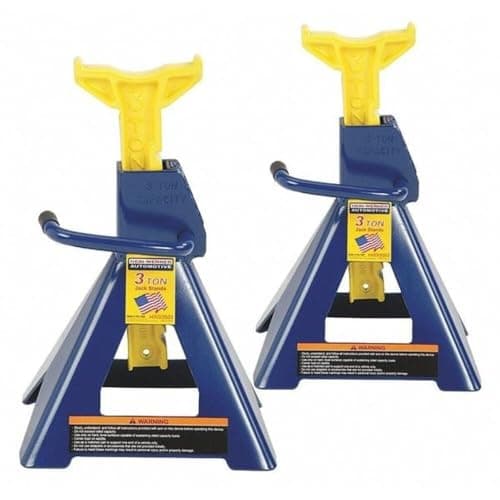
Hein-Werner HW93503 3-Ton Jack Stand, Amazon product photo
Hein-Werner HW93503 3-Ton Jack StandBest stand for a long stay
3 ton8.7
2
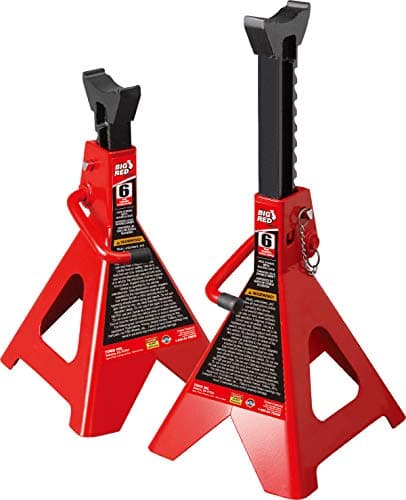
BIG RED T46002A 6-Ton Double-Locking Jack Stands, Amazon product photo
BIG RED T46002A 6-Ton Double-Locking Jack StandsBest for a heavy vehicle left up
6 ton (12,000 lb)8.8
3
Camco 44471 Wheel Chock with Rope (2-Pack), Amazon product photo
Camco 44471 Wheel Chock with Rope (2-Pack)What to add before you walk away
2 chocks9.0

Product photographs come from each product's own Amazon listing via the Associates program. They are the seller's images, not photographs of anything we own — we have no test rig and claim none.

Hein-Werner HW93503 3-Ton Jack Stand, Amazon product photo

Short answer: there is no published time limit. A car on sound jack stands, set on flat concrete, at matched heights, on rated support points, can sit for days or weeks — people do it routinely over a long restoration or a winter lay-up. None of the manufacturers whose specifications we cite publish a maximum duration, because duration is not the variable that fails. What fails is the surface, the setup, or the discipline of the person who walks back under it two weeks later without checking.

What actually sets the limit

The short version

  • The floor. Flat, sound concrete carries a point load indefinitely. Asphalt creeps in warm weather, timber decking flexes, and gravel or soil settles under a stand — on those surfaces, hours are too long.
  • The footprint. Pressure is load divided by contact area, so a stand with a wide base is doing less to your floor than a narrow one carrying the same weight.
  • The setup. Matched heights, square saddles, rated support points. A setup that was marginal on day one gets no safer by being left.
  • The environment. Children, pets, other road users, and anyone who might lean on, bump or borrow the car while it is up.
  • Your memory. The real hazard of a long stay is forgetting which end is supported and how, and trusting a setup you can no longer remember making.

The floor is the real variable

A jack stand concentrates a couple of thousand pounds onto a base the size of a paperback. On a sound garage slab that is nothing. On asphalt in summer heat the stand will slowly press in, and because the two stands will not sink at identical rates, the car tilts. On gravel or soil, the stand does not sink evenly at all — it tips.

If flat concrete is not available, do not solve it by leaving the car up for less time. Solve it by not leaving the car up. The surface question is covered in detail in jacking up a car on gravel, and the honest answer there is the same one that applies here.

What happens to the car while it sits

Nothing dramatic, but a few things are worth knowing. Suspension hangs at full droop, which puts bushings and CV boots at an angle they do not normally hold — not harmful over days, worth avoiding over months. Tires that are off the ground are not flat-spotting, which is the one genuine benefit of long-term storage on stands. Brake discs will surface-rust if the car is somewhere damp, and that cleans off on the first few stops.

If the car is going up for storage rather than repair, put it on four stands so it sits level, and support at the manufacturer's points rather than the suspension arms unless the manual says otherwise. How many jack stands do I need covers the four-corner case, and where to put jack stands covers finding the points.

The five checks before you go back under

  1. 1.Look at the floor around each base

    Cracks, flaking, a depression or a dusty ring that has moved all say the stand has shifted. So does a stand that is no longer vertical.

  2. 2.Check both locks on each stand

    The ratchet pawl seated, the safety pin still through the bar. On a pin stand, the pin fully home rather than resting on the lip.

  3. 3.Confirm the saddles are still square on the support points

    A saddle that has crept to the edge of a sill or rail is the warning you get before something slips.

  4. 4.Re-chock the wheels that are on the ground

    Chocks walk. It takes five seconds to push them back against the tires.

  5. 5.Shove the car hard at a corner

    Front-to-back and side-to-side, standing clear. Any movement means lower it and set it up again. This is the same test you did on day one and it is the one that matters most on day fourteen.

Do all five every time you come back to the car, not once a week. The whole point of a written check is that it survives the two weeks your memory does not.

When stands are the wrong tool for a long stay

If a project car is going to be off its wheels for months, stands are not really the right answer — not because they are unsafe, but because they put the car at an awkward height and occupy floor space you cannot use. A portable scissor lift raises the whole car on a rated mechanical lock and lowers it flat when you need the space. Jack stands versus QuickJack compares the two honestly, including the part where stands win on price by an order of magnitude.

The practical answer

Overnight, a weekend, two weeks: all normal on sound stands and a sound concrete floor, with the ground-side wheels chocked and the five checks done every time you return. Beyond a couple of months, think about whether a lift suits the project better. On any surface other than flat concrete, the answer is not a shorter time — it is a different place to do the job.

The picks in full

Every pick, in detail

Hein-Werner HW93503 3-Ton Jack Stand, Amazon product photo

1. Best stand for a long stay

Hein-Werner HW93503 3-Ton Jack Stand

Hein-Werner · score 8.7/10

11/16 in height increments and a formed base that resists sinking, made in the USA — the stand to buy if you want engineering rather than the lowest price.

A 7-5/8 in by 8-3/4 in base is a large footprint for a 3-ton stand, and footprint is what matters when a car is going to sit still for days — pressure on the floor is load divided by contact area. The 11/16 in height increments let you set both stands to exactly the same notch, which is what keeps the car from settling unevenly over time.

Published specifications

Capacity
3 ton Hein-Werner
Min height
11-1/2 in Hein-Werner
Max height
17 in Hein-Werner
Height increments
11/16 in Hein-Werner
Base size
7-5/8 in x 8-3/4 in Hein-Werner
Weight
19 lb gross Hein-Werner

What works

  • Fine 11/16 in increments let you match two stands to the same height
  • Formed base is shaped to spread load on asphalt
  • Hein-Werner publishes "assembled in the US with US and global components" for it

What you give up

  • Sold as a single stand, so you buy two — which is most of the price gap
  • Ratchet bar only — no separate secondary pin
  • Hein-Werner does not publish an ASME PASE compliance statement for this model

Our scoring

  • Fit & reach8.6
  • Safety margin8.6
  • Beginner ease8.8
  • Build quality9.4
  • Value8.0
$153.87 · View on Amazon

#ad Price as of October 16, 2026. How this is funded

Specifications published by Hein-Werner — we earn nothing from that link.

BIG RED T46002A 6-Ton Double-Locking Jack Stands, Amazon product photo

2. Best for a heavy vehicle left up

BIG RED T46002A 6-Ton Double-Locking Jack Stands

Torin (BIG RED) · score 8.8/10

15-3/8 in to 23-13/16 in is the range a pickup actually sits at, on 12,000 lb of rated capacity — buy this instead of stretching a 3-ton stand.

6 ton (12,000 lb), forged steel, welded frame and a pyramid base — the widest base shape here, which spreads the load over more floor. Torin states the design is tested to meet ASME standards. For a truck or SUV that is going to be off its wheels for a while, capacity headroom and base area are both worth paying for.

Published specifications

Capacity
6 ton (12,000 lb) Torin
Min height
15-3/8 in Torin
Max height
23-13/16 in Torin
Construction
Forged steel, welded frame, pyramid base Torin
Standards
Tested to meet ASME standards Torin

What works

  • Height range genuinely fits trucks, vans and body-on-frame SUVs
  • Wide pyramid base is the most stable footprint in this set
  • Capacity headroom you will not run out of on a light-duty vehicle

What you give up

  • 15-3/8 in minimum is far too tall for a car
  • Heavy enough to be awkward to position one-handed
  • Overkill, and over-tall, for sedan work

Our scoring

  • Fit & reach8.0
  • Safety margin9.4
  • Beginner ease8.4
  • Build quality8.6
  • Value9.0
$67.49 · View on Amazon

#ad Price as of October 16, 2026. How this is funded

Specifications published by Torin (BIG RED) — we earn nothing from that link.

Camco 44471 Wheel Chock with Rope (2-Pack), Amazon product photo

3. What to add before you walk away

Camco 44471 Wheel Chock with Rope (2-Pack)

Camco · score 9.0/10

A pair of UV-stable plastic chocks with pull ropes, sized for tires up to 26 in — the cheapest part of a safe lift and the one people skip.

A wheel chock is the cheapest thing you can put between a parked car and a long weekend. With two wheels on the ground and the car supported at the other end, the chock removes the one failure mode nobody is watching for: the vehicle rolling slightly and walking a stand off its support point.

Published specifications

Quantity
2 chocks Camco listing
Fits tires
Up to 26 in diameter Camco listing
Removal
Attached rope handle Camco listing
Material
Hard plastic with UV inhibitors Camco listing
Origin
Made in the USA Camco listing

What works

  • The rope means you can pull it out without reaching under the car
  • Two in the box, which is the number you actually need
  • UV inhibitors mean it survives being left outside

What you give up

  • Rated for tires up to 26 in — too small for a truck tire
  • Plastic can slide on a dusty or oily floor
  • Camco publishes no chock dimensions or rope length

Our scoring

  • Fit & reach8.8
  • Safety margin8.8
  • Beginner ease9.6
  • Build quality8.2
  • Value9.6
$17.99 · View on Amazon

#ad Price as of October 16, 2026. How this is funded

Specifications published by Camco — we earn nothing from that link.

Method

How these picks were chosen

We did not test these tools. We do not run a laboratory, we have not loaded a jack to failure or checked a wrench on a calibration bench, and we will not tell you otherwise. What we did instead is read the published manufacturer specifications, check the figures that matter against the safety standard that applies to portable automotive lifting equipment, and work out which tool suits which job. Every number on this page links to where it came from, so you can check us.

The five things we score are the five that decide a first purchase: will it fit under and lift your car, how much safety margin the rating and the locking mechanism leave you, how hard it is to get right alone in a driveway, what the materials and published standards say about how long it lasts, and what the money buys against the rest of the field.

Read the full method — including how we pick a top pick, and how prices get on the page.

Questions

Frequently asked questions

+Is it safe to leave a car on jack stands overnight?

Yes, on sound stands set to matched heights on flat concrete, supported at the manufacturer's points, with the wheels still on the ground chocked. Re-check the stands, the locks and the chocks, and shove the car at a corner, before you go underneath the next morning.

+Can a car sit on jack stands for months?

It can, and people do it for winter lay-ups and long rebuilds. Use four stands so the car sits level, keep it on concrete, and run the full check every time you return. If the car is up for months mostly to free the floor, a portable lift is the better tool.

+Will leaving a car on jack stands damage the suspension?

Not over days or weeks. The suspension hangs at full droop, which holds bushings and CV boots at an unusual angle but is not a load they are not designed for. Over many months, supporting at the manufacturer's body points rather than the arms is the kinder choice.

+Can I leave a car on jack stands on asphalt?

Not for long. Asphalt deforms under a concentrated point load, more so in warm weather, and the two stands will not sink at the same rate — which tilts the car. Use flat concrete, or do not leave the car up.

Sources

Where these figures come from

Read next

Related reading