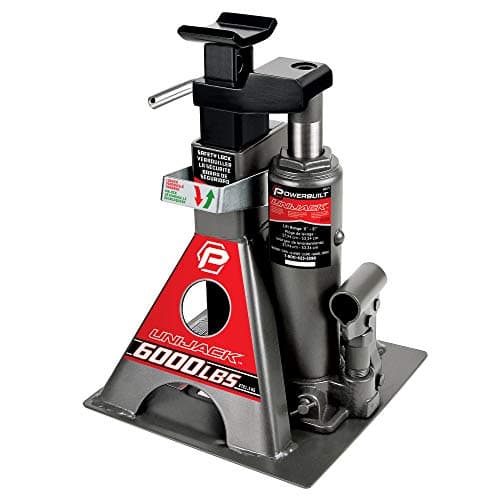
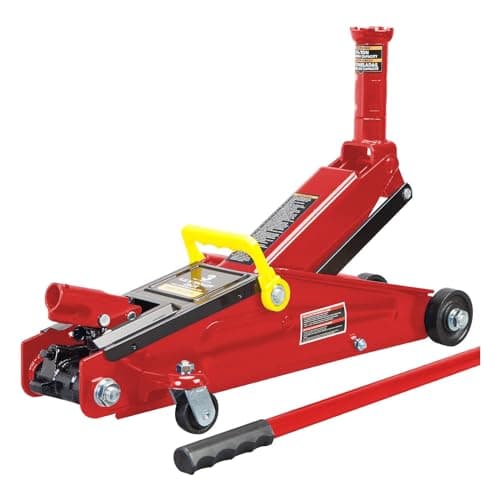
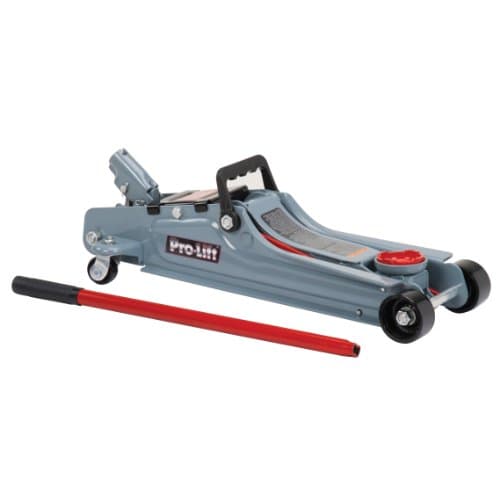
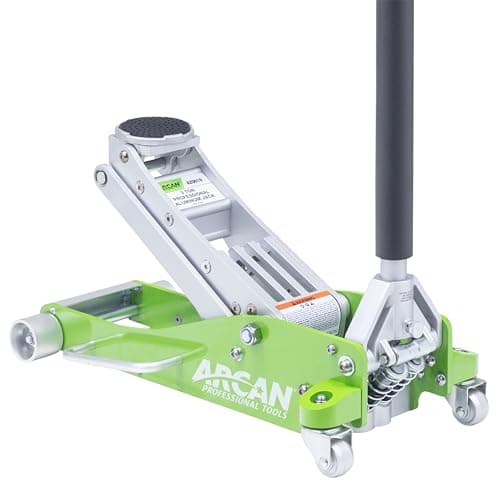
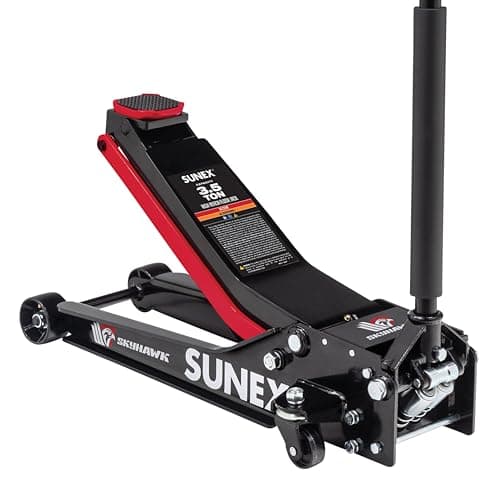
Short answer: on published evidence the Sunex 66035HR is the safest floor jack on this site, because Sunex states ASME PASE compliance outright and nobody else here does. The Powerbuilt Unijack is the safest tool in the category for a different reason, which is that it holds the vehicle on a mechanical bar rather than on fluid, and the Torin T83006 is the cheapest jack here that publishes an overload mechanism at all. But the honest headline is the one nobody wants: no floor jack is safe to work under, including the one at the top of this list. A jack is a lifting device. Safety comes from what you transfer the load to afterward.
How we ranked this, before we ranked anything
We do not run a test lab. We cannot drop a car on five jacks and report which one held, and any site telling you it did should be read carefully. What we can do is read what each manufacturer publishes about its own product and rank the claims by how checkable they are. That is the entire method on this page, and it is the same method behind safest jack stands and safest car ramps.
The ladder below runs in descending order of how much a claim is worth. A named standard beats a described mechanism; a described mechanism beats a visible design feature; a visible design feature beats an adjective. Heavy duty, professional grade and safest are unregulated marketing words with no defined meaning, and a jack whose safety case rests on them has made no claim you can hold anyone to.
| Kind of claim | Evidence value | Why |
|---|---|---|
| Maker states compliance with a named standard (ASME PASE, PALD) | Strongest | A defined test regime, asserted by the party carrying the liability |
| Maker describes the mechanism (safety bypass, overload valve, locking bar) | Strong | A specific component you can ask about and a service part you can replace |
| Design features you can see (wide base, formed saddle, steel section) | Moderate | Verifiable by looking, but not a performance claim about load |
| Adjectives, such as heavy duty, professional or safest | None | Unregulated language with no defined meaning and no test behind it |
The standard that matters here is ASME PASE, the safety standard for portable automotive service equipment. It covers hand jacks, automotive stands and ramps in one document. Some makers state compliance on the product page and most do not. Where a maker publishes a statement we quote it; where there is none, we say there is none rather than implying one exists somewhere.
What each maker publishes, side by side
| Jack | Published safety claim | Capacity | Lift range |
|---|---|---|---|
| Sunex 66035HR Skyhawk | ASME PASE compliant | 3.5 ton | 3.58 in to 24.4 in |
| Powerbuilt 620471 Unijack | Meets or exceeds ASME and PALD; integrated locking safety bar | 3 ton | 11 in to 21 in |
| Torin BIG RED T83006 | Safety bypass system | 3 ton | 5-7/8 in to 20-7/8 in |
| Pro-Lift F-767 | Built-in safety valve and bypass | 2 ton | 3-1/2 in to 14 in |
| Arcan A20019 | None published | 3 ton | 3.75 in to 18 in |
Two things to notice in that table. First, the order of the safety column is almost the inverse of the order of the lift-range column, because the jacks that publish the most are not the jacks that fit the most cars. Second, the best-selling jack in the category publishes nothing, which tells you something about how little buyers currently reward the disclosure.
What an overload bypass actually does
A hydraulic jack is a small pump pushing fluid into a cylinder. Pump past the load the jack is rated for and pressure keeps climbing until something gives: a seal, a weld or the cylinder. An overload bypass is a pressure-relief path. Past a set pressure, fluid returns to the reservoir instead of into the cylinder, and the saddle simply stops rising no matter how hard you work the handle. That is why a jack with a published bypass behaves predictably when you misjudge a vehicle's weight. It refuses, rather than failing.
Two corollaries follow, and both matter more than the ranking above. The first: a jack that stops rising under load is not broken, and the fix is not to force it. It is telling you the load exceeds what it will lift, and the answer is a bigger jack or a different lift point. The floor jack capacity guide works through the arithmetic of what a corner of your car actually weighs. The second: the relief valve is set at the factory and sealed. Harbor Freight's own owner's manual for its PITTSBURGH 70482 jack is explicit that the safety valve must not be opened or adjusted, and that instruction generalizes. If a jack will not reach its rated height, the problem to chase is air in the system or low fluid, not the valve, and floor jack leaking down has the bleed sequence.
Capacity headroom is a safety spec, and it is cheap
A jack under one corner of a car does not carry the whole car. It carries roughly a quarter of the vehicle's weight, sometimes a third if you are lifting at a central front jacking point with the engine sitting over it. On a 3,500 lb sedan that is somewhere between about 875 lb and 1,200 lb, which means a 2-ton jack is not marginal. It is enormously over-specified.
So why do we keep recommending 3 ton? Because headroom costs almost nothing in this category and it buys two real things. A jack worked near its rated limit is slower, stiffer and more tiring to pump, so you take shortcuts. And the rating is the one number that stays true when the vehicle changes, because the sedan you own now is not necessarily the crossover you own in four years. Going from 2 ton to 3 ton is usually a small price step; going from 3 ton to 3.5 ton, as the Sunex 66035HR here does, is a larger one you buy for the lift range rather than for the capacity. What size floor jack do I need turns this into a buying decision.
The handoff is where safety is actually won or lost
Here is the uncomfortable truth about this whole page: the difference in real risk between the first and last jack on it is tiny next to the difference between using stands and not using them. Serious incidents in home garage lifting follow the same shape, which is that the load was on the jack when a person went under it, or the load was on something that was not a rated support at all. The jack's published paperwork is not what fails in those stories.
So the sequence matters more than the purchase. Park on level concrete or asphalt. Chock the wheels that stay down, and the wheel chocks guide covers which end. Find the manufacturer's lift point, which is often not the same place as the support point; car jack points and where to put jack stands explain how to tell them apart. Lift higher than the notch you intend the stand to sit on, so the car is lowered onto a fully engaged lock rather than lifted into it. Set both stands to the same notch. Lower until the jack carries nothing, leave it in light contact as a backup, and shove the car at a body panel before you trust it.
Two surfaces defeat all of this regardless of which jack you bought. Gravel and dirt let a caster sink and the chassis twist, and jacking up a car on gravel is honest about what to do instead. Warm asphalt lets a narrow base punch in over twenty minutes, which is a stand-footprint problem more than a jack problem.
The safest option in the category is often not a jack
For a straight oil change on a car that fits them, car ramps remove the step that goes wrong. You drive onto a solid wedge, so there is no lift-then-transfer handover to misjudge and nothing hydraulic holding the car at any point. Ramps cannot do a wheel-off job, which is why they are an addition rather than a replacement, and a ramp too steep for your front bumper is its own problem. Floor jack vs ramps covers which to buy first, and safest car ramps applies the same published-evidence method to that field.
The verdict
If the question is strictly which jack has published the most about its own safety, the answer is the Sunex 66035HR, and it is not close, because a named standard beats everything else on this page. If you are lifting a truck and want the lifting tool and the holding tool to be one object, the Powerbuilt Unijack is the honest answer, because what holds the vehicle is steel. If you want a jack that fits a normal car, publishes an overload mechanism and costs what a first jack should cost, the Torin T83006 is the pick, subject to that 5-7/8 in minimum height clearing your sill.
And if you came here because you wanted the single safest thing you could buy this month, buy good jack stands. The jack is the tool that gets the car up; the stands are the tool that lets you be under it, and no amount of published compliance on the jack substitutes for the second purchase. Safest jack stands ranks that field the same way this page ranks this one.